The unexpected dismissal of criminal cases against James Comey and Letitia James ignited political backlash, raising questions about prosecutorial legitimacy and deepening partisan tensions across the United States.
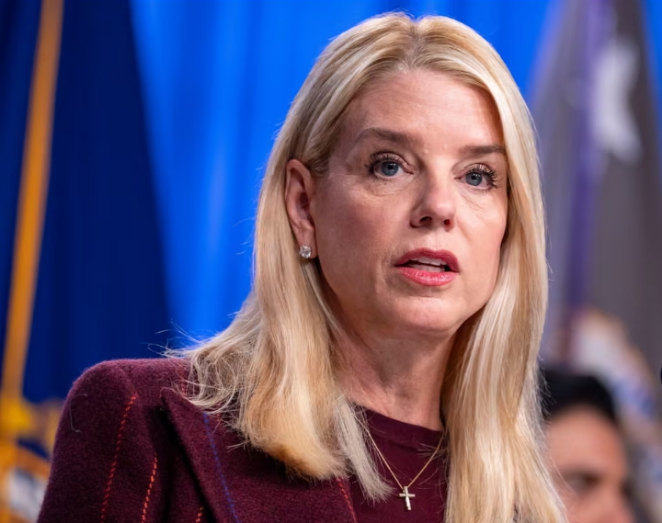
Attorney general Pam Bondi responded aggressively, denouncing the ruling as an attack on institutional accountability and promising to pursue an uncompromising appeal through every available legal channel.
Bondi framed the ruling as an outrageous judicial misstep, accusing the courts of enabling individuals she insists betrayed public trust and evaded responsibility for alleged misconduct.
Her statement signaled an unyielding commitment to rescue the prosecutions, insisting the administration would not tolerate any barrier obstructing consequences for what she called deeply damaging actions.
The ruling centered on Judge Cameron McGowan Currie’s determination that Lindsey Halligan’s appointment as U.S. attorney dangerously violated constitutional requirements governing the lawful exercise of prosecutorial authority.
Currie emphasized that Halligan’s appointment lacked Senate confirmation, rendering all associated prosecutorial actions invalid, including grand jury procedures, case filings, and the contested indictments against Comey and James.
Legal analysts described the situation as unprecedented, noting the ruling’s immediate effect was to undermine months of investigative work and destabilize high-profile cases already mired in controversy.

Critics argued the appointment’s flaws were obvious from the outset, accusing the administration of deliberately circumventing proper vetting processes to install a politically aligned prosecutor without legitimate oversight.
Supporters of the administration rejected those arguments, insisting the appointment was lawful and accusing the judiciary of weaponizing procedural technicalities to sabotage politically sensitive criminal investigations.
The escalating dispute underscores persistent conflicts between branches of government, intensifying perceptions that justice institutions have become susceptible to partisan influence and political maneuvering in high-profile cases.
Comey, addressing the media after the ruling, expressed relief while warning that politically motivated prosecutions could resume, stating that malevolence and incompetence had defined the original attempt against him.
James, similarly cleared by the court, described the outcome as vindication, asserting that years of scrutiny were politically inspired and unrelated to the merits of the mortgage fraud allegations she faced.
Legal observers highlighted that the unlawful prosecutor appointment raised broader questions about the integrity of federal appointments and the potential consequences of circumventing Senate oversight mechanisms.
Some political analysts claimed the decision would embolden future administrations to challenge judicial authority by exploiting loopholes in appointment procedures, potentially destabilizing the federal justice system further.
The dismissal also prompted renewed debate over whether former officials like Comey and James could ever face politically charged investigations without facing structural protections undermining impartiality.
Bondi emphasized that the appeal would explore every legal avenue, including higher federal courts, arguing that the public interest demanded accountability despite technical flaws in the appointment process.
Observers noted that the political stakes are high, as the cases were widely interpreted as attempts to retaliate against prominent figures who opposed former President Donald Trump’s policies and actions.
Trump himself responded indirectly, criticizing the judiciary on social media for what he called biased protection of political allies, further inflaming partisan divisions and public scrutiny of the legal process.
Legal experts explained that while the federal judicial review supported procedural correctness, it left the underlying allegations unresolved, creating a situation where public perception of guilt remained politically polarized.
The administration’s insistence on an appeal signals a hardline approach to prosecutorial legitimacy, demonstrating a willingness to fight perceived procedural injustices even amid intense public criticism.
Commentators highlighted that the dismissal could reshape expectations around federal appointments, as future prosecutors might face heightened scrutiny regarding their qualifications and the legality of their installation.
In Congress, lawmakers from both parties reacted with concern, warning that politically motivated appointments and rapid dismissals could erode trust in the justice system and damage public confidence permanently.
Comey warned that even with the dismissal, political adversaries might continue to target him, emphasizing the fragility of protections against selective prosecution in a polarized political environment.
James echoed similar sentiments, highlighting that the ruling does not erase the years of legal battles, stress, and reputational harm caused by politically charged investigations targeting state and federal officials.
Legal commentators noted that the case exemplifies tension between procedural legality and substantive justice, raising questions about whether courts should prioritize technical violations over addressing potential wrongdoing.
The public reaction has been polarized, with some celebrating the ruling as a triumph of the judiciary over political interference, while others condemned it as an example of unchecked legal loopholes.
Observers pointed out that the case could set precedent for challenging appointments nationwide, potentially invalidating previous prosecutions where appointment procedures were similarly flawed or politically influenced.
Analysts stressed that the dismissal exposes vulnerabilities in federal oversight structures, showing how politically motivated actors might manipulate procedural loopholes to influence the outcome of high-profile cases.
Bondi defended the prosecutions, asserting that Comey and James had allegedly undermined public trust, and claimed that without accountability, political elites could act without fear of legal consequences.
Some critics questioned whether the appeal would succeed, noting that courts typically defer to procedural requirements when determining the legality of appointments, even if the accused faced serious allegations.
The controversy has reinvigorated debates over the balance of power, suggesting that future appointments may require more rigorous vetting to prevent the recurrence of politically tainted cases.
Former officials expressed concern about the chilling effect on law enforcement, warning that prosecutorial authority could be politicized, undermining the ability to pursue justice impartially against politically sensitive targets.
Political commentators suggested the ruling could embolden officials to resist investigative actions if procedural errors are identified, raising questions about the limits of accountability in politically charged prosecutions.
Bondi emphasized that the appeal is not just about the two cases but about preserving the integrity of the justice system against political interference from any quarter.
Comey and James, now officially cleared of criminal liability, cautioned that public perception might remain divided, warning that politically motivated narratives could persist regardless of legal outcomes.
Experts noted that the case could trigger legislative reforms, with potential measures to strengthen appointment protocols and clarify the scope of prosecutorial authority in politically sensitive investigations.
The Comey and Letitia James charges have become symbolic of the broader struggle over accountability, illustrating the tension between partisan politics and the rule of law in high-profile federal cases.
Legal scholars explained that the ruling reflects a strict interpretation of appointment law, ensuring that prosecutors cannot exercise authority unless appointed in strict compliance with statutory requirements.
The case has prompted renewed discussion about presidential powers, judicial oversight, and the proper balance between political considerations and procedural safeguards in sensitive prosecutions.
Observers highlighted that while the appeal process may take months or years, its outcome could reshape the future of politically charged federal prosecutions, establishing new legal benchmarks.
Some analysts argued that the public perception of justice might be more impactful than legal technicalities, emphasizing the role of transparency and communication in maintaining trust in institutions.
Bondi’s determination to appeal suggests a long-term legal strategy designed to reinforce prosecutorial authority and counter perceived political interference that could erode institutional credibility.
The Trump political retaliation claims surrounding the cases continue to dominate media coverage, framing the prosecutions as part of a broader narrative of partisan targeting in U.S. politics.
Critics insist that allowing procedural technicalities to dictate outcomes risks undermining accountability, potentially encouraging future officials to exploit loopholes to evade responsibility for alleged misconduct.
Supporters contend that upholding legal procedures protects individuals from politically motivated prosecutions, reinforcing the principle that no one is above the law regardless of political affiliation or public profile.
The case has highlighted the intersection of law and politics, demonstrating how procedural irregularities can dramatically alter the trajectory of high-profile investigations and affect public confidence.
Legal commentators point out that appellate courts will scrutinize the dismissal, weighing procedural correctness against public interest and potential harm from unresolved allegations in politically charged cases.
The ruling also raises questions about the role of federal judicial review in balancing procedural technicalities with substantive justice in cases involving high-profile political figures.
Observers warned that the dismissal could embolden future administrations to manipulate appointments strategically, potentially using politically aligned prosecutors to target opponents while avoiding legal scrutiny themselves.
Bondi emphasized that the appeal would insist that legal norms cannot be subverted for political convenience, asserting that accountability must be maintained despite procedural obstacles.
Comey, in interviews following the dismissal, reiterated that the prosecution reflected a politically motivated attempt to tarnish reputations and highlighted the risks of politically weaponized justice.
James stressed that despite legal vindication, political narratives may continue, underlining the complex interaction between public opinion, media coverage, and the judicial process in high-profile cases.
Legal analysts concluded that the case underscores the importance of precise appointment procedures, warning that even minor technical flaws can invalidate entire investigations and disrupt justice delivery.
The dismissal has sparked nationwide discussion, emphasizing that the integrity of the justice system depends not only on impartial courts but also on adherence to procedural safeguards.
Critics of the appeal warn that an extended legal battle may prolong uncertainty, consume taxpayer resources, and further politicize what should ideally be impartial judicial proceedings.
Supporters maintain that defending the prosecution is crucial to prevent a dangerous precedent where politically influential figures could evade accountability through procedural loopholes or technicalities.
Observers noted that the case will be studied extensively in law schools, as it exemplifies tensions between procedural law, prosecutorial authority, and the influence of partisan politics on justice.
The appeal is likely to involve complex constitutional arguments, including interpretations of the Appointments Clause and federal statutes governing the proper installation of U.S. attorneys.
Public opinion remains sharply divided, with partisan media framing the dismissal either as a triumph for judicial integrity or as evidence of systemic bias protecting political elites.
Bondi’s approach demonstrates a hardline strategy, signaling that procedural victories for defendants will not be accepted without challenge, especially when perceived as undermining accountability for public trust violations.
Observers emphasize that while the dismissal of criminal cases resolves immediate legal questions, broader debates over political influence, judicial authority, and procedural integrity remain unresolved and contentious.
Analysts predict that the appeal could reshape expectations for future prosecutions, particularly in politically sensitive contexts, establishing new standards for appointments and procedural compliance.
The outcome of this appeal could also influence legislative discussions, prompting reforms designed to prevent politically motivated appointments from invalidating criminal prosecutions in the future.
The unfolding events surrounding Comey and James highlight the intersection of law, politics, and public perception, demonstrating the fragility of trust when high-profile cases are entangled in partisan conflict.
Legal experts stress that the case reinforces the critical importance of procedural diligence, showing that technical flaws can override substantive allegations, profoundly affecting justice outcomes in politically sensitive investigations.
The national conversation sparked by the dismissal of criminal cases serves as a cautionary tale for administrations, judicial authorities, and prosecutors regarding the consequences of circumventing established legal procedures.
Bondi concluded that the fight to reinstate accountability through appeal is essential to defend the justice system from perceived partisan manipulation, emphasizing that no technicality should shield alleged misconduct.
The controversy surrounding Comey, James, and Halligan has already become emblematic of broader challenges in maintaining impartial justice, ensuring procedural compliance, and resisting political pressures in the U.S. legal system.
This legal saga will continue to dominate political discourse, exemplifying how procedural irregularities, partisan narratives, and judicial interpretations can converge to shape high-profile criminal cases.
About The Author