British Prime Minister Andy Burnham UN speech echoes that Britain is ready to lead an international effort to establish artificial intelligence standards, while warning that AI development could outpace existing safeguards and create national security risks.
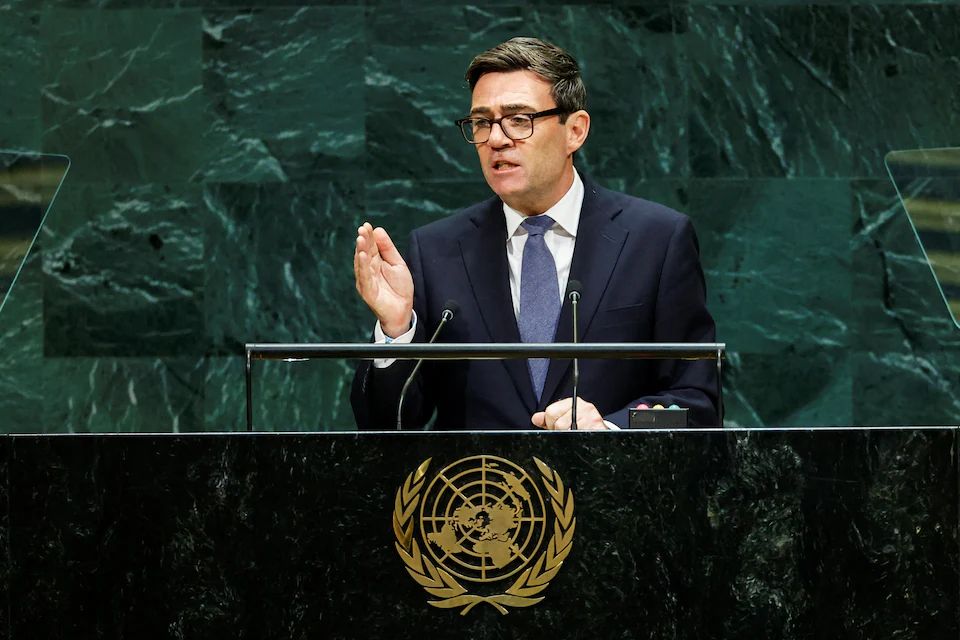
Speaking during his inaugural address to the United Nations General Assembly in New York on September 22, Burnham said governments needed to respond to concerns surrounding the rapid development of AI.
“We’ve all heard the warnings – which we must heed,” Burnham said. “I know how worried people are. So we have to rise to this moment.”
His remarks placed AI at the centre of Britain’s international agenda as he sought to outline the country’s approach to the opportunities and risks associated with increasingly advanced technology.
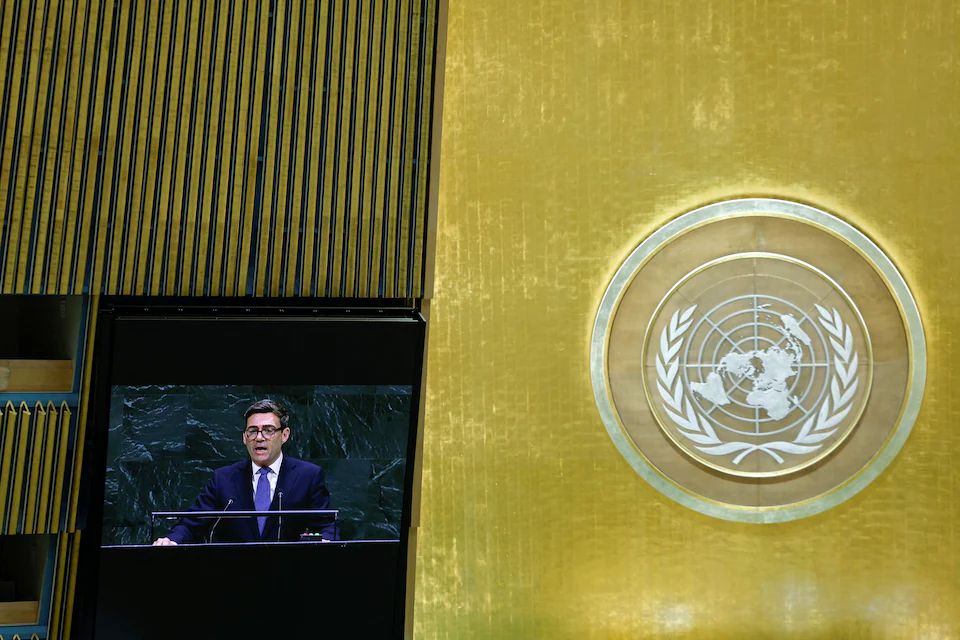
Burnham Calls for Global AI Standards
Burnham said Britain wanted to pursue the economic and social benefits of AI while remaining clear about potential dangers, including inadequate safeguards and the use of technology by hostile actors.
Rather than adopting what he described as a “doom-monger” approach, Burnham said Britain should seek to develop AI responsibly while ensuring that governments are prepared for emerging risks.
The British prime minister said fundamental decisions concerning AI should remain the responsibility of elected governments rather than being left solely to technology companies.
“We will work towards agreeing a single set of global principles and standards to ensure the transparency and access we need to increase our preparedness – and to ensure that AI development is safe,” he said.
Britain’s Role in Global AI Governance
Burnham said Britain could act as an “honest broker” because of its relationships with the United States, the European Union, China and India.
He pointed to Britain’s existing AI Security Institute, which works with the United States and leading AI laboratories on questions surrounding AI safety and security.
His government also wants greater access to information about new frontier AI models so that British authorities can improve their preparedness and resilience as the technology advances.
Reuters reported that British officials have told AI leaders they expect “full and total visibility” of new frontier models as part of efforts to strengthen the country’s ability to assess emerging risks.
AI and National Security Concerns
Burnham also used his UN speech to highlight the security implications of artificial intelligence, particularly its potential use in information warfare.
He accused Russian agencies of using technology and fabricated online material to spread disinformation and exploit public fears.
“Russian agencies have used every means at their disposal to spread lies and disinformation and prey on people’s fears,” Burnham said.
He added: “They’ve used bots and fake websites. Falsified newspaper articles. Forged the branding of 28 British organisations – including universities and the BBC. They’ve amplified far right narratives. And we have evidence that they tried to interfere with the 2019 General Election.”
Russia has rejected those allegations.
Burnham said Britain would respond by strengthening its capacity to identify and disrupt hostile information operations, including campaigns involving manipulated digital content and deepfakes.
New National Centre for Information Defence
The British prime minister announced plans for a new National Centre for Information Defence, which will focus on detecting, attributing and disrupting hostile state information attacks.
The centre is also expected to help identify deepfakes and other forms of manipulated information considered damaging to British interests.
“Today I am tasking our security chiefs to begin work on a new National Centre for Information Defence – to detect, attribute and disrupt these kinds of hostile state information attacks – to support and defend our democracy,” Burnham said.
The announcement links Britain’s AI policy with broader national security efforts, particularly as governments confront increasingly sophisticated digital manipulation.
AI at the Heart of Britain’s G20 Presidency
Burnham also said artificial intelligence would feature prominently during Britain’s presidency of the G20 next year.
He said Britain would seek international agreement around principles and standards that could improve transparency, access and preparedness while addressing concerns over the safety of AI development.
The move comes as governments and technology companies debate how rapidly advanced AI systems should develop and what safeguards should accompany them.
Reuters reported separately that the United Nations Security Council is also preparing discussions on AI and international security, with technology companies expected to contribute to the debate.
The UN discussion reflects growing international attention on the governance of advanced AI, with different governments and technology companies proposing different approaches to safety, standards and technological development.
UK-US AI Defence Cooperation
Burnham’s UN appearance also follows a new AI defence partnership between Britain and the United States.
The partnership involves Britain’s Defence Rapid AI Delivery Taskforce and the US Department of War Chief Digital and Artificial Intelligence Office, with the stated aim of developing trusted and interoperable AI capabilities for security and defence purposes.
Burnham has said the cooperation will help protect critical infrastructure and strengthen the ability of both countries to respond to emerging threats.
At the same time, his UN message emphasised that AI governance cannot be addressed by individual countries alone.
The British government therefore faces the task of combining domestic security measures, cooperation with allies and broader international discussions over common standards.
Global Debate Over AI Intensifies
Burnham’s call comes amid a wider debate over how governments should respond to increasingly capable AI systems.
OpenAI has separately called for international technical standards covering frontier AI, including common measurements and incident-reporting mechanisms. The company has argued that coordinated standards could help countries avoid fragmented approaches to AI governance.
Read also: Trump threatens to annihilate Iran as diplomats push for deal at UN
UN Secretary-General António Guterres has also urged stronger international oversight of AI, calling for countries developing the technology to share information about emerging safety risks and work towards common safeguards.
The competing proposals show that AI governance is becoming an increasingly important issue at international forums, with governments weighing technological innovation against questions of safety, security and accountability.
For Burnham, the issue provides an opportunity to outline Britain’s role in those discussions while presenting AI as both an area of economic opportunity and a potential source of new security challenges.
About The Author