Ukrainian President Volodymyr Zelenskyy has warned that Russia and China are deepening military-industrial cooperation, a development he says poses a serious threat to regional and global security.
According to Kyiv’s foreign intelligence, Russia is increasingly reliant on Chinese investments, advanced technologies, and political support, strengthening its capacity for military operations and complicating international peace efforts.
Zelenskyy stressed that the partnership between Moscow and Beijing represents a strategic alignment that could extend the war in Ukraine and alter the balance of power across Europe.
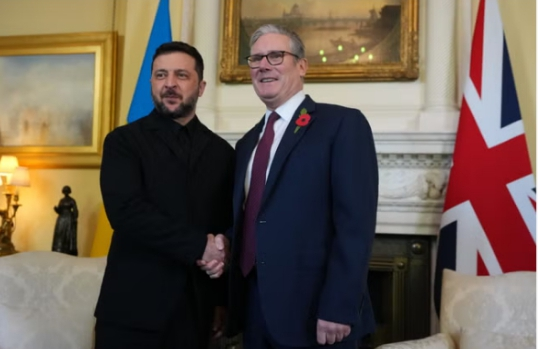
The Ukrainian president instructed his foreign intelligence services to closely monitor the cooperation, ensuring that any developments are analyzed in terms of their impact on Ukraine and its Western allies.
“Global security must not be undermined because Russia’s appetite for aggression remains unabated,” Zelenskyy said, highlighting the potential dangers of a strengthened Russia-China military-industrial nexus.
Intelligence reports point to the “de-sovereignisation” of parts of Russian territory in favor of China, with resource-rich regions increasingly tied to Beijing through trade, investment, and technology agreements.
China has maintained a low profile in the Ukraine conflict, claiming neutrality while continuing to provide Moscow with crucial support to mitigate the effects of Western sanctions.
In September, leaders from both countries outlined a vision for a multilateral global order at the Shanghai Cooperation Organisation summit, signaling their shared intent to counterbalance Western influence.
Chinese President Xi Jinping emphasized collaboration in sectors such as aerospace, energy, agriculture, and digital technology, framing the partnership as a strategic choice beneficial to both nations’ long-term goals.
Zelenskyy’s warning comes as Ukraine prepares to submit updated proposals to U.S. negotiators aiming to secure a peaceful resolution to the conflict, reflecting ongoing efforts to balance diplomacy and defense.
He is expected to discuss the proposals in a video call with about 30 allied nations, known as the “coalition of the willing,” highlighting the multilateral approach Ukraine is pursuing to end the war.
France and the United Kingdom are leading efforts to ensure any settlement is fair, prevents future Russian aggression, and supports Ukraine’s sovereignty amid ongoing international negotiations.
Concerns remain that U.S.-led initiatives, particularly those pushed by former President Donald Trump, could favor Russia if executed hastily, potentially undermining months of careful diplomatic work.
Zelenskyy also addressed the possibility of holding elections during the ongoing conflict, noting that adequate security guarantees and legal adjustments would be essential to ensure legitimacy and voter safety.
“To hold elections, two issues must be addressed: security, including conducting votes under potential attacks, and legislative frameworks necessary to protect the electoral process,” Zelenskyy explained.
On the ground, hostilities continue despite diplomatic efforts. Ukrainian forces report intense fighting in Donbas and southern regions, with Russian drones striking infrastructure in Odesa, affecting energy and civilian systems.
In Russian-occupied Kherson, Ukrainian shelling reportedly hit a hospital, killing three staff members and wounding two, demonstrating the continuing civilian toll of frontline operations in contested regions.
Ukraine’s military also reported repelling mechanized assaults in Pokrovsk, highlighting sustained combat activity, which persists even as diplomatic efforts to resolve the conflict progress.
Analysts warn that China’s deepening involvement could prolong the war by enabling Russia to access advanced technologies, weaponry, and strategic resources, challenging the effectiveness of Western sanctions.
Zelenskyy emphasized that Ukraine is carefully tracking Chinese and Russian activities, particularly in areas that could enhance Moscow’s military capability or undermine Ukraine’s territorial integrity.
He stressed that diplomatic negotiations must consider these developments, ensuring any settlement is resilient enough to deter future aggression and maintain regional stability.
The Russia-China alliance has framed collaboration in strategic industries as mutually beneficial, including aerospace, digital innovation, energy, and agriculture, signaling a long-term commitment to shared development goals.
Experts note that this partnership challenges Western influence, as both countries seek alternative global governance structures that bypass NATO and the European Union, reshaping international security landscapes.
Zelenskyy has called on the international community to remain vigilant, warning that neutrality from global powers should not translate into passive acceptance of Moscow’s military ambitions.
As Ukraine submits its latest proposals for peace, Zelenskyy highlighted the need for continued coordination with allies, emphasizing that unity is critical to secure a balanced agreement that safeguards Ukraine’s sovereignty.
Despite diplomatic advances, the conflict continues to inflict civilian casualties and damage infrastructure, underscoring the war’s human, economic, and strategic costs for Ukraine and the broader region.
Ukraine’s intelligence services are intensifying monitoring of Chinese and Russian projects, particularly those enhancing military capabilities or controlling key natural resources, which could affect Ukraine’s long-term security.
Zelenskyy has reiterated that global security frameworks must adapt to this evolving threat, cautioning that failure to address the growing Russia-China military partnership could embolden further destabilizing actions.
The Ukrainian president’s warnings reflect concern that the alliance is long-term, not a temporary wartime arrangement, and could have serious implications for European and global security for years to come.

In the coming weeks, Ukrainian officials will increase diplomatic engagement, coordinating with allied nations to present a unified stance while closely observing Russia-China collaboration in military, technological, and economic sectors.
Zelenskyy concluded that vigilance, diplomatic cohesion, and careful monitoring of strategic alliances are essential to deter aggression and preserve stability in Europe and beyond.
About The Author