In Pakistan, a young lawyer’s courtroom battle is forcing the nation to confront a long-ignored injustice: the hidden cost of menstruation. Mahnoor Omer’s petition challenges the period tax in Pakistan—a levy that activists say penalises women simply for being women.
At 25, Omer has become an unexpected voice of rebellion. Her legal action before the Lahore High Court demands the government eliminate the sales and customs duties imposed on sanitary products—taxes that inflate costs by nearly 40 percent.
Critics call it a systemic punishment wrapped in bureaucracy. “It’s a tax on a biological function,” says Ahsan Jehangir Khan, Omer’s co-petitioner and constitutional lawyer. “That’s not just unfair—it’s unconstitutional.”
For years, Pakistani authorities have charged an 18 percent sales tax on locally produced sanitary pads and an additional 25 percent customs tax on imported pads and raw materials. The period tax in Pakistan turns essential items into luxury commodities.
UNICEF estimates that after additional local levies, the total burden on sanitary pads rises to nearly 40 percent. For most Pakistani women, that cost is devastating. A 10-pack of pads can cost 450 rupees—around $1.60—in a country where monthly income averages $120.
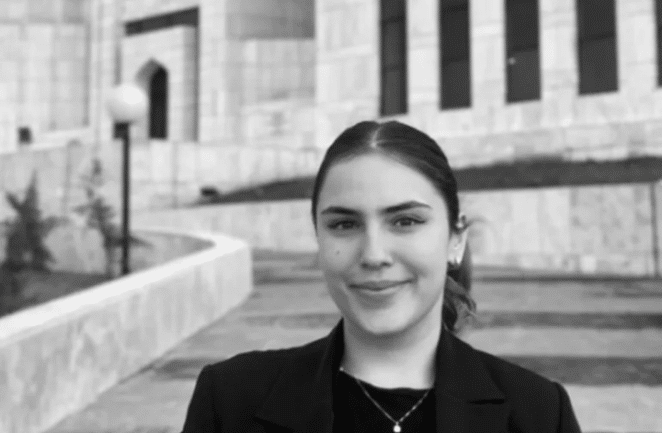
“If middle-class families hesitate to buy pads, imagine the situation for poorer women,” Omer says. “It’s a question of dignity, not just economics.” Her demand: abolish what she calls the sanitary pad tax that fuels gender inequality.
Only 12 percent of Pakistani women use commercial sanitary pads, according to a joint 2024 UNICEF–WaterAid report. The rest rely on cloth, newspaper, or unsafe substitutes, often without clean water or proper disposal options.
Activists argue the period tax in Pakistan deepens this crisis. “When a woman can’t afford pads, she risks infection, absenteeism, and shame,” says Hira Amjad, head of the Dastak Foundation, which advocates menstrual health rights.
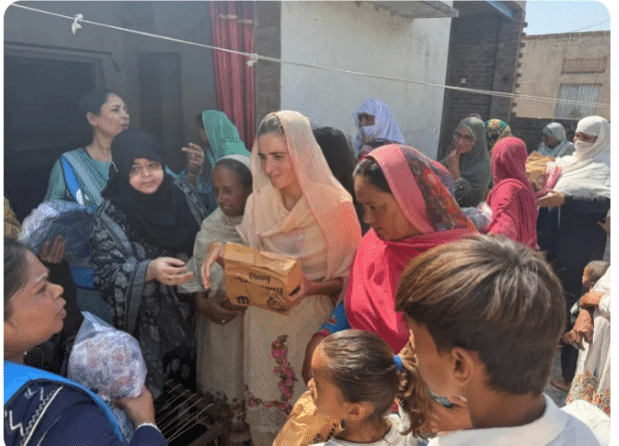
Amjad’s organisation has distributed thousands of period kits in flood relief camps and rural areas. Each kit contains soap, underwear, painkillers, and pads. “We’re fighting two battles—poverty and stigma,” she adds. “Removing taxes would lift a huge barrier.”
The stigma begins early. Omer recalls hiding pads up her school sleeves like contraband. “Teachers treated it as shameful,” she says. “We were taught silence, not hygiene.” That silence, she insists, sustains inequality and justifies the period tax in Pakistan.
Bushra Mahnoor, founder of the student-led Mahwari Justice movement, agrees. “Girls learn embarrassment before they learn biology,” she says. Her organisation has provided over 100,000 menstrual kits and even produced rap songs to normalise menstruation discussions.
“Say the word mahwari [menstruation] out loud,” she says. “When you do, you’re telling the world it’s not shameful—it’s life.” The period tax in Pakistan stands in direct opposition to that message, she argues.
Data supports the urgency. A 2023 study in Frontiers in Public Health found that eight in ten Pakistani girls feel embarrassed discussing menstruation. Two-thirds never receive menstrual education before their first period. For many, that lack of awareness leads to dangerous hygiene practices.
The period tax in Pakistan thus becomes more than a fiscal issue—it symbolizes institutional neglect of women’s access to hygiene products. Economically, it punishes women; socially, it reinforces taboo; politically, it reveals gender bias in policymaking.
“In most households, men control finances,” Amjad says. “If pads are taxed, they’re considered dispensable. It’s always food first, health later.” Removing the sanitary pad tax could transform that calculus for millions.
The economic argument also resonates with Pakistan’s constitutional principles. Omer’s petition cites violations of rights to equality, dignity, and social justice—provisions that prohibit discrimination based on gender.
“The constitution is clear,” Khan explains. “No law should impose unequal burdens. The period tax in Pakistan does exactly that—it taxes biology, not choice.”
Omer’s campaign mirrors similar global victories. India scrapped its tampon tax in 2018 after years of advocacy. Nepal’s Supreme Court ruled against menstrual product taxes in 2025, and the United Kingdom abolished its tampon tax in 2021.
“If others can do it, why can’t we?” Omer asks. “Menstrual justice isn’t radical—it’s rational.” Her case, however, is the first of its kind in Pakistan, and observers say it could set a historic precedent for gender equality in Pakistan.
Omer’s activism began long before the court filing. At 16, she organised “dignity kits” for women in poor Islamabad neighbourhoods. “We sold cupcakes to raise funds,” she recalls. “Each pack meant one woman could face her period with dignity.”
Later, as a gender justice consultant and Supreme Court law clerk, she saw how policy fails women daily. “It’s not just one bad law—it’s a mindset,” she says. “The period tax in Pakistan is a symptom of that mindset.”
Her mother’s support, she says, kept her grounded. “She always told me to challenge what feels wrong, even when it’s uncomfortable.” Today, Omer studies gender, peace, and security at the London School of Economics, promising to return to Pakistan to continue the fight.
Yet the path has been far from easy. “My parents were scared,” Omer admits. “They told me, ‘You don’t take on the state.’ But now they’re proud. They see it’s about justice.”
For Khan, her co-petitioner, the battle is philosophical. “You cannot legislate fairness without confronting privilege,” he says. “The period tax in Pakistan was written by men who never had to consider the cost of menstruation.”
Omer’s movement has also drawn support from environmental activists. Amjad argues that sustainable, cotton-based pads should replace plastic ones, which take centuries to decompose. “Let’s end the sanitary pad tax for eco-friendly products first,” she suggests.
Her foundation also campaigns for paid menstruation leave, citing cases of women dismissed for missing work due to period pain. “We treat menstrual pain like a personal weakness,” Amjad says. “It’s a workplace issue, not a woman’s excuse.”
The fight extends beyond taxation—it’s about recognition. “Menstruation is not a privilege. It’s biological,” says Omer. “We can’t keep punishing women for existing.”
International observers have noted Pakistan’s inconsistency on women’s welfare. Despite signing conventions on gender rights, the government has lagged in implementing policies addressing menstrual equity. The period tax in Pakistan exposes that contradiction starkly.
UNICEF’s policy brief urges countries to classify menstrual hygiene products as essential goods, exempt from sales and import duties. “Taxing them contradicts development goals,” the brief states. “Affordability determines access.”
For low-income families, affordability is everything. “When a pad equals the price of a meal, something is wrong with your system,” Omer says. She envisions a Pakistan where every woman can afford dignity.
Her supporters describe her as unrelenting. “Mahnoor has the fire of ten lawyers,” Khan says. “She believes the law should serve people, not punish them.”
In the courtroom, Omer’s arguments cut through decades of silence. “This isn’t women versus the state,” she told reporters after her filing. “It’s fairness versus indifference.”
Her words resonate with young Pakistanis tired of patriarchal norms. Student volunteers have joined awareness campaigns using hashtags like #AbolishPeriodTax and #MenstrualJusticeNow. For them, the period tax in Pakistan represents the broader failure to prioritise women’s needs.
“If this petition succeeds, it’ll be a revolution in slow motion,” Amjad says. “We’ll see girls staying in school, fewer infections, more confidence. It’s not just hygiene—it’s liberation.”
The case’s outcome could take months, but its cultural impact is already visible. Media discussions once taboo are now mainstream. Influencers, NGOs, and even some politicians are voicing support for tax reform.
For Omer, progress isn’t measured in court orders alone. “It’s when a girl buys pads without shame,” she says softly. “That’s when we’ve won.”
As Pakistan debates fairness, her stand has become symbolic—a reminder that justice begins with everyday realities. “When I think of this case,” she says, “it’s not a courtroom I see—it’s a feeling of justice.”
The period tax in Pakistan, she insists, is not just a fiscal issue but a reflection of moral priorities. Abolishing it would be more than policy reform—it would be an act of collective conscience.
And as Omer prepares for another hearing, she remains undeterred. “If the law doesn’t change today, it will tomorrow,” she says. “Because justice, eventually, bleeds through.”
About The Author