Venezuela denounced a recent United States court ruling approving the transfer of oil company Citgo, describing the decision as an act of aggression targeting the nation’s sovereignty and economy.
Vice President Delcy Rodriguez condemned the sale as fraudulent and politically motivated, arguing the ruling exposes what she views as Washington’s continued use of financial pressure to destabilise Venezuela.
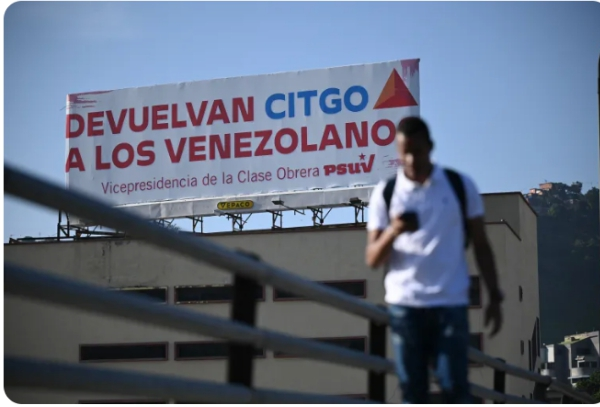
Rodriguez said the government “energetically rejects” the court-authorised transaction, insisting oil company Citgo was unlawfully targeted in a broader campaign driven by partisan geopolitical objectives.
The ruling was issued by Delaware Judge Leonard Stark, who ordered the sale of Citgo’s parent company to Amber Energy, an affiliate of Elliott Investment Management, for $5.9bn.
Elliott Investment Management said the transaction is supported by major US investors and reflects legal processes rather than any underlying political agenda involving Venezuela or its state institutions.
Citgo, headquartered in Houston, is the most valuable foreign asset owned by PDVSA, Venezuela’s state oil company, which faces decades of accumulated debt, arbitration awards, and sanctions.
Creditors claim that PDVSA owes more than $20bn, a figure shaped by repeated defaults, shrinking production, declining export revenue, and the effects of sweeping US sanctions imposed earlier.
A key claimant is the Canadian firm Crystallex, which won a $1.2bn arbitration award after Venezuela nationalised the Las Cristinas gold mine in 2008 under former President Hugo Chavez.
The Venezuelan government argues that the forced auction of oil company Citgo represents the illegal appropriation of national wealth and violates international principles of sovereign immunity.
The ruling comes during heightened tensions, as President Nicolas Maduro accuses Washington of escalating military deployments in surrounding waters to pressure Venezuela and undermine regional stability.
Maduro claims the presence of US warships forms part of a strategy designed to weaken Venezuela ahead of future negotiations and influence global energy markets at a critical moment.
The United States denies these allegations, arguing its operations in the region focus on countering drug trafficking and improving maritime security rather than targeting Venezuela’s natural resources.
Still, Maduro publicly insists that US actions form a dual economic and military offensive intended to constrain Venezuela’s autonomy and interfere with domestic political processes.
Analysts say oil company Citgo has symbolic importance for both nations, representing decades of economic ties and the complexity of overlapping legal, financial, and political disputes.
The company once served as Venezuela’s economic bridge to the United States, refining and distributing petroleum products that contributed significantly to national revenue before sanctions tightened.
For years, Venezuela was one of the largest oil exporters to the United States, but shipments plummeted after Chavez reoriented foreign policy and US sanctions later cut off financial channels.
Under Trump’s first administration, PDVSA became a primary target of sanctions designed to restrict revenue, contributing to production declines, reduced capacity, and mounting financial instability.
A partial easing under Joe Biden permitted Chevron to operate under a limited licence, allowing modest production increases before new restrictions were reinstated during Trump’s second presidency.
Energy experts argue the sale complicates Venezuela’s long-term recovery prospects, removing a strategic offshore asset that could have served as collateral for debt restructuring efforts.
Opposition leaders inside Venezuela say the crisis surrounding oil company Citgo is the result of government mismanagement, corruption, and political interference within PDVSA over multiple decades.
They accuse Maduro’s administration of irresponsibly leveraging Citgo during borrowing sprees and failing to defend national assets effectively during international arbitration disputes.
Government supporters counter that Washington weaponised sanctions to cripple Venezuela’s economy, intentionally reducing export capacity and damaging infrastructure that requires billions in repairs.
Maduro’s allies say the Citgo sale reflects geopolitical motivations disguised as legal decisions, arguing the ruling aligns with longstanding efforts to isolate Venezuela on the world stage.
Legal analysts note the ruling may empower creditors seeking compensation from other countries that nationalised foreign assets, potentially changing the global landscape of investment risk.
The Maduro government says it will pursue appeals and diplomatic efforts to reverse what it calls a political seizure, although experts say the chances remain extremely limited.
Venezuela’s outreach to OPEC highlights its attempts to mobilise international support, though major producers appear reluctant to confront the United States over an economic dispute.
Analysts say OPEC nations face their own political risks and may view Venezuela’s current predicament as the result of internal economic collapse rather than external interference alone.
Maduro’s plea for solidarity emphasises the importance of Venezuela’s vast reserves, which remain the world’s largest officially documented oil resources but are underutilised due to operational constraints.
Decades of underinvestment have left PDVSA’s infrastructure severely degraded, with refineries struggling, pipelines corroded, and maintenance delayed due to shortages of funding and technical expertise.
Environmental groups warn that failing facilities increase the risk of spills, accidents, and air pollution, issues already documented in several regions where PDVSA operates aging installations.
Economists predict the Citgo loss will deepen Venezuela’s fiscal crisis, reducing state income and complicating efforts to stabilise the bolivar amid rising inflation and collapsing purchasing power.
The sale may also affect political dynamics within Venezuela, as Maduro highlights the ruling to rally nationalist sentiment and portray the United States as an imperial adversary.
Opposition parties, however, accuse Maduro of exploiting the crisis for political gain, asserting that government mismanagement created the conditions that allowed creditors to seize assets.
Internationally, the ruling signals to investors that sovereign assets abroad carry increasing legal exposure, particularly when governments nationalise foreign property or default on external obligations.
Washington denies coordinating the ruling with broader policy objectives, emphasising that US courts operate independently and that the executive branch does not direct their decisions.
Still, Venezuelan officials argue that the sequence of sanctions, freezes, and asset seizures demonstrates a coordinated campaign intended to weaken the government and force political concessions.
Diplomatic communication between the two countries remains limited, with tensions rising amid competing narratives concerning regional military deployments and maritime security operations.
Observers warn that the dispute over oil company Citgo adds to a growing list of unresolved confrontations between Washington and Caracas, increasing the risk of unpredictable escalation.
The Maduro administration says it will continue resisting what it describes as an economic blockade, strengthening ties with Russia, China, and Iran to counterbalance US financial pressure.
But these partnerships come with their own risks, as lenders demand strict conditions, collateral, and repayment assurances that Venezuela may struggle to provide given its economic state.
Energy analysts say rebuilding PDVSA and restoring export capacity could take more than a decade, requiring massive investment, political stability, and significant reforms the government has resisted.
Many Venezuelans worry the Citgo dispute will worsen shortages, fuel instability, and further reduce state revenue for essential services already strained by years of economic contraction.
Caracas residents describe the ruling as another blow to a country already grappling with inflation, limited job opportunities, and persistent shortages of basic goods and household supplies.
The humanitarian impact remains a pressing concern, with many Venezuelans relying on remittances, food programs, and international assistance to cope with deteriorating economic conditions.
Regional leaders continue urging dialogue between the United States and Venezuela, though prospects remain uncertain given the political climate and competing strategic interests.

As legal battles continue and geopolitical tensions rise, the fate of oil company Citgo highlights the complex intersection of energy economics, international law, and high-stakes diplomacy.
About The Author