Cocaine lab demolition – Colombian President Gustavo Petro has directly invited US President Donald Trump to Colombia to observe the destruction of cocaine laboratories, following Trump’s warning that countries trafficking drugs into the US could face military attacks.
Trump made his comments at a Cabinet meeting on Tuesday, singling out Colombia as a source of cocaine exported to the United States. “I hear Colombia, the country of Colombia, is making cocaine. They have cocaine manufacturing plants, oK, and then they sell us their cocaine,” Trump said.
Petro responded swiftly, emphasizing the effectiveness of Colombia’s anti-drug operations. “Come to Colombia, Mr. Trump,” Petro posted on social media. “Come with me, and I’ll show you how they are destroyed, one laboratory every 40 minutes, to prevent cocaine from reaching the US.”
The Colombian leader also warned against threats to national sovereignty. “Do not damage two centuries of diplomatic relations. You have already slandered me; do not continue down that path,” Petro said, referencing Trump’s prior claims that Colombia’s president was involved in drug trafficking.
Petro underscored Colombia’s role in curbing cocaine supply. “If there is a country that has helped stop thousands of tonnes of cocaine so that North Americans do not consume it, it is Colombia,” he added. Yet, Colombia remains the primary source of cocaine entering the US, according to the Drug Enforcement Administration.
In 2024, the DEA reported that 84 percent of cocaine seized in the United States originated in Colombia. The country has carried out extensive anti-narcotics operations, including the destruction of 18,400 laboratories, a feat Petro highlighted without relying on missile strikes.
Trump’s administration has deployed significant military forces in Latin America under the stated goal of stopping the flow of drugs from Venezuela, launching missile attacks on vessels in the Pacific and Caribbean Seas. At least 83 people have died in these strikes, drawing international scrutiny.
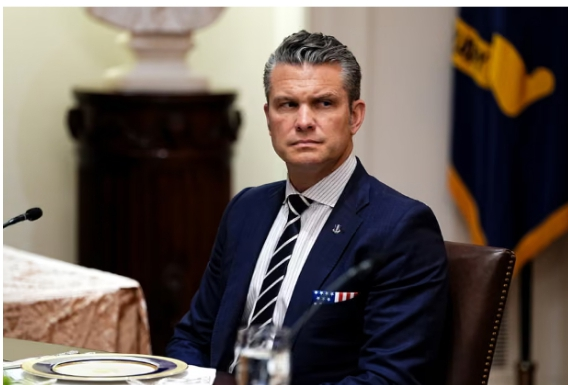
Sitting beside Trump during his remarks was US Defense Secretary Pete Hegseth, who is under investigation for a controversial “double-tap” strike in September that killed two survivors of a prior US attack on a suspected drug smuggling vessel. The initial attack had already claimed nine lives.
Legal experts have described the secondary strike on survivors clinging to the wreckage as potentially a war crime. Both Democratic and Republican lawmakers in Congress have promised investigations into the circumstances of these killings.
Hegseth defended the secondary strike but claimed he had not witnessed the survivors or the follow-up attack in real time. He stated that he only later discovered that US Admiral Frank Bradley had authorized the second strike against survivors.
Washington has presented no evidence that the victims were engaged in illegal activity, while Venezuelan President Nicolas Maduro has accused the US of attempting to remove him under the guise of anti-drug operations. Maduro’s government condemned the attacks, calling them “illegal and provocative.”
Colombia’s anti-drug efforts, however, have been praised domestically and internationally. Authorities recently conducted the country’s largest cocaine seizure in a decade, confiscating 195 tons in joint operations with other nations. Officials said this prevented 35 million doses from entering global markets, valued at over $388 million.
President Petro has also invested heavily in Colombia’s defense capabilities, including a $4.3 billion deal for 17 fighter jets aimed at maintaining regional stability. Petro described the jets as a “deterrent weapon to achieve peace” amid heightened geopolitical tensions in Latin America.
Relations between Colombia and the US have been strained since Trump publicly accused Petro of involvement in the drug trade. Washington subsequently imposed sanctions on Petro, intensifying diplomatic tensions and sparking mutual criticism between the leaders.
Trump’s threat to attack countries supplying drugs to the US comes amid his broader “America First” strategy. Experts warn that such policies risk destabilizing diplomatic ties in the region and could undermine longstanding anti-drug cooperation.
Colombian officials emphasize that their anti-drug operations rely on intelligence, law enforcement, and coordinated destruction of laboratories, not military strikes. Petro stressed that Colombia has destroyed thousands of cocaine labs “without missiles,” a point he reiterated in his invitation to Trump.
The tension comes as US military deployments in the region continue to increase. Operations targeting Venezuela and nearby territories have raised concerns over civilian casualties and legal accountability for US actions in international waters.
Trump has defended the broader strategy as necessary to protect American citizens from narcotics. “Anybody that’s doing that and selling it into our country is subject to attack,” he said during the Cabinet meeting, signaling potential escalation beyond Venezuela.
Colombian authorities insist that they are committed to combatting the drug trade without foreign military intervention. Petro has framed the destruction of cocaine labs as part of a national mission, aimed at both law enforcement and public health objectives.
“This is not just about Colombia,” Petro told reporters. “It is about the safety of all Americans and the region. We are proactive, not reactive. We prevent cocaine from reaching your streets without firing missiles at our people.”
Analysts note that the clash between Trump and Petro reflects broader tensions in US-Latin American relations. While Colombia remains an important partner in anti-drug efforts, confrontational rhetoric threatens cooperation and could incentivize illicit networks to adapt their operations.
Trump’s statements have sparked criticism from both parties in the US. Critics argue that threatening military strikes against sovereign nations could violate international law and undermine US credibility abroad.
Meanwhile, Colombian officials maintain that their anti-drug strategy combines intelligence gathering, surveillance, and law enforcement raids. Petro’s claim of destroying 18,400 cocaine labs demonstrates the scale of these operations and the country’s commitment to international cooperation.
The diplomatic dispute comes at a time when the US is also focusing on Venezuela’s political situation. Maduro has accused Washington of planning regime change under the guise of anti-drug operations, while Colombia seeks to emphasize sovereignty and legal enforcement rather than military confrontation.
Petro’s open invitation to Trump to witness the destruction of cocaine laboratories is a bold gesture aimed at showcasing Colombia’s efforts. “Come and see for yourself, Mr. Trump,” Petro said, “how Colombia fights drugs without turning our country into a battlefield.”
The US-Corombia relationship remains fragile. Sanctions, military posturing, and public threats have all contributed to the deterioration of trust between the two governments. Petro insists that Colombia’s record on narcotics speaks for itself, citing decades of anti-drug efforts.
Colombia’s fight against cocaine production also has significant economic implications. The illicit trade fuels criminal networks, but enforcement measures have disrupted trafficking and curtailed the profits of international cartels. Petro’s strategy combines law enforcement and community programs to prevent the spread of drug operations.
In addition to anti-drug operations, Colombia has pursued defense modernization. The recent fighter jet deal and increased intelligence capacity are intended to secure the nation against both domestic and regional threats, according to government officials.
The clash with Trump highlights the complex interplay between US foreign policy, regional security, and the global drug trade. Petro has positioned Colombia as a responsible partner that adheres to international law, contrasting with Trump’s threat of unilateral military action.
International observers have expressed concern over the rhetoric from both sides. While Colombia remains committed to legal anti-drug strategies, Trump’s statements could escalate tensions and risk unintended consequences, particularly in shared maritime regions.
Despite the tension, Petro’s government has maintained a strong stance on sovereignty. His invitation to Trump is both a challenge and an attempt at transparency, demonstrating that Colombia’s anti-drug measures are effective and humane compared to military interventions.
Colombia continues to monitor the US approach closely. Officials stress that foreign interference must respect Colombian law and sovereignty, particularly given the country’s history of successful anti-drug campaigns without mass casualties.
The ongoing dispute has also intensified scrutiny on US officials involved in military actions, including Defense Secretary Pete Hegseth. Lawmakers have called for accountability regarding secondary strikes on survivors of targeted vessels, emphasizing adherence to international law.
Colombia’s success in cocaine lab destruction is attributed to a combination of intelligence operations, local enforcement, and social programs aimed at disrupting drug networks. Petro cites the rapid destruction of labs, sometimes every 40 minutes, as evidence of efficiency and commitment.
The geopolitical stakes extend beyond narcotics. The US-Colombia relationship influences regional alliances, trade, and security cooperation. Petro has consistently framed anti-drug operations as part of broader regional stability efforts, contrasting with unilateral US military threats.
As tensions continue, Petro’s public invitation remains a symbolic assertion of Colombia’s sovereignty and law enforcement capabilities. “This is our fight, conducted with respect for life and law,” he said, “not missiles and military posturing.”
Observers note that the standoff reflects deep divisions over strategy in addressing the cocaine trade. Colombia favors enforcement, prevention, and judicial measures, while Trump emphasizes military deterrence and threats of force.
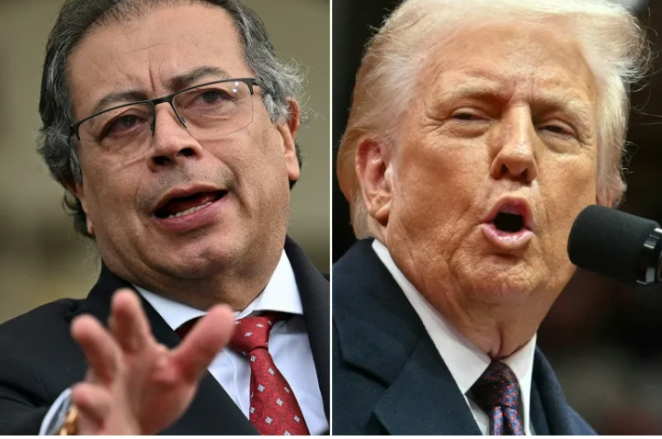
Colombia’s Petro invites Trump to cocaine lab demolition amid attack threat, signaling both defiance and transparency in response to US threats. Colombia’s record of anti-drug success is presented as evidence of its capability and commitment to regional security.
The ongoing tensions underscore the challenges of US-Latin American relations, where drug policy, military posturing, and diplomacy intersect in complex and often contentious ways.
About The Author