The United States has begun relocating parts of its advanced THAAD missile defence system from South Korea to the Middle East, triggering political concern in Seoul and raising fresh security questions across the region.
The move involves elements of the Terminal High Altitude Area Defense system, a powerful missile shield designed to intercept and destroy ballistic threats. American officials confirmed components were being reassigned as Washington strengthens military readiness amid escalating tensions linked to Iran.
South Korea’s government responded cautiously, seeking to calm public anxiety while emphasizing that national defence capabilities remain strong. Officials stressed the country retains layered air and missile defence systems capable of countering threats from North Korea.
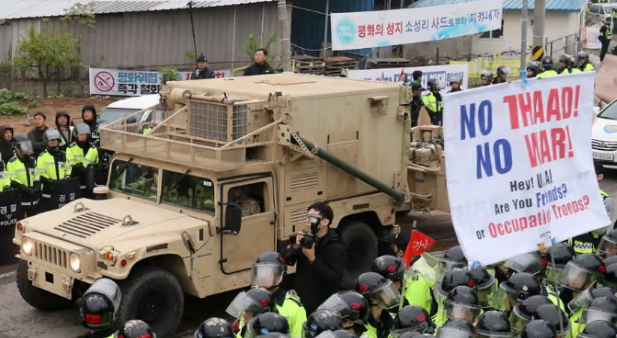
The redeployment revives memories of the controversial 2017 installation of THAAD batteries in Seongju, a rural county that suddenly became central to regional security strategy. At the time, local protests erupted amid fears residents could become targets.
Seoul had defended the original deployment as essential protection against North Korea’s advancing missile technology. The system was jointly operated with US forces stationed in the country under a long-standing bilateral defence agreement.
China and Russia strongly opposed the earlier installation, arguing the system’s powerful radar could monitor their military activities. The diplomatic backlash strained relations between Seoul and Beijing for years.
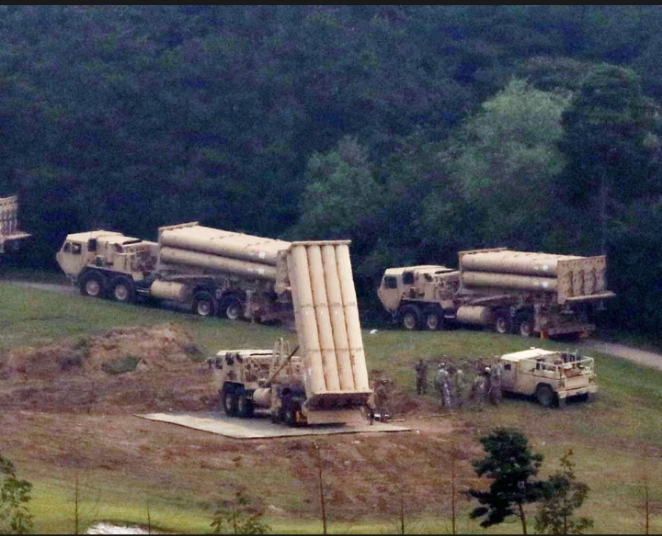
Nearly a decade later, the sudden relocation of missile defence assets is again stirring debate. Critics say it highlights how South Korea’s security infrastructure remains heavily dependent on US strategic decisions.
US defence officials reportedly transferred key THAAD interceptors and associated equipment to reinforce positions in the Middle East. The move follows rising regional instability and fears of wider conflict involving Iran.
Questions have emerged in Seoul about whether the redeployment signals reduced American commitment to East Asian security. Analysts warn perceptions of weakened deterrence could embolden North Korea to escalate military pressure.
South Korea’s president, Lee Jae Myung, sought to reassure citizens that the country’s defensive posture remains intact. He said the adjustments would not significantly undermine readiness against northern threats.
Lee emphasized that South Korea maintains one of the world’s highest defence spending levels relative to its economy. He argued national forces possess independent surveillance and strike capabilities sufficient for deterrence.
The defence ministry acknowledged discussions with Washington regarding potential repositioning of additional missile systems. Reports suggest some Patriot air defence units could also be moved temporarily to support operations elsewhere.
Military officials declined to confirm specific deployments, citing operational security policies. However, South Korean media outlets reported that certain batteries may be redirected toward American bases in Gulf states.
Security experts caution that even limited asset withdrawals may create strategic uncertainty. They note missile defence systems require integrated radar coverage, rapid response coordination, and overlapping interception zones.
Some analysts fear North Korea could interpret the shift as an opportunity to test allied preparedness. Even minor provocations or missile launches could heighten tensions if perceived deterrence weakens.
Regional dynamics extend beyond the Korean peninsula. Japan, another major US ally, is also adjusting to shifting American military priorities as resources flow toward the Middle East.
Japan hosts tens of thousands of US troops across multiple strategic bases. Several naval assets stationed there have reportedly been reassigned to support maritime operations linked to Middle East security efforts.
Political figures in Tokyo have voiced concern that US-based forces might be drawn into prolonged external conflicts. Opposition leaders questioned whether Japanese-hosted units should be used for distant regional wars.
Strategists say Washington faces the challenge of balancing commitments across multiple theatres simultaneously. Competing priorities in East Asia and the Middle East risk stretching military logistics and rapid-response capacity.
For South Korea, the redeployment revives a long-standing policy dilemma: reliance on US extended deterrence versus investment in independent defence architecture capable of functioning without foreign reinforcement.
Conservative commentators argue Seoul must accelerate domestic missile defence programs, satellite surveillance networks, and next-generation interceptor development to reduce vulnerability during allied resource shifts.
Others contend the alliance remains robust and adaptable. They note US forces regularly rotate strategic assets worldwide depending on emerging threats, without necessarily weakening treaty commitments.
Public opinion in South Korea remains divided. Some citizens fear the relocation signals growing unpredictability in US foreign policy, while others see it as a temporary tactical adjustment.
The situation also intersects with evolving geopolitical rivalries involving China, Russia, and North Korea. Any perceived weakening of allied defence structures could reshape strategic calculations across the region.
Despite the unease, officials stress that joint military drills and intelligence-sharing agreements between Seoul and Washington remain fully operational. These mechanisms form the backbone of bilateral defence coordination.
Military planners continue monitoring North Korean activity, including missile tests and submarine developments. Surveillance systems independent of THAAD remain active to ensure early warning coverage.
The redeployment highlights how global conflicts can rapidly influence security dynamics far beyond their immediate theatres. Decisions made in Washington reverberate across allied capitals with strategic consequences.
Diplomatic observers say transparent communication will be essential to reassure partners. Sudden military movements without detailed explanations risk undermining public trust and alliance confidence.
As tensions persist in the Middle East, further adjustments to US global force posture remain possible. Defence analysts expect continued flexibility in asset positioning depending on operational requirements.
For now, South Korea appears focused on projecting stability and preparedness. Leaders aim to prevent adversaries from misinterpreting the shift as a weakening of national or allied defensive resolve.
The episode underscores the interconnected nature of modern security alliances. Regional defence arrangements increasingly operate within a global framework shaped by simultaneous crises and strategic competition.
While the THAAD relocation may be temporary, it has reignited debate about sovereignty, deterrence reliability, and the future structure of US alliances in rapidly shifting geopolitical conditions.
Read also: British Airways halts Middle East flights as Iran-US war escalates
About The Author