Kharg Island remains untouched despite the ongoing US-Israel war on Iran because destroying the terminal could send global oil prices soaring and destabilize energy markets. The island handles about 90% of Iran’s crude exports daily.
Military planners in both the United States and Israel reportedly see the facility as economically sensitive rather than a purely strategic military target. Analysts warn eliminating exports entirely could trigger prolonged supply shocks worldwide.
Energy experts say crude prices could spike dramatically if flows stop through the terminal. Forecasts suggest oil could surge far beyond recent highs, worsening inflation and straining fuel-importing economies already coping with wartime uncertainty and shipping disruptions.
Although thousands of targets have been struck across Iran, oil export infrastructure has largely been avoided. Market fears have still pushed prices upward as tensions threaten tanker routes and maritime insurance costs across critical regional shipping corridors.
Limited Israeli strikes on refineries and storage depots previously disrupted domestic fuel supplies but stopped short of export infrastructure. The absence of further attacks suggests caution among planners concerned about escalating economic consequences beyond immediate battlefield objectives.
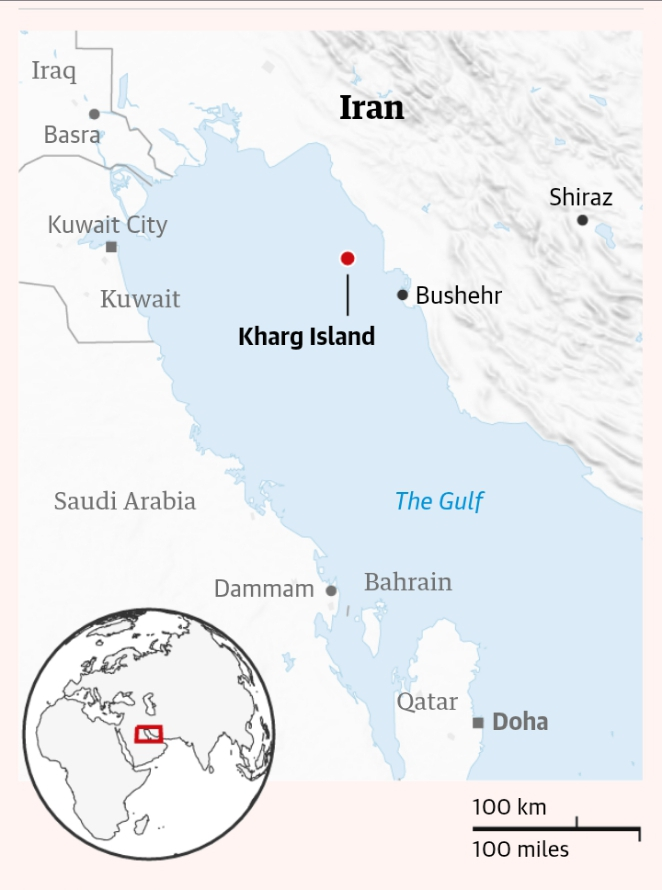
Kharg Island sits in the Persian Gulf near deep-water channels suitable for large tankers, unlike much of Iran’s shallow coastline. Major pipelines from interior oilfields converge there, making it the country’s primary export gateway.
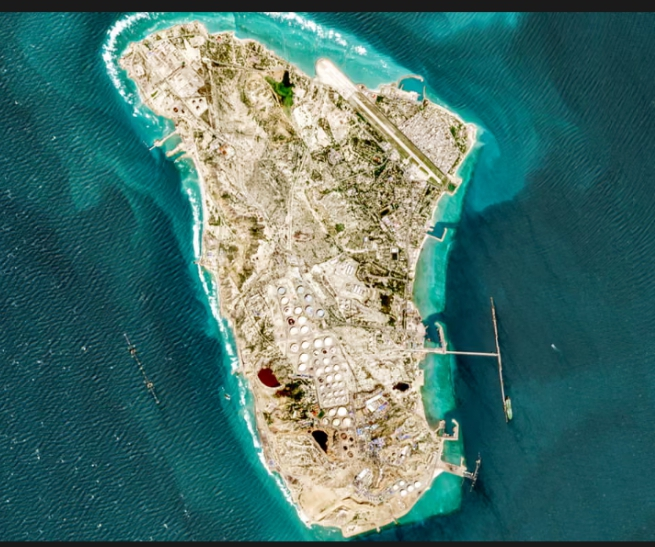
Infrastructure on the island includes extensive loading jetties, storage tanks, and processing facilities capable of moving millions of barrels daily. Satellite imagery shows dense industrial networks highlighting its significance to Iran’s economic stability and government revenues.
Export volumes recently increased as Tehran anticipated possible attacks, attempting to move additional crude before any escalation. Financial analysts note millions of barrels remain stored on site, giving Iran temporary flexibility but increasing the strategic weight of the facility.
Discussion within policy circles has included proposals ranging from disabling operations to physically seizing the island. However, the logistical complexity of mounting and sustaining such an operation makes direct control far more difficult than precision airstrikes.
Some former Western defense officials argue shutting exports could economically paralyze Tehran’s government. Oil revenue underpins public salaries and essential imports, so eliminating sales would rapidly intensify fiscal pressure and internal political strain.
However, global energy interdependence complicates that approach. Even if exports primarily flow to Asia, removing such a large supply volume would tighten worldwide markets, pushing higher fuel prices across Europe, Africa, and the Americas.
Security analysts caution that rebuilding heavily damaged export terminals could take years, meaning economic shockwaves would persist long after active combat subsides. Long-term infrastructure destruction risks reshaping regional trade patterns and investment flows.
Political strategists also warn that destroying core economic assets undermines claims that military operations aim to secure long-term regional stability. A future government inheriting devastated infrastructure would face severe recovery challenges and reduced national revenue.
Seizing territory would require extensive ground forces and maritime protection far exceeding limited special operations missions. Maintaining control would also expose troops to counterattacks, missile strikes, and prolonged insurgent-style resistance operations.
Market observers emphasize that even a temporary halt in exports could cause extreme volatility in commodity exchanges. Traders react sharply to supply uncertainty, amplifying price swings that ripple through manufacturing, transportation, and consumer goods sectors.
Diplomatic considerations further complicate targeting decisions. Major energy-importing nations may resist actions likely to intensify inflation or slow economic growth, adding pressure to avoid steps that could widen global financial instability.
Strategic planners therefore weigh military gains against economic fallout. While neutralizing export capacity could weaken Tehran financially, it may also harm allied economies and reduce international support for continued operations.
For now, the balance of risks appears to favor restraint. As long as wider regional conflict threatens shipping lanes and investor confidence, policymakers appear reluctant to trigger additional shocks tied to deliberate energy infrastructure destruction.
About The Author