US lawmakers pushes urgent White House briefing on the growing genocide against Christians in Nigeria, calling for stronger action and immediate global intervention.
The United States House Appropriations Committee is intensifying its efforts to investigate the genocide against Christians in Nigeria, preparing a comprehensive report for the White House.
The committee disclosed in a recent X post that Representative Riley Moore has led the charge in highlighting the escalating violence targeting Christians across multiple regions of Nigeria.
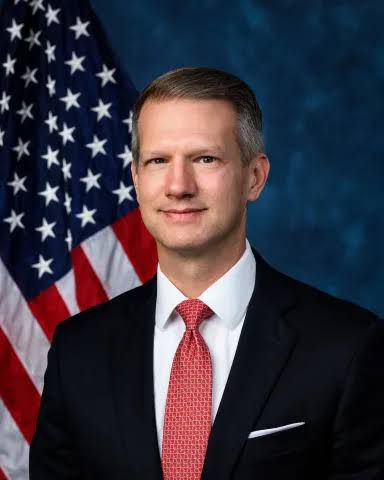
Moore emphasized that these attacks have gone largely unreported and ignored, despite the scale of the crisis.
Subcommittee Chairman Mario Diaz-Balart, working with Moore, confirmed that the FY26 National Security and Related Programs (NSRP) bill reaffirms President Donald Trump’s designation of Nigeria as a Country of Particular Concern (CPC).
The upcoming report is expected to provide detailed recommendations for U.S. policy responses, including potential diplomatic, security, and humanitarian measures to protect affected communities.
President Trump previously announced the redesignation of Nigeria as a CPC on his Truth Social platform, citing what he called an “existential threat” to Christianity in the country.
Trump accused radical Islamist groups of killing thousands of Christians and warned that further U.S. measures, including potential military action, may be considered if the violence continues.
Representative Moore, who heads the investigative committee, criticized the Nigerian government for failing to protect its Christian population despite receiving billions of dollars in U.S. security assistance over the years.
In an interview on the Dinesh D’Souza program, Moore expressed frustration over what he described as global indifference.
“My brothers and sisters in Christ are being murdered for practicing their faith,” he said.
“Years of silence from Nigerian authorities and the international community have allowed this genocide against Christians in Nigeria to continue unchecked.”
Moore warned that Nigeria’s inaction could have severe consequences.
“If extremist groups gain stronger control, the United States will eventually have to intervene,” he stated.
However, he emphasized a preference for cooperative engagement with Nigerian authorities to resolve the crisis peacefully.
“We hope to partner with Nigeria to protect vulnerable communities before the situation escalates beyond control,” Moore added.
The committee highlighted that Nigeria has been equipped with significant U.S. military and security support, including training, equipment, and operational assistance.
Yet, Moore stressed that these resources have not been used effectively to protect Christians from targeted attacks.
“Despite receiving billions in aid, the Nigerian government has failed to prioritize the safety of Christians, leaving them vulnerable to ongoing violence,” he said.
For Moore, this is not only a matter of foreign policy but a moral obligation. He explained that the violence has remained largely “under the radar,” with minimal attention from international media or policymakers.
“This is about defending human lives, not nation-building or political agendas,” he said.
“We must act to protect Christians from being murdered simply for their faith.”
The upcoming report is expected to include a detailed account of specific incidents, regions, and patterns of attacks against Christians in Nigeria.
It will likely recommend a multifaceted U.S. response, including diplomatic pressure, security cooperation, and accountability measures against perpetrators.
President Trump has praised Moore’s efforts. Responding to Trump’s CPC announcement, Moore wrote: “Thank you, President Trump, for your leadership in defending persecuted Christians, especially in Nigeria. Your decisive action will save thousands of lives. I am on it and will provide updates soon.”
This exchange underlines the urgency and high stakes involved in addressing the ongoing crisis.
Experts note that the U.S. designation of Nigeria as a CPC represents a significant shift in policy.
While Washington has historically supported Nigeria through military aid and counterterrorism programs, this public acknowledgment of religious persecution is unprecedented.
By emphasizing the genocide against Christians in Nigeria, the U.S. is sending a strong signal that systematic attacks against religious communities will not be ignored.
Moore reiterated that failure to act could force more direct U.S. intervention.
“We cannot stay silent while thousands of Christians are killed every year,” he warned.
“Global leaders and Nigerian authorities must move beyond statements to tangible action. The world must confront this genocide against Christians in Nigeria now.”
The CPC designation also carries practical implications. It allows the U.S. to impose sanctions, restrict certain aid, and prioritize human rights considerations in bilateral relations.
Moore and other advocates stress that these steps, while essential, are only the beginning.
The committee’s report is expected to call for stronger diplomatic engagement and increased collaboration with international partners to protect Christian communities.
The investigation highlights the broader issue of religious violence in Nigeria, which has claimed thousands of lives and displaced millions over the past decade.
Moore stressed that unless decisive measures are taken, the situation will continue to deteriorate, further entrenching extremist influence in the region.
More news at ireport247news
About The Author