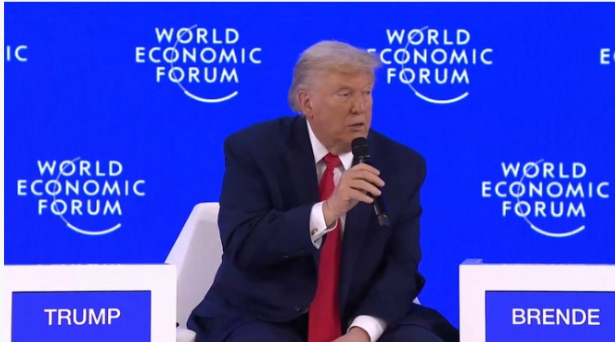
Donald Trump has described Vladimir Putin and Volodymyr Zelensky as “stupid” for failing to reach a peace deal, saying negotiations ahead of US talks are urgent in the ongoing Ukraine-Russia war.
The US president spoke at the World Economic Forum in Davos, stressing that both leaders should prioritize peace over politics. “If they don’t, they are making a huge mistake,” Trump added, highlighting the importance of resolving the Ukraine conflict quickly.
Kyiv faces one of its coldest winters in years, with more than 60 per cent of the city still without electricity and thousands of homes lacking heating.
Russian strikes on Ukraine’s energy infrastructure have left residents struggling to survive in sub-zero temperatures.
President Zelensky confirmed the scale of the crisis, warning that prolonged power outages are worsening humanitarian conditions. The Ukrainian capital continues to reel under repeated attacks on critical utilities, complicating daily life dramatically.
Trump also announced he would meet Zelensky in Switzerland, despite the Ukrainian leader previously stating he could not attend Davos due to the crisis.
The US president emphasized that peace negotiations must proceed, regardless of ongoing violence in Kyiv. “I believe they can come together and get a deal,” he said, reiterating the urgency of diplomatic solutions.
Trump’s comments have reignited debates on international responsibility and the US role in mediating the conflict.
Meanwhile, US special envoy Steve Witkoff confirmed plans to meet Russian President Vladimir Putin in Moscow on Thursday.
The Kremlin welcomed the discussion, which aims to advance talks on Ukraine and Russia, though details remain limited.
Witkoff will also meet Ukrainian officials to coordinate discussions, while Jared Kushner is expected to join as part of the peace delegation. The effort highlights Trump’s continued involvement in international affairs, particularly in Eastern Europe.
The energy crisis in Kyiv continues to escalate as temperatures drop to minus 20°C. Officials report that thousands of buildings remain without heating, and residents face growing hardships.
Humanitarian agencies are providing emergency support, yet the scale of the destruction makes relief challenging.
Russian attacks on Ukraine’s power grid have left millions vulnerable to extreme cold, highlighting the human cost of prolonged military operations.
Communities struggle to maintain essential services amid ongoing bombardments.
Ukraine is increasingly leveraging its combat data to support international partners. The government is offering battlefield intelligence, drone footage, and detailed operational reports to allies to improve artificial intelligence models for defense purposes.
This unprecedented sharing of real-time data is meant to enhance allied capabilities and preparedness.
Analysts say Ukraine’s strategic approach allows other nations to anticipate Russian tactics and refine military responses, strengthening global defense networks.
Finnish President emphasized that Putin’s war has been a strategic failure, noting that Russia’s advance has stagnated and its influence diminished.
European leaders assert that NATO remains robust, and the alliance is expanding with new members, including Finland.
Mark Rutte, NATO Secretary-General, praised efforts to increase defense spending, suggesting that trans-Atlantic cooperation is stronger than critics claim.
Europe is preparing to defend itself against potential Russian aggression, emphasizing resilience in the face of geopolitical threats.
German authorities arrested two suspects, a Russian and a German national, accused of aiding pro-Russian militias in eastern Ukraine. Prosecutors allege the duo supplied medical equipment, drones, and other materials to groups supporting separatists in Donetsk and Luhansk since 2016.
Officials describe the arrests as part of ongoing efforts to disrupt foreign support networks that threaten Ukraine’s stability.
The investigation underscores European vigilance against foreign interference in the Ukraine conflict, while signaling broader security concerns.
Ukraine’s anti-corruption bureau is investigating a former senior presidential aide and an ex-Naftogaz board member over an alleged green energy embezzlement scheme.
Officials claim the suspects submitted fraudulent claims for renewable energy payments from facilities in Russian-occupied territories.
A total of nine individuals have been identified in the investigation. Ukrainian authorities emphasize that corruption undermines both domestic recovery and international support during wartime. The probe highlights the government’s commitment to accountability despite the ongoing conflict.
Trump’s remarks at Davos have drawn mixed reactions, with critics questioning the tone and others welcoming his call for urgent negotiations.
Analysts argue that international diplomacy must balance criticism with constructive engagement to advance peace.
Meanwhile, Zelensky remains focused on stabilizing Kyiv and protecting civilians amid continued Russian attacks.
Diplomatic channels remain active, though uncertainty persists regarding the timing and outcomes of upcoming meetings in Switzerland and Moscow. The world watches closely as leaders seek a breakthrough.
Power outages and harsh weather have amplified civilian suffering in Ukraine, with humanitarian agencies warning of worsening conditions.
Food distribution, medical services, and emergency response are severely disrupted. International organizations are urging governments to provide rapid aid and infrastructure support.
Residents rely on community shelters and local initiatives to endure sub-zero nights. The winter crisis demonstrates the intersection of warfare and climate, complicating relief efforts and testing Ukraine’s resilience.
Trump’s peace initiatives involve multiple stakeholders, including US envoys, Israeli advisors, and European partners.
Coordination aims to reconcile Ukrainian and Russian demands while addressing humanitarian concerns.
Observers highlight that diplomatic engagement must navigate entrenched positions, ongoing military operations, and international legal considerations. The upcoming meetings in Moscow and Switzerland could determine the trajectory of the conflict.
Negotiations remain fragile, reflecting the complexity of resolving wars with deep geopolitical implications.
Experts suggest that successful peace talks would require compromises on security guarantees, territorial control, and energy infrastructure restoration.
Ukraine insists on retaining sovereignty and international support, while Russia seeks concessions to secure influence in contested regions.
Trump’s efforts aim to bridge these gaps, though skepticism remains high. The involvement of multiple international actors adds pressure to achieve tangible outcomes. Failure could prolong conflict, heighten civilian suffering, and destabilize the broader region.
Kyiv continues to document the impacts of Russian attacks on essential services. Reports indicate that millions have experienced power disruptions, infrastructure damage, and logistical obstacles in accessing aid.
Ukrainian authorities are prioritizing reconstruction and emergency response, yet resources are strained.
The winter cold exacerbates the situation, prompting appeals for international assistance.
Observers warn that continued attacks on civilian infrastructure may constitute violations of international law. Ukraine’s resilience is being tested as both military and humanitarian crises unfold simultaneously.
The conflict has also spurred technological and intelligence innovation. Ukraine’s sharing of combat data with allies enables AI-driven defense strategies, real-time tactical simulations, and better prediction of enemy movements.
These advances may influence future warfare, defense policy, and international cooperation.
Military analysts argue that leveraging data intelligence could offset resource disparities and improve operational efficiency.
Ukraine’s approach demonstrates how modern conflicts increasingly integrate technology alongside conventional military engagement.
Trump emphasized the urgency of negotiation, warning that failure to reach a deal would prolong hostilities unnecessarily. He reiterated that both Putin and Zelensky bear responsibility for seizing diplomatic opportunities.
The former president’s comments aim to pressure leaders into decisive action while reinforcing the importance of international mediation.
Critics argue that rhetoric alone cannot substitute for comprehensive peace strategies, yet the message highlights the stakes.
Achieving agreement requires balancing military, political, and humanitarian considerations simultaneously.
As Europe strengthens defense capabilities, NATO leaders stress preparedness in light of Russian aggression.
Finland’s president reaffirmed confidence in collective defense mechanisms, signaling continued deterrence against potential attacks.
Cooperation between trans-Atlantic partners ensures readiness and operational resilience. Strategic expansion, intelligence sharing, and investment in military infrastructure contribute to regional security.
Analysts argue that Ukraine’s conflict has galvanized NATO, creating opportunities for improved coordination and alliance modernization, ultimately strengthening collective defense.
The humanitarian impact of the war is severe, with civilians facing cold winters, electricity loss, and disrupted essential services. International relief organizations call for urgent interventions to prevent further suffering. Aid efforts must navigate ongoing hostilities, damaged infrastructure, and logistical constraints.
Coordination among governments, NGOs, and local communities is critical to meet immediate needs. The situation underscores the intersection of military conflict, environmental challenges, and human welfare, emphasizing the urgency for sustainable solutions.
Peace negotiations remain the most critical path forward. Witkoff’s meeting with Putin, Trump’s engagement with Zelensky, and involvement from international advisors signal active diplomacy.
However, progress is contingent on mutual willingness to compromise and prioritize humanitarian considerations. Analysts caution that without concrete agreements, the conflict risks prolongation.
Simultaneously, Ukraine’s strategic sharing of combat intelligence supports allied preparedness and reinforces the importance of data-driven defense measures in modern warfare.
Read also: Spanish rail disaster survivor: six-year-old girl emerges as sole family survivor
The world continues to watch as leaders balance military realities with diplomatic ambitions. Ukraine’s struggle for survival amid harsh winter conditions, ongoing Russian attacks, and infrastructure collapse highlights the urgent need for resolution.
International actors must navigate a complex geopolitical landscape while addressing civilian suffering. The upcoming meetings in Moscow and Switzerland could provide pivotal momentum toward peace, though uncertainty remains.
Effective diplomacy, combined with humanitarian assistance, is essential for stability in the region.
About The Author