The Spanish rail disaster survivor at the centre of national mourning is a six-year-old girl who lived while her entire family perished during Spain’s worst rail tragedy.
Authorities confirmed the child survived a catastrophic collision between two trains in southern Spain, an accident that claimed forty-two lives and shocked the nation deeply.
The young girl had been travelling with her parents, brother, and cousin after a celebratory family trip to Madrid, marking a holiday filled with joy.
Officials said the family had attended a popular musical performance and visited a famous football stadium before boarding the train homeward together.
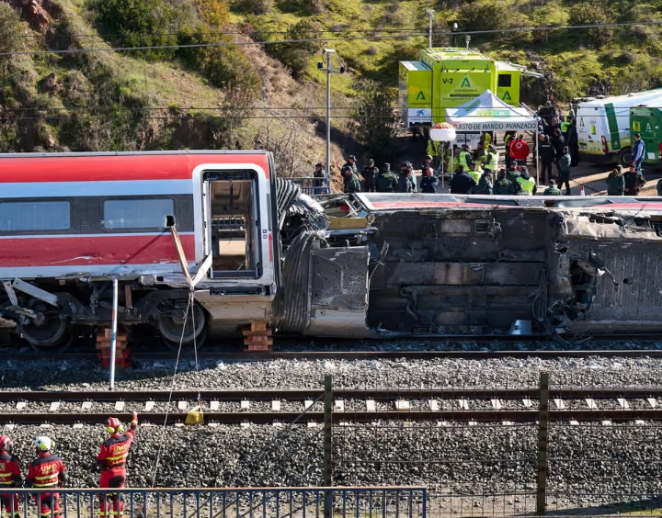
The return journey ended abruptly when two trains collided near the town of Adamuz, in Andalucía’s Córdoba province, triggering widespread devastation and emergency responses.
Rescue teams later discovered the child walking alone along the railway tracks, confused but conscious, having sustained only a minor head injury.
Medical workers described her condition as stable, emphasizing how remarkable her survival appeared amid wreckage that left dozens dead and many others critically injured.
Spanish media reports identified the girl as the sole survivor from her household, though her name remains withheld to protect her privacy.
Local officials said the family lived in Aljaraque, a coastal town near Huelva, where residents struggled to absorb the scale of the loss.
Adrián Cano, the mayor of Aljaraque, said the community was “broken with grief and almost without words,” reflecting widespread shock across the town.
The girl’s survival quickly became symbolic during Spain’s national mourning, prompting tributes, vigils, and messages of solidarity from across the country.
José Carlos Hernández Cansino, mayor of nearby Punta Umbría, called the child’s survival “a miracle” during an emotional television interview.
“We hoped we would not receive such confirmation,” he said, recalling the moment authorities learned the missing family members had died.
Emergency services confirmed the child spent the night under police care before being reunited with her grandmother at a Córdoba hospital.
Hospital officials said trained officers stayed beside her to provide reassurance while doctors monitored her condition overnight.
Spain’s Queen Letizia later visited injured passengers receiving treatment, speaking quietly with families affected by the disaster.
Photographs from the visit showed a solemn atmosphere as medical staff continued treating survivors from multiple regions.
The high-speed train involved had been travelling from Málaga to Madrid when it derailed near Adamuz.
Investigators said the train crossed onto another track before colliding with an oncoming service heading from Madrid to Huelva.
Transport authorities launched a full inquiry, focusing on track conditions, signalling systems, and operational decisions preceding the collision.
Rail unions noted previous concerns raised by drivers regarding infrastructure safety, though officials cautioned against premature conclusions.
As recovery operations continued, emergency crews worked carefully to retrieve remaining victims from damaged carriages.
Families gathered nearby, awaiting news, many holding photographs and sharing stories of loved ones lost in the tragedy.
One father told Spanish television his pregnant daughter remained in intensive care with serious injuries sustained during the collision.
Doctors reportedly placed her under sedation while monitoring the unborn baby’s heartbeat, offering cautious hope to relatives.
Another passenger’s sister described escaping with lighter injuries while firefighters pulled unconscious survivors from wreckage-filled carriages.
She said passengers smashed windows to escape, helping one another amid confusion, smoke, and debris scattered across the tracks.
Relatives also reported a family dog went missing during the crash, adding further anguish to already devastated households.
Spain declared three days of national mourning, lowering flags and holding moments of silence across public institutions nationwide.
Prime Ministerial statements expressed condolences, calling the event a “national tragedy” and pledging transparency throughout the investigation.
Rail safety experts emphasized the need for swift findings to restore public confidence in Spain’s high-speed rail network.
The Spanish rail disaster survivor became a focal point in public discussions about fate, resilience, and the fragility of ordinary journeys.
Psychologists said long-term support would be essential for the child, given the scale of trauma and sudden loss experienced.
Community leaders pledged continued assistance for affected families, including counselling, financial help, and memorial events.
Candlelit vigils were held in Aljaraque and Madrid, with residents laying flowers and handwritten notes near train stations.

Many messages referenced the surviving child, expressing hope she would one day find strength despite unimaginable loss.
Investigators stressed the inquiry would take time, urging patience as technical data and witness testimony are reviewed carefully.
Spain’s rail operator said cooperation with authorities remains complete, while safety reviews across the network continue.
For now, the story of the Spanish rail disaster survivor stands as a reminder of tragedy, survival, and national solidarity.