Ukraine farmers face mounting pressure
Ukraine farmers face crisis as Russia’s Black Sea blockade disrupts exports, leaving grain storage facilities increasingly full while farmers struggle to generate enough revenue for fuel, wages, debts and future planting.
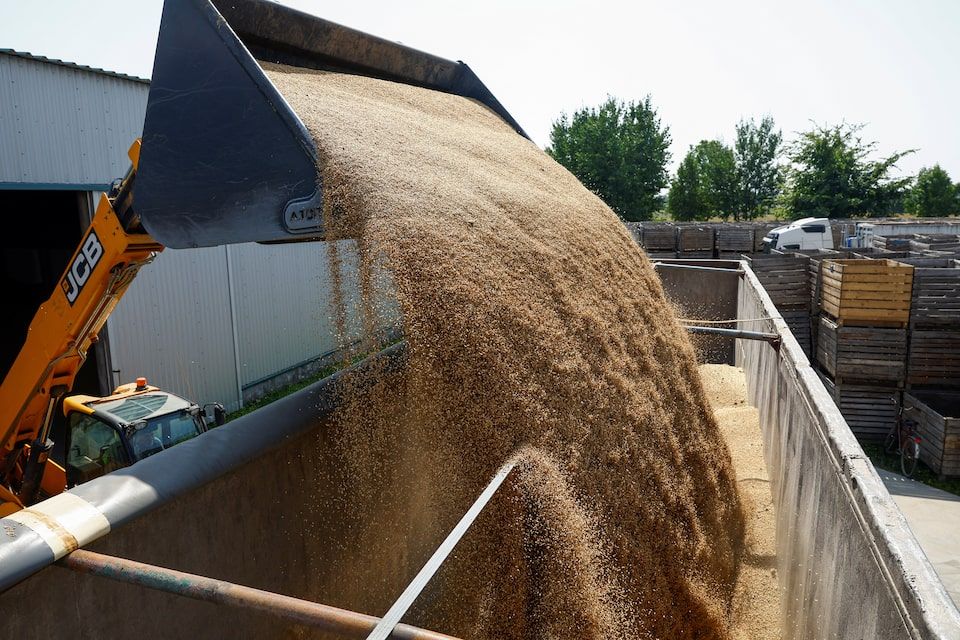
The pressure comes at the height of Ukraine’s wheat harvesting season, with farmers preparing for the corn harvest next month and increasingly worrying about where their crops can actually go.
Ukraine remains one of the world’s major producers of wheat, corn and sunflower seeds, while roughly 90% of its crop exports traditionally move through Black Sea routes.
The latest disruption has therefore created a major challenge for an agricultural industry that remains crucial to Ukraine’s wartime economy and its ability to generate foreign currency through international food sales.
According to , Ukrainian grain exports fell by 75% year-on-year during the first two weeks of August as Russian attacks severely disrupted Black Sea shipping infrastructure.
Farmers struggle with overflowing storage
For farmer Serhiy Rybalko, the situation has become increasingly difficult because his storage facilities are nearly full while buyers have become reluctant or unable to purchase additional grain.
“There is nowhere to send this grain,” Rybalko said, describing the situation as “a complete disaster for farmers” as the harvest continues despite worsening export difficulties.
Rybalko previously supplied grain to major Ukrainian exporter Nibulon and local processing facilities, but he said those sales channels have effectively stopped, leaving his business without reliable revenue.
“Everything has just stopped. Finances have ground to a halt. Revenue streams have dried up. There are no exports,” he said, describing the devastating financial consequences of the blockade.
The farmer also faces significant financial obligations after borrowing heavily to rebuild his agricultural operation following the destruction and disruption caused by Russia’s invasion.
He estimates that his farm needs about 20 million hryvnias, equivalent to roughly $447,000, every month during harvest season to cover loans, wages and fuel.
Without sufficient income, farmers could struggle to finance autumn fieldwork, purchase agricultural inputs and prepare land for winter crops, creating another problem beyond the immediate export disruption.
Black Sea blockade threatens Ukraine’s economy
Agriculture is one of the foundations of Ukraine’s economy, accounting for almost 60% of the country’s export revenues and providing essential foreign currency during the ongoing war.
The disruption is therefore not simply an agricultural problem, because prolonged export restrictions could weaken government finances, reduce rural incomes and increase pressure on Ukraine’s already fragile wartime economy.
Ukraine expects to harvest approximately 60 million tonnes of grain this year, broadly matching last year’s production, but the abundance could become a liability without sufficient storage and export capacity.
Domestic grain prices have fallen sharply as supplies accumulate, even while international benchmark prices have increased because global markets are becoming increasingly concerned about possible shortages.
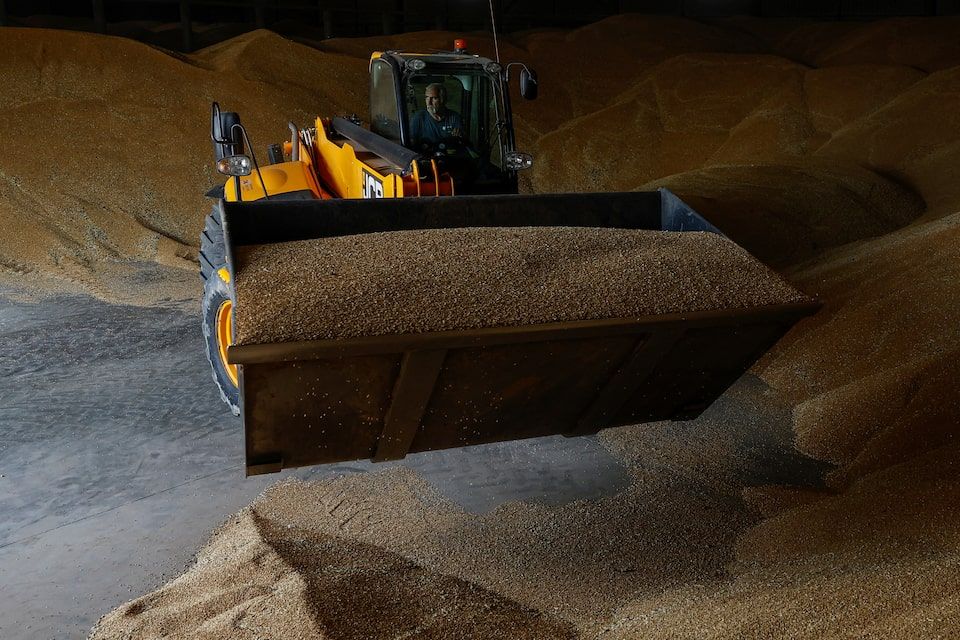
Farmers are consequently facing an unusual situation where production may be strong, yet the financial return from harvesting crops remains dangerously weak because transportation and export opportunities have deteriorated.
Denys Marchuk of Ukraine’s main farmers’ union warned that Ukraine supplies approximately 6% of global wheat and 11% of global corn, making continued disruption potentially significant for importing countries.
He warned that delays could create food shortages in some import-dependent countries across Africa and the Middle East, regions that rely heavily on Ukrainian agricultural commodities.
Alternative routes are becoming harder
Ukraine previously responded to Black Sea disruptions by moving agricultural products through roads and railways crossing western borders, but those alternatives are now facing significant limitations.
Relations with neighbouring Poland have deteriorated over agricultural competition, while stricter European Union trade arrangements have further complicated efforts to redirect enormous quantities of Ukrainian grain.
Lower water levels on the Danube have also created logistical difficulties, while Russian strikes against Ukrainian railway infrastructure have reduced another important option for moving agricultural products.
Economist Oleh Nivievskyi warned that Ukraine must prepare for the possibility that the economic consequences of the current port blockade could become as severe as, or worse than, previous disruptions.
The country’s central bank estimates that Ukraine could lose approximately $2.5 billion in hard-currency revenues during the remaining months of the year because of the blockade.
Ukraine’s farmers could additionally suffer around $3 billion in losses from increased logistics costs, according to the farmers’ union, while the agricultural sector’s wartime losses have already surpassed $90 billion.
Next year’s harvest could be threatened
The most serious concern may extend beyond the grain currently sitting inside Ukrainian storage facilities, because farmers need immediate income to finance the planting cycle that will determine next year’s harvest.

Without adequate revenue from this year’s crops, agricultural businesses could struggle to purchase fuel, pay employees, acquire seeds and fertiliser, and prepare fields for winter planting.
The potential consequences are especially serious because Ukraine’s cultivated farmland has already declined by nearly a quarter due to fighting, mines, shelling and insufficient irrigation.
The government has introduced emergency support measures, including expanded state lending programmes, easier borrowing requirements and lower interest rates for working-capital loans.
However, many farmers argue that additional assistance is needed because emergency financing cannot completely compensate for lost export markets, collapsing domestic prices and dramatically higher transportation costs.
Farm director Felix Fyodorov described the contradiction facing Ukrainian agriculture, saying the harvest and wheat production were “almost twice as good” compared with last year, while prices were “half of what they were”.
For farmers such as Rybalko, the immediate challenge is surviving long enough to plant again, with some producers already selling wheat below desirable prices simply to raise cash for diesel and other essential expenses.
The crisis therefore risks creating a damaging cycle in which farmers cannot profit from successful harvests, cannot adequately finance future planting, and eventually produce less food because they lack resources.
“If Ukraine does not sow its crops today,” one farmer warned, the country could face “a real food crisis” within a year if winter crops and spring preparations are abandoned.
Global food markets face another warning
The disruption also comes as global food markets face pressure from extreme heat, geopolitical conflicts and supply uncertainties, making Ukraine’s reduced exports particularly significant for vulnerable importing countries.
Read also: Trump Air Force One switch sparks security questions
Russia and Ukraine remain important agricultural exporters, meaning further escalation around Black Sea shipping could influence international prices and increase food-security concerns across several regions.
For Ukraine, however, the crisis is more immediate and personal: farmers must find buyers, storage space and transportation while simultaneously financing the next agricultural cycle.
Unless alternative export routes are expanded and Black Sea shipping becomes more reliable, Ukraine farmers face crisis with potentially serious consequences for businesses, workers, government revenues and global food supplies.
Meta description: Ukraine farmers face crisis as Russia’s Black Sea blockade disrupts grain exports, depresses prices, threatens harvest financing and raises fears over next year’s food production.
About The Author