The Strait of Hormuz blockade fuels Gulf anger as economies across the Middle East suffer severe disruption following the outbreak of war between the United States, Israel and Iran. Gulf states say they are bearing the consequences of a conflict they did not start.
An uneasy quiet now hangs over the industrial port city of Ras Al Khaimah in the United Arab Emirates. Normally a busy maritime hub, the port has fallen silent as ships remain docked amid growing fears.
Hundreds of oil tankers have formed a backlog in the surrounding waters, waiting for safe passage. The normally busy shipping lanes leading toward the Arabian Sea have become one of the most dangerous waterways in the world.
The crisis intensified when Iranian missiles targeted two oil tankers heading toward the strait earlier this week. One vessel caught fire after the strike, raising alarm across regional shipping networks.
The danger spread further on Saturday when a drone attack targeted the oil terminal in Fujairah, the UAE’s main oil port on its eastern coast. Thick black smoke could be seen rising from the facility.
These incidents are among many consequences faced by Gulf countries as the regional conflict expands. Governments across the Gulf say they attempted to prevent the war before it began.
For decades, countries such as Bahrain, Kuwait, Saudi Arabia, Qatar, Oman and the United Arab Emirates have hosted US military bases or allowed access to strategic infrastructure.
In exchange, Washington has acted as the region’s most powerful military partner and security guarantor. Gulf states have also spent billions purchasing American weapons systems and defence technology.
However, the latest conflict has created tensions in that long-standing partnership. Analysts say Gulf leaders increasingly question whether their alliance with the United States adequately protects their interests.
Khaled Almezaini, an associate professor of politics and international relations at Zayed University in Abu Dhabi, said the Gulf states attempted to avoid this scenario.
“The perceived Iran threat to the Gulf only became a reality when the US declared the war – Iran did not fire first,” Almezaini said.
He added that while Gulf countries condemn Iranian attacks, they also send a clear message to Washington and Israel that the conflict must end.
“There is strong condemnation of the Iranians but at the same time there’s a message to the Americans and the Israelis that, well, we have to find a way to end this. This is not our war,” he said.
In the weeks leading up to the strikes on Iran, Gulf leaders reportedly hosted diplomatic negotiations aimed at avoiding escalation.
They warned the US president about the severe consequences the region could face if military action began against Iran.
Despite those warnings, the strikes went ahead, and many observers believe they occurred without full consultation with Gulf allies.
While Gulf governments expected retaliation from Iran, the scale of the response has shocked regional officials.
Iran has launched thousands of drones and missiles targeting airports, oil facilities, military bases, ports and commercial infrastructure throughout the Gulf.
Tehran reportedly took these steps even after Gulf states assured Iran their territory would not be used to launch attacks.
Air defence systems across the region have intercepted many incoming drones and missiles. However, the cost of intercepting these attacks has been extremely high.
Officials estimate that air defence systems and interceptors are costing countries such as the United Arab Emirates more than $2bn.
The war has also devastated aviation operations throughout the Gulf region.
Airports have reduced flights, while airlines have lost billions of dollars due to disrupted routes and security concerns.
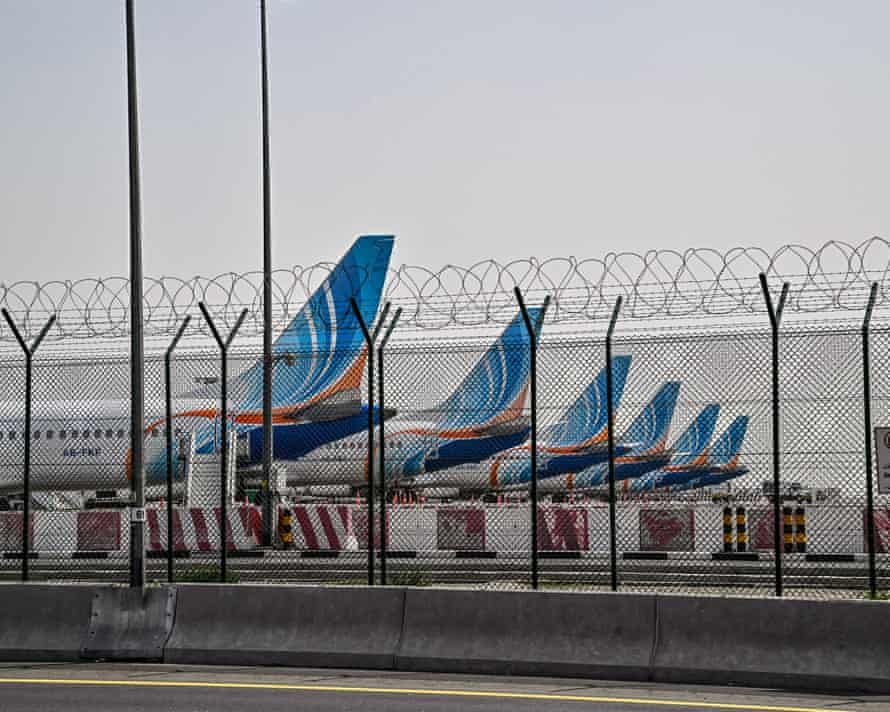
Dubai International Airport, one of the world’s busiest aviation hubs, has seen aircraft grounded during the conflict.
Tourism and investment sectors have also suffered. The United Arab Emirates has long promoted itself as a safe haven for international business and tourism.
But the outbreak of regional warfare has damaged that reputation significantly.
Bahrain is reportedly facing a worsening economic crisis as the conflict continues to disrupt commerce and financial flows.
The most severe economic shock, however, stems from Iran’s blockade of the Strait of Hormuz.
The narrow sea passage is the only maritime route linking the Persian Gulf to the open ocean.
Around one fifth of the world’s oil and gas shipments normally pass through the strait.
Iran’s blockade has drastically reduced energy exports from Gulf states that depend heavily on oil revenues.
Experts estimate the region is losing between $700m and $1.2bn every day due to disrupted oil shipments.
Almezaini said Gulf governments warned Washington that this exact scenario could occur.
“The UAE and GCC tried to stop the United States declaring this war because they knew the implications,” he said.
He pointed out that Iran’s foreign minister had earlier warned the strait could be closed if war erupted.
“Now that exact scenario is playing out,” Almezaini said.
Security analysts say the crisis has exposed the imbalance in the Gulf’s military relationship with the United States.
Allison Minor, director of the Atlantic Council’s project on Middle East integration, said the war has raised fundamental questions.
“The most fundamental question is one of consultation,” Minor said.
“Are the Gulf states actually achieving the kind of partnership and security support that they feel is necessary if the United States is going to engage militarily in the region?”
The issue of consultation has become a major point of concern among Gulf leaders.
Many feel they were not adequately consulted before Washington launched strikes on Iran.
The conflict has also revived memories of previous incidents that strained regional alliances.Only months earlier, Israel carried out airstrikes on Qatar, another US ally in the Gulf.
Those attacks did not trigger significant response from Washington, which analysts say further unsettled Gulf governments.
Diplomatic tensions intensified when Oman’s foreign minister publicly criticised the US and Israeli strikes.
Badr bin Hamad al Busaidi said the attacks violated international law.
“Oman’s view is that the military attacks against Iran by the United States and Israel are illegal,” he said.
Read also: Canada plans Arctic military bases after Trump threatens ‘51st state’ and Greenland takeover
He added that continued hostilities mean the states responsible for launching the war are breaching international law.
Al Busaidi also argued that the decision to strike Iran occurred while diplomatic negotiations over Tehran’s nuclear programme were making progress.
According to him, the war appears to be an attempt to reshape the Middle East in Israel’s strategic favour.
Despite their anger, Gulf states now face a complicated strategic dilemma.
They want to reduce tensions and bring the conflict to an end.
At the same time, some leaders believe the United States must ensure Iran is not left as a destabilised power in the region.
A weakened but hostile Iran, they fear, could create long-term security threats.
Sanam Vakil, director of the Middle East and North Africa programme at Chatham House, described the situation as a nightmare for Gulf governments.
“This is the Gulf’s worst nightmare,” Vakil said.
“There’s deep anger and frustration at the United States because this is not their war, and yet they’re bearing the brunt.”
Vakil explained that Gulf countries had long hoped to build a security partnership with the United States similar to Israel’s close alliance with Washington.
However, the latest crisis suggests such a relationship may never fully materialise.
Still, Gulf states remain heavily dependent on the United States for military protection.
Building alternative security partnerships would take many years.
As a result, analysts say Gulf governments may gradually pursue greater strategic autonomy.
This approach could include diversifying defence partnerships and strengthening regional cooperation.
Vakil said such changes had already been under discussion before the conflict began.
The war, however, may accelerate that process.
“The Gulf is not going to move quickly, nor can they, in finding alternatives to the US,” she said.
“But they’re also not going to just double down with an unreliable partner.”
While geopolitical tensions dominate headlines, the conflict has also disrupted ordinary lives across the region.
Workers in tourism, shipping and maritime industries are facing severe income losses.
Sumon, a 27-year-old employee at a boat and jetski rental company near Ras Al Khaimah’s marina, described the situation as devastating.
“For many days, our boats and jetskis aren’t allowed to go out because of all these problems and fighting with Iran in the sea,” he said.
Without customers, businesses have struggled to stay afloat.
Employees like Sumon worry about how long they can survive without steady income.
“It’s very bad news, we don’t have customers and my boss can’t give me a salary,” he said.
Looking across the harbour toward the silent port, Sumon pointed to the empty waters.
“No boats are moving any more,” he said.
“No one knows when it will end.”
About The Author