


The “UK Strait of Hormuz meeting” has emerged as a central diplomatic effort to address the growing crisis caused by the closure of one of the world’s most critical energy corridors.
Leaders from dozens of countries are expected to participate in coordinated discussions aimed at restoring stability and ensuring the safe passage of global oil and gas supplies.
The initiative reflects mounting international concern over the economic and strategic consequences of prolonged disruption in a region vital to global energy security.
The “UK Strait of Hormuz meeting” comes amid escalating tensions linked to the ongoing US-Israel war on Iran, which has significantly impacted maritime operations.
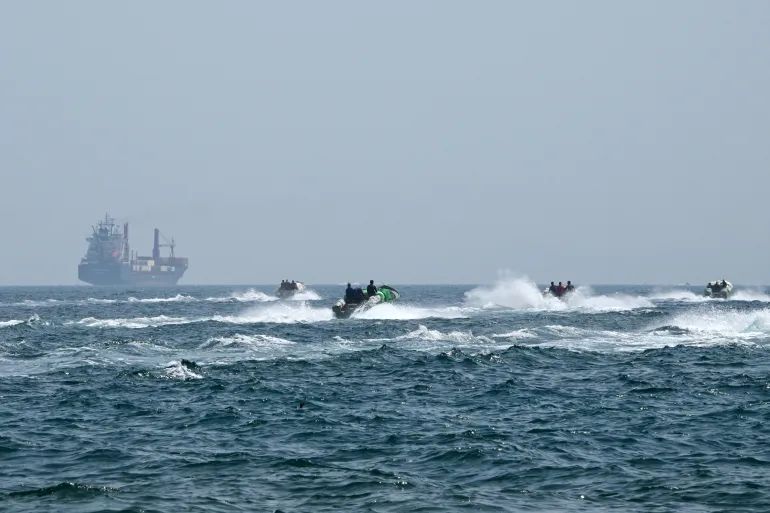
The closure of the strait has effectively halted a substantial portion of global energy shipments, triggering alarm across financial markets and energy-dependent economies worldwide.
Governments are increasingly recognising the urgency of collective action to mitigate risks and stabilise supply chains affected by the ongoing conflict.
Officials organising the meeting emphasise that diplomatic coordination will be essential in developing a unified response to the crisis and its broader implications.
Participants are expected to explore a range of strategies, including political negotiations, economic measures, and security arrangements to reopen the vital shipping route.
The “UK Strait of Hormuz meeting” will also examine how best to protect vessels currently stranded or at risk within the affected maritime zone.
Ensuring the safety of seafarers and commercial shipping has become a priority as uncertainty continues to disrupt normal trade operations.
The situation highlights the vulnerability of global infrastructure to geopolitical conflicts, particularly in regions that serve as critical transit points for essential resources.
Energy analysts warn that sustained disruption could lead to long-term structural changes in global supply networks and pricing mechanisms.
The “UK Strait of Hormuz meeting” therefore represents more than an emergency response; it is a strategic effort to prevent deeper economic fallout.
Countries involved are also expected to consider the role of military planning in supporting post-conflict stabilisation and ensuring secure navigation routes.
Such discussions may include coordination of naval assets and surveillance capabilities to maintain safety once hostilities subside.
However, leaders have cautioned that reopening the strait will not be straightforward, given the complexity of the ongoing conflict and regional dynamics.
The “UK Strait of Hormuz meeting” must therefore balance immediate practical solutions with longer-term considerations about regional security and stability.
Political tensions between major powers continue to complicate consensus-building, particularly regarding the appropriate level of intervention.
Some nations advocate for a cautious diplomatic approach, while others support more assertive measures to secure maritime routes and protect economic interests.
The meeting is expected to reflect these differing perspectives, highlighting the challenges of achieving unified action among diverse international stakeholders.
The “UK Strait of Hormuz meeting” also underscores the interconnected nature of global economies, where disruptions in one region can have widespread consequences.
Energy-importing countries have been particularly affected, facing rising costs and increased uncertainty in securing reliable supplies.
In response, some governments have begun releasing strategic reserves in an attempt to stabilise domestic markets and reduce immediate pressures.
Despite these measures, experts warn that such interventions provide only temporary relief if the underlying conflict remains unresolved.
The “UK Strait of Hormuz meeting” aims to address these underlying issues by fostering cooperation and exploring pathways toward de-escalation.
Diplomatic engagement remains a key focus, with efforts to encourage dialogue between conflicting parties and reduce the likelihood of further escalation.
At the same time, military preparedness is being considered as a contingency to ensure rapid response capabilities if conditions deteriorate further.
The dual-track approach reflects the complexity of the crisis, requiring both negotiation and readiness to manage evolving risks effectively.
The “UK Strait of Hormuz meeting” is also seen as a test of international cooperation in responding to global crises with shared economic implications.
Observers note that the effectiveness of the meeting will depend on the willingness of participating nations to commit resources and align strategic priorities.
Past efforts to coordinate responses to similar disruptions have faced challenges due to competing national interests and geopolitical rivalries.
Nevertheless, the urgency of the current situation may drive greater collaboration than previously observed in comparable circumstances.
The “UK Strait of Hormuz meeting” has therefore become a focal point for assessing the capacity of global institutions to manage complex crises.
Its outcomes could influence future approaches to securing critical infrastructure and responding to geopolitical disruptions in interconnected systems.
Economic analysts continue to monitor developments closely, recognising that decisions made during the meeting could shape market trends and investor confidence.
The energy sector, in particular, remains highly sensitive to signals regarding supply stability and geopolitical risk.
The “UK Strait of Hormuz meeting” may provide such signals, offering insights into potential timelines for reopening the strait and restoring normal operations.
However, uncertainty remains high, with outcomes dependent on both diplomatic progress and developments on the ground in the conflict zone.
The humanitarian dimension also remains significant, as disruptions to trade and infrastructure indirectly affect populations across multiple regions.
Access to essential goods and services can be impacted by prolonged instability, compounding the broader consequences of the crisis.
The “UK Strait of Hormuz meeting” therefore carries implications beyond economics and security, touching on global welfare and stability.
Read also: Artemis II Moon launch crowds excitement as NASA prepares historic crewed mission
Leaders participating in the discussions are expected to consider these broader impacts when shaping their strategies and policy responses.
Balancing national interests with collective responsibility will be critical in determining the effectiveness of any proposed solutions.
The “UK Strait of Hormuz meeting” ultimately represents a coordinated attempt to navigate one of the most complex geopolitical challenges in recent years.
Its success or failure may define how the international community responds to similar crises in the future.
As discussions unfold, the world will be watching closely for signs of progress toward restoring one of the most vital arteries of global trade.
In this context, the “UK Strait of Hormuz meeting” stands as a crucial moment in efforts to stabilise the global economy and manage escalating geopolitical tensions.
About The Author
