

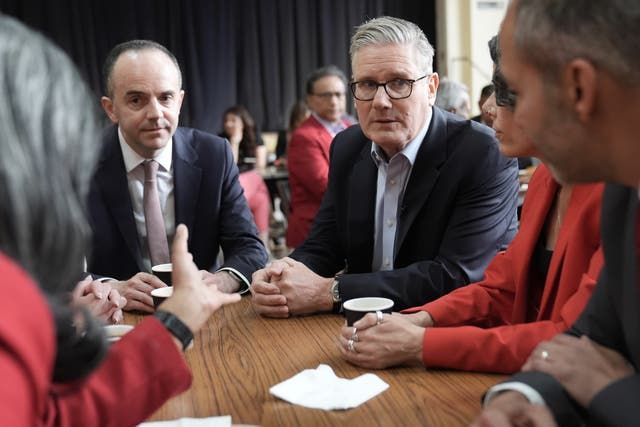
The UK Local Election Results 2026 delivered a major political shock on Friday as Prime Minister Keir Starmer vowed not to resign after Labour party lost control of eight councils amid a strong surge for Reform UK led by Nigel Farage.
With counting continuing across England, Scotland and Wales, Labour has suffered significant losses in key areas, while Reform UK has emerged as one of the biggest winners of the elections.
Starmer Faces Pressure After Labour Council Losses
Sir Keir Starmer acknowledged that the results were “very tough” but insisted he would remain in office despite growing pressure from within his party and opposition critics.
Speaking to Labour members, Starmer said:
“These are tough results but tough days like this, they don’t weaken my resolve to deliver the change that I promised at the general election.”
He also admitted that Labour had failed to convince voters that improvements were being delivered quickly enough since taking office.
Labour is projected to have lost hundreds of councillor seats nationwide, with analysts suggesting total losses could exceed 1,500.
Key Labour Strongholds Lost
Labour suffered major setbacks in traditional strongholds including Hartlepool and Tameside.
In Hartlepool, Reform UK won all 12 contested seats, ending Labour’s control of the council entirely. Local MP Jonathan Brash reportedly called for Starmer to set out a clear leadership timetable.
In Tameside, Labour lost 14 of the 15 seats it was defending in a dramatic collapse in support within a historically loyal area.
These results have intensified debate within Labour about the party’s direction and leadership stability.
Reform UK Surge Reshapes Political Landscape
The standout story of the election has been the rapid rise of Reform UK.
Read also: Trump halts Project Freedom after Saudi Arabia blocks Strait of Hormuz operation
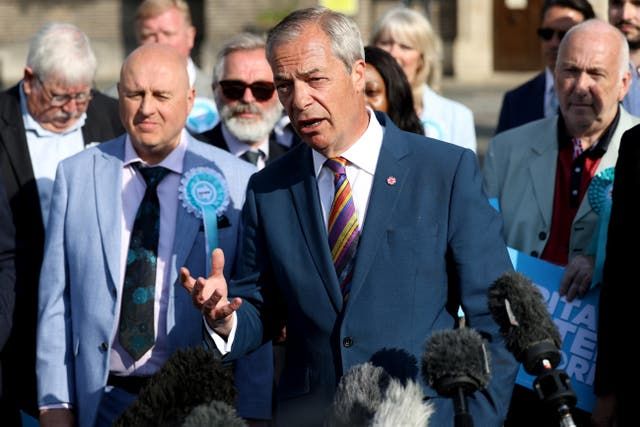
Nigel Farage declared that Britain is experiencing a “historic shift in British politics” after Reform secured more than 300 council seats and gained control of multiple local authorities.
Reform also won Havering Council in east London, marking its first victory in a London borough.
Farage said:
“This is now the most national of all parties.”
He argued that Reform UK is now competing strongly in both former Conservative and traditional Labour areas, signalling a major realignment in British politics.
Experts Warn of Political Fragmentation
Political analyst John Curtice said the results point to a “fracturing of British politics.”
He noted that no single party is currently dominating across the country, suggesting a continued shift away from the traditional two-party system.
Results Still Coming Across the UK
Counting continues across councils in England, as well as parliamentary and devolved elections in Scotland and Wales.
Further Labour losses remain possible as more areas declare results, while Reform UK is expected to continue pushing for gains in key battleground regions.
Political observers say the outcome of the UK Local Election Results 2026 could reshape strategies ahead of the next general election, with both Labour and Reform UK adjusting their national messaging in response to voter sentiment.
What The UK Local Election Results 2026 Reveal Beyond The Headlines
The UK Local Election Results 2026 also point to a deeper shift in how British voters are expressing political dissatisfaction, moving beyond traditional party loyalty and toward issue-driven and performance-based voting patterns.
One emerging factor is the weakening influence of national party leadership on local outcomes. While figures such as Keir Starmer and Nigel Farage dominate national discourse, many of the council-level results suggest voters are increasingly judging parties based on local service delivery, cost-of-living pressures, and council tax concerns rather than purely ideological alignment.
Another notable development is the acceleration of political volatility in historically stable regions. Areas once considered reliably Labour or Conservative are now producing highly unpredictable results, indicating that voter realignment is no longer limited to isolated “red wall” or suburban swing constituencies but is becoming a broader national trend.
The performance of Reform UK also signals a shift in opposition politics. Rather than acting solely as a protest channel, the party’s expansion into council control suggests it is beginning to build administrative credibility at local level, which could influence how voters assess its viability in future general elections.
For the Labour Party, the results highlight a growing challenge in maintaining coalition unity between its traditional working-class base and newer urban, professional voter groups. This tension is increasingly visible in local election outcomes where turnout differentials and regional priorities diverge sharply.
Political analysis from John Curtice suggests that Britain may be entering a prolonged period of multi-party instability, where fragmented voting patterns make it difficult for any single party to secure sustained dominance across different electoral cycles.
Finally, the scale of seat movement in these elections suggests that future contests may be less predictable and more reactive to short-term national sentiment shifts, especially around economic performance, public service delivery, and leadership credibility. This could significantly reshape campaign strategies ahead of the next general election.
About The Author
