Liverpool defeated Real Madrid 1-0 at Anfield in an electrifying UEFA Champions League encounter, with Alexis Mac Allister’s decisive header securing a vital three-point victory for the Reds.
Mac Allister’s goal arrived just after the hour mark, connecting with Dominik Szoboszlai’s precise cross, demonstrating Liverpool’s tactical patience and ability to exploit defensive lapses at critical moments.
Real Madrid threatened early, with Thibaut Courtois making outstanding saves to keep his side in contention, yet Liverpool’s defense remained organized, denying Madrid opportunities throughout the first half.

Jurgen Klopp’s men dominated possession intermittently, though early attacking chances went begging. Persistence eventually paid off, reflecting Liverpool’s characteristic approach of combining patience, pressing, and timing in UEFA Champions League matches.
The result moved Liverpool into the top eight of their group, level on points with Real Madrid, setting up an intense race for qualification in coming fixtures.
Liverpool’s midfield displayed excellent control, linking defense and attack seamlessly. Fabinho and Thiago Alcântara orchestrated play, dictating tempo and supplying precise passes to exploit Real Madrid’s occasional defensive disorganization.
Real Madrid struggled to break through, with Vinícius Júnior and Rodrygo limited by Liverpool’s high pressing. Madrid’s inability to finish chances emphasized the importance of clinical execution at European level.
The match illustrated how narrow margins define success in the UEFA Champions League, where a single goal often separates victory from disappointment in tightly contested group-stage fixtures.
Liverpool fans erupted in celebration following Mac Allister’s header, acknowledging not only the result but also the tactical discipline and collective effort required to defeat a storied opponent like Real Madrid.
Meanwhile, Paris Saint-Germain suffered a 2-1 defeat to Bayern Munich, showing vulnerability in defense and exposing gaps that Bayern exploited with remarkable speed and attacking precision early in the match.
Luis Diaz scored for Bayern after just four minutes, capitalizing on PSG’s defensive disorganization and initiating a commanding start that placed the French champions under immediate pressure in Munich.
Diaz doubled Bayern’s advantage after twenty-five minutes, highlighting the efficiency of Bayern’s attacking transitions and PSG’s struggle to maintain defensive cohesion against high-intensity European opposition.
PSG briefly recovered in the second half when Joao Neves converted Lee Kang-in’s cross in the 74th minute, offering hope, but it was insufficient to salvage points against Bayern.
Luis Diaz received a red card during first-half stoppage time for a reckless challenge on Achraf Hakimi, adding tension and reshaping Bayern’s approach despite their early two-goal cushion in the UEFA Champions League match.
Luis Enrique criticized PSG players for defensive errors and lapses in concentration, emphasizing that even minor mistakes can be costly when competing against elite clubs in high-stakes UEFA matches.
The contrasting fortunes of Liverpool and PSG highlight how discipline, pressing, and tactical awareness can determine success in UEFA Champions League encounters against Europe’s strongest teams.
Liverpool’s victory over Real Madrid demonstrated a perfect combination of composure, pressing, and clinical finishing, traits that have long defined Jurgen Klopp’s approach to European football at the highest level.
Real Madrid will need to recover quickly, addressing missed opportunities and defensive vulnerabilities, as further group-stage fixtures could have decisive implications for their UEFA Champions League qualification hopes.
PSG’s collapse against Bayern underlined the importance of defensive organization and collective focus. Enrique’s squad must improve cohesion, reduce errors, and maximize finishing efficiency to remain competitive in the tournament.
Liverpool’s win was as much about psychological edge as tactical execution, showing that confidence, resilience, and team chemistry are key components for European success in intense group-stage encounters.
Bayern Munich’s efficiency exemplified how preparation, tactical discipline, and opportunistic finishing can exploit opponent mistakes, reinforcing the unforgiving nature of UEFA Champions League competition for even elite teams.
Real Madrid’s defeat exposes the fine margins in European football, demonstrating that high-profile squads must combine creativity with defensive solidity to avoid being punished in top-tier competitions.
PSG must learn from Bayern’s efficiency, emphasizing structure, accountability, and disciplined pressing in future fixtures to prevent further setbacks in UEFA Champions League group stages.
Liverpool’s victory positioned them strongly for upcoming fixtures, reinforcing confidence in their ability to progress and demonstrating tactical intelligence, resilience, and finishing prowess necessary in elite European competitions.
Madrid’s offensive threats, including Vinícius Júnior and Benzema, were neutralized by Liverpool’s pressing, reflecting the tactical awareness required to counteract technically gifted attackers in UEFA Champions League matches.
The importance of set-piece organization was evident. Liverpool’s defensive coordination allowed them to minimize threats from corners and free-kicks, a detail that often proves decisive in tight UEFA contests.
PSG’s inability to adapt quickly following early Bayern goals highlighted the need for in-game tactical flexibility and mental resilience when competing against efficient, high-pressing opponents in UEFA Champions League matches.
Liverpool fans witnessed an example of strategic patience paying off, with sustained possession eventually creating the precise moment for Mac Allister to score, underscoring the value of timing and anticipation.
Real Madrid’s squad now faces pressure to respond in future group fixtures, needing both scoring efficiency and defensive sharpness to secure critical points for UEFA Champions League advancement.
PSG’s defeat sparked debate regarding squad readiness, highlighting concerns over defensive depth, individual errors, and the psychological demands of competing in the Champions League against world-class opposition.
The contrasting results of Liverpool and PSG demonstrate that consistency, concentration, and clinical finishing are often more decisive than individual talent in determining UEFA Champions League outcomes.
Bayern Munich’s execution underscored the importance of exploiting early opportunities. PSG’s inability to recover fully despite a late goal reflects the ruthless efficiency required in European football at this level.
Liverpool’s midfield and defense combined seamlessly, with coordinated pressing and rapid transitions limiting Real Madrid’s attacking influence and maintaining control over possession, a model for success in UEFA Champions League matches.
Luis Enrique highlighted that small defensive lapses can be costly, particularly in the UEFA Champions League. PSG’s players must adopt accountability and composure to compete successfully against elite European clubs.
Liverpool’s tactical organization, combined with clinical finishing from key attackers, reflects the team’s strategy of blending patience, creativity, and pressure to succeed in high-stakes UEFA Champions League fixtures.
Real Madrid’s inability to convert chances emphasizes the critical importance of attacking precision and mental focus, which remain decisive for UEFA Champions League progression and avoiding costly group-stage setbacks.
Bayern Munich’s rapid counter-attacks revealed PSG’s vulnerability, showing that European competition demands constant attention, tactical awareness, and resilience, especially when facing organized, high-quality opposition in UEFA matches.
Liverpool’s victory reinforced the club’s European ambitions, demonstrating that disciplined defense, creative playmaking, and timely finishing are crucial to securing success in the UEFA Champions League group stages.
PSG now faces a crucial period to reassess strategies, emphasizing defensive discipline, team cohesion, and effective use of attacking opportunities to remain competitive in UEFA Champions League action.
Real Madrid must adapt quickly to recover points, improve defensive organization, and exploit attacking chances to maintain competitiveness, showing that strategy and execution are inseparable in UEFA Champions League football.
The UEFA Champions League group stage continues to reveal that tactical discipline, mental resilience, and efficiency at key moments often outweigh individual brilliance or star power in determining European outcomes.
Liverpool’s win showcased a perfect combination of pressing, creativity, and composure. Mac Allister’s decisive header symbolized their ability to execute strategy under pressure in the UEFA Champions League environment.
PSG’s collapse against Bayern highlighted the high stakes of European football, emphasizing that minor errors can be amplified and punished ruthlessly, demanding focus, discipline, and cohesion in UEFA matches.
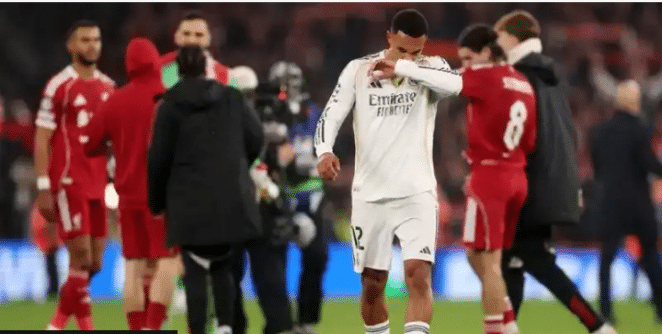
Real Madrid and PSG must use recent setbacks as lessons, improving concentration, defensive organization, and attacking efficiency to navigate the remaining UEFA Champions League fixtures successfully and qualify for knockout stages.
Liverpool’s combination of patience, pressing, and tactical intelligence now sets them apart, making them a formidable UEFA Champions League contender and demonstrating that preparation and execution are decisive at Europe’s top level.
About The Author