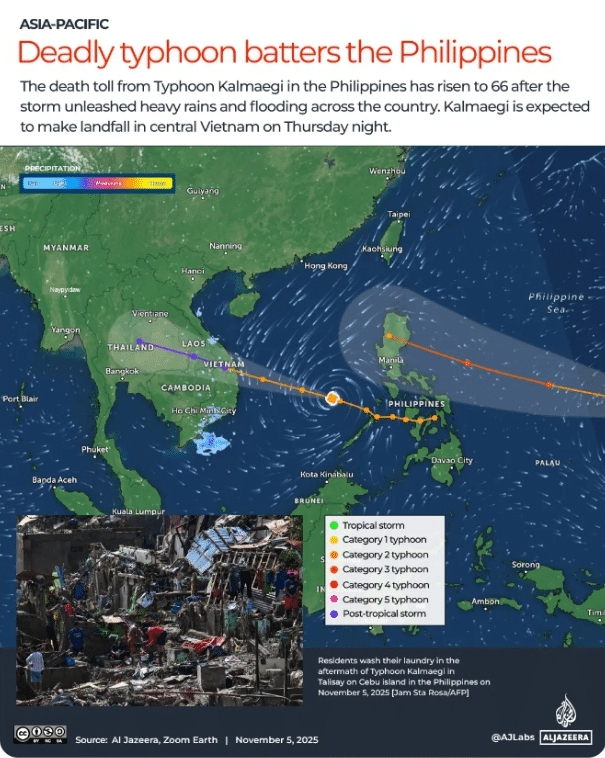
At least 66 people have died as Typhoon Kalmaegi unleashed torrential rains and destructive floods across central Philippines, causing catastrophic damage, mass displacement, and widespread infrastructural collapse.
The Typhoon Kalmaegi tragedy struck hardest on Cebu Island, where floodwaters rose at terrifying speed, submerging entire neighborhoods, sweeping cars away, and trapping terrified residents on rooftops for hours.
Officials confirmed that 49 deaths occurred in Cebu, while six more perished in a helicopter crash during search and rescue efforts, adding another heartbreaking dimension to the crisis.
Civil defence deputy administrator Rafaelito Alejandro said 26 people remain missing as emergency crews work tirelessly through piles of debris in hopes of finding survivors amid massive devastation.
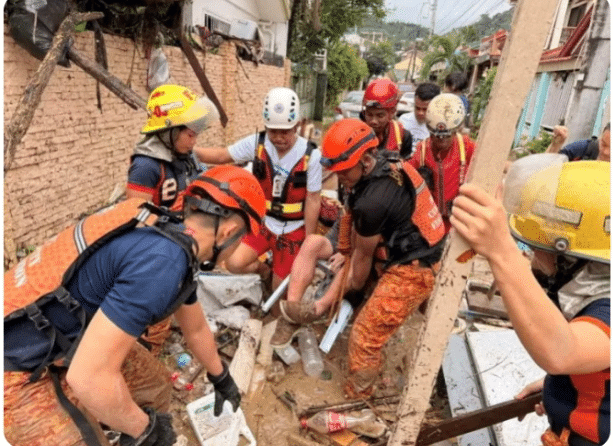
“All floods have subsided, but clearing operations are now our major challenge,” Alejandro told local radio DZMM, highlighting how blocked roads continue to delay emergency relief and recovery efforts.
In the hours before Typhoon Kalmaegi made landfall, meteorologists recorded 183 millimetres of rainfall in Cebu City—surpassing the province’s monthly average in a single night of relentless downpour.
Provincial Governor Pamela Baricuatro described the floods as “unprecedented and horrifying,” warning that such climate-driven disasters are becoming far more intense than previous generations ever experienced.
“We were expecting the winds to be dangerous,” Baricuatro said. “But the water is what’s truly putting our people at risk—the floodwaters were fast, deep, and merciless.”
In Mindanao, tragedy deepened when a Philippine military helicopter crashed during a humanitarian mission, killing all six crew members who had been delivering aid to isolated communities.
Military spokesperson Colonel Antonio Luz said the crash likely occurred due to poor visibility and mechanical failure, but a formal investigation is now underway to determine the exact cause.
The Philippine weather agency, PAGASA, reported that Kalmaegi maintained winds of 120km/h, with gusts exceeding 165km/h, leaving a destructive path through several Visayas provinces before heading westward.
Tens of thousands were evacuated from Cebu, southern Luzon, and northern Mindanao, as government shelters filled beyond capacity and families sought refuge in schools, churches, and public halls.
Although the storm weakened slightly while crossing Visayas, it remained a typhoon-strength system, continuing to lash the islands with heavy rains, strong winds, and coastal storm surges.
Disaster experts say the floods reveal systemic failures in urban planning, with poor drainage systems, uncontrolled deforestation, and unregulated construction worsening the impact of natural disasters.
Cebu resident Maria Gonzales, 42, described the horror: “The water came in minutes. We climbed to our roof, holding our children while watching our home disappear.”
Rescue workers, including Philippine Red Cross volunteers, used inflatable boats to navigate through flooded areas of Talisay and Talamban, where submerged homes left only rooftops visible.
Humanitarian groups estimate that over 100,000 people are displaced, many now living in temporary shelters without electricity, safe water, or adequate food supplies as recovery operations begin.
Governor Baricuatro said local officials are prioritizing the distribution of relief packs, medicine, and clean water while coordinating with national agencies for large-scale rehabilitation.
The Typhoon Kalmaegi disaster has once again exposed the Philippines’ vulnerability to climate-related crises, with experts warning that warming seas are fueling stronger and wetter storms each year.
Environmental scientist Dr. Leo Javier noted that the country’s location in the Pacific “typhoon belt” makes it one of the world’s most climate-exposed nations, demanding urgent adaptation measures.
“Every year, storms get more unpredictable,” Javier said. “We need stronger evacuation systems, climate-resilient infrastructure, and urban designs that account for intense rainfall and flooding.”
President Ferdinand Marcos Jr. expressed condolences to victims’ families, pledging to mobilize all government resources to support affected provinces and rebuild critical infrastructure destroyed by the typhoon.
Marcos said his administration would “not only rebuild but rebuild better,” ensuring future disasters do not leave such devastating impacts on vulnerable Filipino communities.
PAGASA forecasts show that Typhoon Kalmaegi will exit Philippine territory by Thursday, heading toward Vietnam, where authorities are bracing for additional flooding and potential landslides.
In Vietnam, officials warned that saturated soils and swollen rivers could cause more fatalities, especially in areas already battered by weeks of torrential monsoon rains.
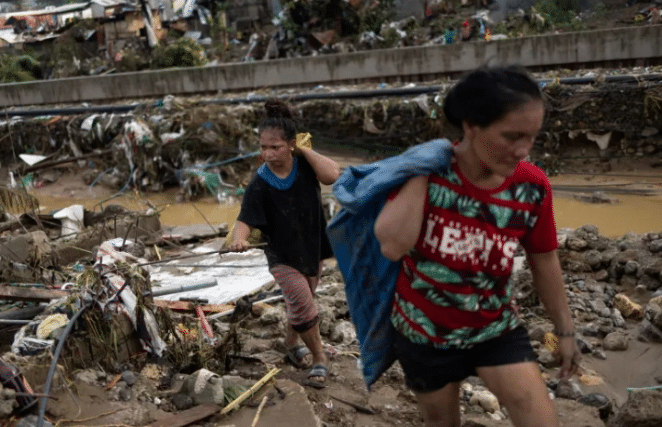
Meanwhile, in Cebu, displaced families continue to mourn their losses as entire villages remain underwater, with only church spires and streetlights visible above the muddy floodwaters.
The Department of Public Works reported that dozens of bridges and highways were destroyed or rendered impassable, cutting off access to several rural communities for more than 48 hours.
Local volunteers and army engineers are working together to restore power and communication lines, which were completely knocked out during the height of the storm.
Economists have warned that the cost of Typhoon Kalmaegi’s destruction could exceed $300 million, with long-term impacts on agriculture, fishing, and small-scale local industries.
Rice fields across Visayas were submerged, threatening food supply chains, while livestock losses are expected to drive up meat prices in the coming months.
The Philippine Red Cross and global aid agencies have launched appeals for emergency funding, calling on international donors to provide financial and logistical support for recovery operations.
“The world must act fast,” said Red Cross chairman Richard Gordon. “Filipinos are resilient, but recovery without resources is nearly impossible after such a devastating blow.”
In shelters, aid workers distribute hot meals and medical care while children receive psychological support, many traumatized after witnessing their homes collapse in raging floodwaters.
Community leaders say rebuilding efforts must include stronger flood barriers, upgraded drainage systems, and sustainable housing to reduce disaster risk in flood-prone urban areas.
Climate advocates emphasize that the Philippine government needs to enforce stricter environmental laws, particularly on deforestation and waste management, to help mitigate future typhoon disasters.
The Typhoon Kalmaegi catastrophe follows a year of record rainfall and extreme weather across Southeast Asia, reinforcing global calls for climate action and funding for vulnerable nations.
International experts say the disaster illustrates how rising ocean temperatures intensify typhoons, increasing their rainfall capacity and wind strength, while exposing the poorest populations to the worst impacts.
As cleanup begins, locals face the grim reality of rebuilding homes, reopening schools, and restoring livelihoods in communities where floodwaters turned life upside down overnight.
Many families, still grieving their dead, have vowed to stay and rebuild in Cebu, describing the disaster as both a tragedy and a test of the Filipino spirit.
“This is home,” said fisherman Rolando Perez. “We have faced storms before, but nothing like this. Still, we will rise again because that’s what Filipinos do.”
The government has promised housing assistance, livelihood grants, and expanded disaster-preparedness programs in cooperation with international partners, including Japan and the United Nations.
As aid continues to arrive, hopes remain that recovery will also bring reform—stronger infrastructure, smarter policies, and genuine commitment to climate resilience.
In the words of Governor Baricuatro, “This is a wake-up call. We can’t stop the storms, but we can prepare better, build better, and protect our people more effectively.”
For now, the country mourns as it counts its dead, clears its roads, and begins the painful task of rebuilding from the ruins left behind by Typhoon Kalmaegi.