The much-anticipated Trump-Xi deal has sparked mixed global reactions, with analysts divided on whether it signifies calm or conceals deeper cracks in the US-China rivalry.
Both leaders appear poised for a symbolic handshake rather than a substantive resolution, as their meeting in South Korea raises more questions than answers about future global stability.
“This deal is more performance than progress,” remarked an Asian trade diplomat, suggesting that the Trump-Xi deal was crafted to impress domestic audiences rather than reshape world dynamics.
The atmosphere in Gyeongju was tense yet charged with cautious optimism, as President Donald Trump described the summit as “a turning point,” though even allies viewed his words skeptically.
For China’s Xi Jinping, the engagement was a balancing act — projecting strength abroad while maintaining composure at home amid slowing growth and mounting trade tensions.
“Neither side can afford to lose face,” said Deborah Elms of the Hinrich Foundation. “Yet both know that compromise, not confrontation, sustains their long-term interests.”
The US-China rivalry has deep historical roots, but under Trump’s second presidency, it has become a defining struggle for economic and ideological supremacy in the twenty-first century.
Many observers believe the so-called “deal” merely halts escalation without tackling core disputes over technology, defense, and digital sovereignty, leaving the rivalry simmering beneath the surface.

Trump boasted that he “secured America’s interests,” but his critics in Washington argue the accord was “hollow theatre,” crafted for optics amid rising political pressure.
Chinese officials, meanwhile, lauded the meeting as “constructive,” claiming that both nations agreed to respect “mutual red lines,” though no verifiable mechanism was presented to enforce these claims.
Behind the smiles, the Trump-Xi deal exposed how dependent both economies remain on each other — and how deeply they mistrust one another in the global power struggle.
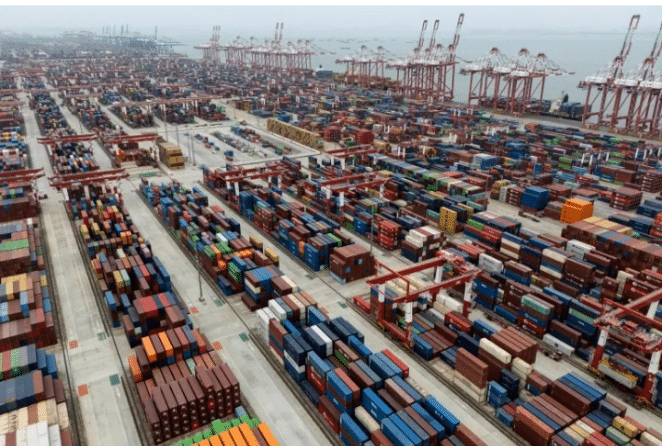
China’s exports to the United States have plummeted, while American firms face stricter regulations in Beijing. “The pain is mutual,” noted economist Wang Wen of Renmin University.
Yet Trump remains defiant. “The United States will never bow to unfair trade,” he declared, insisting that tariffs would remain “until China plays by the rules.”
In contrast, Xi Jinping called for “mutual respect and win-win cooperation,” subtly warning against American “bullying” and promoting Beijing’s vision of economic diplomacy.
The rhetoric underscores how fundamentally both sides view the world — one through confrontation, the other through patient endurance cloaked in strategic ambiguity.
“Each step they take toward peace seems to hide two toward competition,” commented a European trade observer, describing the uneasy dance of the US-China rivalry.
The temporary thaw in trade tensions is unlikely to last. Analysts predict that unresolved disputes over semiconductors, rare earths, and artificial intelligence will reignite friction.
“Trump thrives on crisis,” said Dennis Wilder, a former CIA China specialist. “Every concession is transactional — a performance of strength, not a policy of stability.”
That sentiment echoes across Asian markets, where uncertainty prevails despite official statements promising predictability. Investors sense volatility cloaked in diplomatic smiles.
While the White House touts “victory for American workers,” Chinese state media portrays Xi as the guardian of global balance, resisting Western “economic coercion.”
Both narratives feed domestic pride but erode trust internationally, blurring the boundary between negotiation and nationalism in this enduring global power struggle.
“This is the illusion of detente,” said an ASEAN policy analyst. “Each country needs to look peaceful abroad while waging psychological war at home.”
Trump’s vision of “America First” continues to collide with Xi’s dream of “national rejuvenation,” producing a collision of egos as much as a clash of systems.
Despite the bold headlines, tariffs on key sectors — from electronics to steel — remain, punishing consumers and industries on both sides of the US-China rivalry.
The Biden-era truce has collapsed under Trump’s new aggression, leaving even allies unsettled about Washington’s reliability as a partner in economic diplomacy.
Europe and ASEAN nations, increasingly wary, are pursuing alternative supply chains to cushion against the turbulence of the Trump-Xi deal fallout.
“The rest of the world can no longer be collateral damage in their duel,” said one EU trade commissioner, calling the rivalry “a storm that refuses to end.”
Meanwhile, American farmers cautiously welcome China’s promise to purchase more soybeans, though many recall similar promises that evaporated amid previous trade tensions.
For ordinary citizens in both countries, the confrontation feels distant yet palpable — through inflation, scarcity, and shifting job markets shaped by the US-China rivalry.
Some observers argue that Trump’s unpredictable tactics are calculated to extract maximum leverage, “keeping Beijing guessing and Wall Street nervous,” as one analyst put it.
Others view his methods as reckless brinkmanship, risking long-term stability for short-term applause — a pattern familiar to veterans of his first administration.
Even so, Xi faces his own constraints, with a slowing economy and youth unemployment testing the Communist Party’s promise of prosperity through “peaceful rise.”
The Trump-Xi deal may delay confrontation, but it cannot erase structural contradictions between two powers competing to shape the rules of modern civilization.
“The United States and China are locked in a rivalry that defines our era,” said Wilder. “This isn’t a cold war — it’s a cold partnership built on fear.”
Some voices remain hopeful. “Great powers can compete responsibly,” said Singaporean diplomat Chan Mei Ling. “But they must learn humility — or history will teach it brutally.”
Still, as the summit closed, the mood was neither jubilant nor despairing — a fragile balance between symbolism and suspicion, peace and preparation.
Markets rallied briefly, but political analysts warned of “the calm before another storm,” as trade lawyers scrutinized vague language and missing enforcement clauses.
In private, Trump aides described the outcome as “a tactical pause,” admitting the administration expects further economic skirmishes before the 2026 election cycle.
Xi’s advisers expressed similar sentiments, hinting that Beijing will bide its time until “the American storm passes,” suggesting patience remains China’s greatest weapon.
“The world watches two giants circling each other,” said a South Korean academic. “Neither ready to retreat, neither willing to destroy the balance outright.”
Yet for global governance, the stakes are existential. If the US-China rivalry continues unchecked, smaller nations will face impossible choices in a divided world.
Trump’s rhetoric may win applause at rallies, but it deepens fractures in alliances that once defined America’s global leadership and credibility in economic diplomacy.
“Power used without restraint breeds isolation,” warned a former U.S. ambassador. “And isolation, in the long run, is the death of influence.”
Both Trump and Xi claim to champion national pride — yet both risk alienating partners who seek cooperation rather than coercion in a fragile global order.
As night fell over Gyeongju, the symbolic handshake lingered in headlines but faded in meaning — another chapter in the long, bruising saga of US-China rivalry.
For now, the world must settle for uneasy peace — a pause in the storm, fragile and fleeting, as two superpowers redefine what coexistence truly mean
About The Author