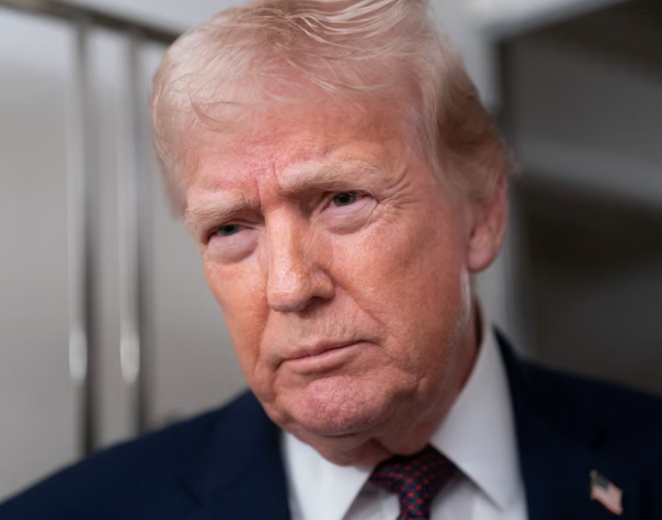
Donald Trump is unafraid to use military force in Iran, the White House said on Monday, as the Iranian government confronts its most serious wave of nationwide protests in more than a decade and faces mounting international concern over a deadly security crackdown.
The warning, delivered by White House press secretary Karoline Leavitt, underscored the administration’s willingness to escalate pressure on Tehran if the situation continues to deteriorate.
While diplomacy remains the US president’s stated preference, officials stressed that military action remains a viable option should Iran’s leadership persist with violence against civilians.
Speaking during a televised interview, Leavitt said Trump has been closely monitoring developments inside Iran and remains deeply alarmed by reports of killings on the streets of Tehran and other cities. She said the president believes the United States must be prepared to act decisively if Iranian authorities continue to suppress protesters with force.
“Diplomacy is the president’s first option,” Leavitt said, “but he is unafraid to use the lethal force and might of the United States military if and when he deems that necessary.”
She added that Trump has made clear he does not want to see further bloodshed but is unwilling to rule out military measures.
According to the White House, a broad range of options is under consideration, including airstrikes. Leavitt described such actions as “one of many, many options” available to the commander-in-chief, while declining to provide specific details about potential military plans.
The comments come as Iran experiences sustained unrest across multiple provinces. Protests first erupted more than two weeks ago following a sharp depreciation of the Iranian rial, which triggered anger among traders and ordinary citizens struggling with soaring prices and economic hardship.
What began as economic demonstrations has since evolved into broader political dissent, with protesters openly challenging the authority of Iran’s clerical leadership.
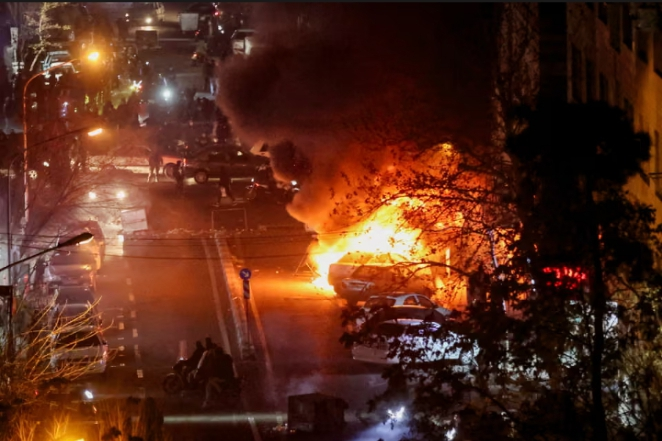
As demonstrations spread, Iranian authorities have responded with a sweeping security crackdown. Human rights groups report mass arrests, the use of live ammunition in some areas and widespread intimidation aimed at discouraging further protests.
Internet access has been repeatedly disrupted, and officials have issued warnings that participation in demonstrations could carry severe penalties.
Norway-based Iran Human Rights has said that at least hundreds of people have been killed since the protests began, while US-based monitoring groups estimate that more than 10,000 individuals have been detained.
Video footage circulating online has shown rows of bodies outside morgues in Tehran, images that have intensified international outrage and added urgency to calls for accountability.
White House officials say Trump views the situation as a critical test of Iran’s leadership and its willingness to respect basic human rights.
Leavitt said the president has been receiving mixed messages from Tehran through both public statements and private communications, noting that Iran’s rhetoric toward the United States has often differed behind closed doors.
“I think the president has an interest in exploring those messages,” she said, while cautioning that actions on the ground matter more than words. She declined to elaborate on the substance of Iran’s private outreach or whether any direct talks were underway.
Trump’s stance reflects a broader pattern in his foreign policy approach, which emphasises deterrence and the credible threat of force. During his presidency, he has repeatedly argued that adversaries respond only when they believe the United States is willing to act militarily if provoked.
Last year, the US carried out strikes on three of Iran’s major nuclear facilities, an operation Trump described at the time as highly effective.
Subsequent independent assessments suggested the damage may have been more limited than initially claimed, but the strikes nevertheless marked a significant escalation in US-Iran tensions.
Leavitt referenced those strikes on Monday, saying Iran is well aware of America’s military capabilities. “Nobody knows that better than Iran,” she said, suggesting that the memory of past US action remains a key factor in Tehran’s calculations.
The White House’s latest warning was reinforced by Trump himself later in the day. In a post on his Truth Social platform, the president announced that any country continuing to do business with Iran would face a 25% tariff on trade with the United States.
The measure, Trump said, would take effect immediately and was intended to increase economic pressure on Tehran.
While the tariff announcement drew swift reaction from international markets and foreign governments, US officials insisted it does not replace the possibility of military action.
Instead, they described it as part of a broader strategy aimed at isolating Iran diplomatically, economically and, if necessary, militarily.
Iranian leaders, for their part, have sought to downplay the scale of the unrest. State media has portrayed the protests as the work of foreign agitators, frequently blaming what officials describe as “American-Zionist terrorism” for the demonstrations.
On Monday, tens of thousands of pro-government supporters gathered in Tehran for a state-organised rally intended to project strength and counter images of dissent.

Despite these efforts, analysts say the protests represent one of the most serious challenges to Iran’s leadership since the 2009 Green Movement.
Unlike previous waves of unrest, the current demonstrations have persisted for weeks and cut across social and economic lines, suggesting deeper public frustration.
Trump has repeatedly warned Tehran against escalating its response. Earlier this month, he said that if Iranian officials continued to attack protesters, the United States would “come to their rescue,” adding that US forces were “locked and loaded and ready to go.”
Last Friday, he reiterated the threat in stark terms, recalling a message he said he had delivered directly to Iranian leaders.
“You’d better not start shooting,” Trump said. “Because we’ll start shooting too.”
The rhetoric has raised concerns among US allies and foreign policy experts about the risk of miscalculation.
Some analysts warn that even limited military action could trigger a wider regional conflict, drawing in neighbouring states and destabilising already fragile security dynamics in the Middle East.
Nevertheless, supporters of Trump’s approach argue that strong language and a willingness to use force are necessary to deter authoritarian regimes from violent repression.
Read also: Read also: Spanish police seize cocaine ship in record Canary Islands drug bust
They say the president’s stance sends a clear signal that Washington will not tolerate mass killings or severe human rights abuses.
Inside the administration, officials insist that no final decisions have been made and that the president continues to weigh all available options.
They emphasise that diplomacy remains possible, but only if Iran demonstrates a genuine commitment to de-escalation.
For now, Trump’s warning stands as one of the most explicit threats of military intervention issued by the White House since the protests began.
As unrest continues inside Iran and international pressure mounts, the coming days may prove decisive in determining whether the crisis moves toward negotiation, further repression or a dangerous escalation involving the United States.
About The Author