
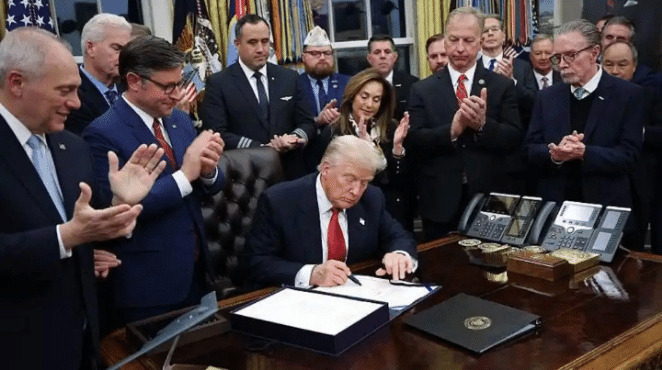

US President Donald Trump has signed a bill officially ending the longest government shutdown in American history after Congress passed it in a tightly divided vote.
For forty-three exhausting days, the United States government remained in limbo, with agencies, departments, and employees caught in a political standoff that tested patience and endurance nationwide.
The closure left more than 800,000 federal workers either furloughed or working without pay, while millions of citizens faced delays in essential public services that define normal civic life.
Across the country, airports saw longer security lines, food inspections slowed, and public lands remained shuttered as Americans waited for the standoff over government funding to reach its conclusion.
The political gridlock began over funding for border security, a divisive issue that saw Democrats and Republicans dig in as neither side wanted to appear politically weak.
After weeks of negotiations, missed paychecks, and mounting pressure from the public, both chambers of Congress finally agreed on a bipartisan measure to reopen the government.
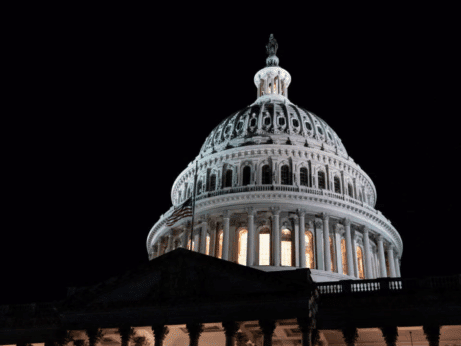
The House of Representatives approved the bill with a narrow 222 to 209 vote, as six Democrats crossed party lines to join Republicans in voting to end the deadlock.
Cheers and applause erupted in the chamber following the result, as weary lawmakers acknowledged that the nation could not afford another day of administrative paralysis.
On Monday, the Senate had already passed a similar version of the bill, giving momentum to a solution that would finally bring relief to federal workers.
When the legislation reached the Oval Office, Trump gave final approval, declaring that “the American people deserve a government that works for them, not against them.”
In signing the measure, Trump effectively closed the chapter on the longest government shutdown, a crisis that exposed deep partisan divisions but also highlighted the resilience of public service workers.
Thousands of employees who had gone weeks without pay expressed relief and exhaustion, knowing that back pay would soon arrive and normal operations could resume.
Transportation Security Administration agents, who had worked through the impasse without compensation, were among the first to welcome news of the bill’s signing.
Many federal employees shared stories of borrowing money, relying on food banks, and turning to local charities as they endured weeks of financial uncertainty and stress.
The White House framed the agreement as a victory for common sense, emphasizing that the administration had stayed committed to border security while reopening essential services.
Critics, however, argued that the ordeal was unnecessary and that partisan brinkmanship had inflicted needless hardship on ordinary Americans across all fifty states.
Economists estimated that the longest government shutdown cost the economy billions in lost productivity, with ripple effects felt across transportation, tourism, and small business sectors.
Small business owners who rely on federal contracts or tourism tied to national parks described the experience as “a punch in the gut” to their livelihoods.
Financial experts warned that the shutdown had shaken confidence in Washington’s ability to manage budgetary disputes responsibly in the eyes of investors and global partners.
The political fallout is expected to linger as both parties prepare for the next round of budget negotiations, where the same border wall issue may resurface.
House Speaker Nancy Pelosi described the compromise as “a necessary act of responsibility” while emphasizing the need for lasting reforms to prevent future shutdowns.
Meanwhile, Senate Minority Leader Mitch McConnell noted that “governing requires compromise,” acknowledging that weeks of uncertainty had tested America’s democratic endurance.
Public opinion polls throughout the ordeal suggested widespread frustration, with most Americans blaming political leaders on both sides for the prolonged standoff.
Despite the damage, the end of the longest government shutdown was met with cautious optimism, as many hoped lessons had been learned about cooperation and governance.
Trump’s statement following the signing struck a conciliatory tone, saying, “We may have our differences, but the people expect action, not stalemate.”
Political analysts observed that his decision to end the shutdown without securing all his initial demands marked a pragmatic shift in tone.
Still, some of his supporters praised him for maintaining pressure on Congress and keeping national security at the forefront of political debate.
The agreement provides temporary funding for key departments, setting the stage for renewed discussions about long-term federal spending and immigration policy.
Federal workers across the country began receiving notices about when to return to duty, with many agencies preparing for a rapid restart of operations.
At airports, air traffic controllers and TSA staff were informed that normal schedules would resume, bringing relief to travelers after weeks of disrupted services.
In national parks, rangers and maintenance crews returned to work, clearing debris, reopening trails, and restoring facilities left unattended since the shutdown began.
Social media was flooded with messages of gratitude, relief, and even humor as Americans reflected on the extraordinary moment when the world’s largest democracy paused.
Historians noted that the longest government shutdown will be remembered not only for its duration but for the human stories that emerged from its chaos.
From families skipping meals to cover bills to communities organizing food drives for unpaid workers, it was a time of collective struggle and unexpected solidarity.
As operations resumed, several lawmakers pledged to introduce new legislation aimed at preventing future shutdowns by ensuring automatic funding during political impasses.
Such proposals, if adopted, could safeguard the economy and federal workforce from becoming hostages to political negotiation in future administrations.
Though the shutdown is over, its economic and emotional toll will linger for months, particularly among those who depleted savings or fell behind on essential expenses.
Charitable organizations that stepped in during the crisis are now calling for increased attention to the vulnerabilities exposed by the shutdown’s impact on working families.
Political commentators believe the longest government shutdown has altered the landscape of Washington politics, serving as a stark warning against prolonged partisanship.
They suggest both parties now understand that weaponizing essential government functions risks alienating voters and undermining public trust in democratic institutions.
For many Americans, the conclusion of the shutdown brings relief mixed with skepticism, as the cycle of political confrontation shows little sign of fully ending.
Trump’s decision to sign the bill may not heal all divisions, but it ensures at least a temporary return to stability after weeks of national unease.
In Washington, staffers resumed their duties, corridors filled once again with the rhythm of government life, and the country moved forward from an avoidable impasse.
As America recovers from the longest government shutdown, the hope is that lessons learned from this episode will guide future leaders toward dialogue over division.
The return of normalcy may be gradual, but for millions of citizens and workers, the sight of government reopening stands as a testament to endurance and resolve.
Ultimately, the bill’s passage restores faith in the ability of elected officials to find consensus, even after forty-three turbulent days that tested the nation’s patience.
The closing of this historic chapter reminds Americans that governance, at its core, demands compromise, empathy, and responsibility toward those who depend on it most.
For the moment, relief outweighs rancor, as federal employees breathe easier knowing the machinery of state once again serves the public without interruption.

In the wake of the longest government shutdown, the message is clear: political victory means little when citizens pay the heaviest price for governmental dysfunction.
The nation moves on, wiser, wearier, and more aware of how fragile progress can be when unity yields to division at the highest levels of power.
About The Author


