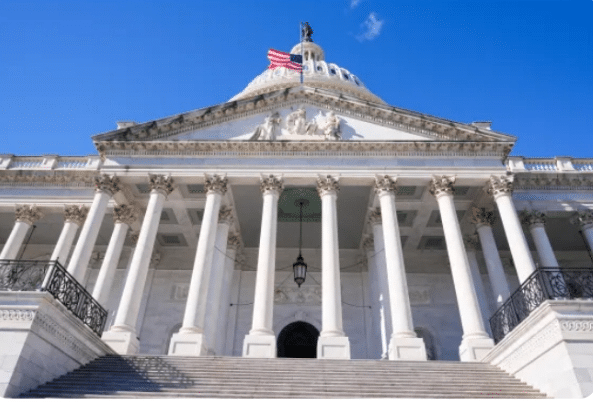
The United States Senate has taken a decisive and powerful step toward ending the 40-day US government shutdown, marking a significant shift in Washington’s political gridlock.
Senators voted to advance a bipartisan bill designed to reopen federal operations and restore public confidence after the nation endured the longest closure in its history.
The bill, known as a stopgap funding package, will keep the government running until January 30 while legislators negotiate comprehensive spending plans for 2026.
“This vote represents a breakthrough moment,” said Senator Dick Durbin. “Americans have waited long enough. It’s time for Congress to deliver stability and responsible governance once again.”
The US government shutdown has strained millions of households, leaving federal employees unpaid, disrupting key services, and eroding faith in elected leaders’ ability to manage basic governmental functions.
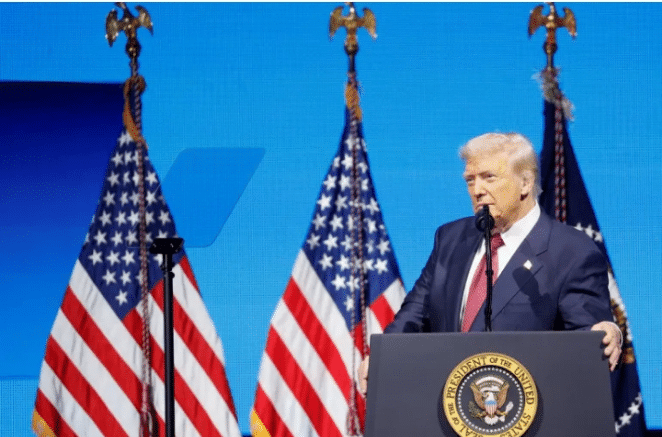
President Donald Trump has publicly urged Congress to act swiftly, saying on Sunday, “The American people deserve a government that works for them, not against them.”
Analysts described the Senate’s decision as “a critical step toward recovery.” Political observers noted that bipartisan cooperation may finally be returning to Capitol Hill after weeks of partisan stalemate.
Ireport247news correspondent in Washington, Emma Abiola, said the 60–40 cloture vote “clears the path for final passage” and suggests momentum toward reopening government operations by midweek.
The procedural success required cross-party support, with eight Democrats breaking ranks to join Republicans — a rare but welcome gesture of compromise in a deeply divided Senate.
Among those Democrats were Jeanne Shaheen, Tim Kaine, and Catherine Cortez Masto, who emphasized that their votes reflected “responsibility to citizens, not party politics.”
Independent Senator Angus King said, “The shutdown has dragged on too long. We cannot let ideological pride cost Americans their livelihoods and security.”
The US government shutdown began on October 1, following deadlock over healthcare subsidies and tax credits under the Affordable Care Act, a longstanding flashpoint in American politics.
Republicans argued that restoring government funding should come first, while Democrats insisted that healthcare protections be guaranteed before reopening federal agencies.
Senate Democratic leader Chuck Schumer opposed the proposal, saying, “We will not abandon working families. Affordable healthcare remains a fight worth having, even amid compromise.”
Bernie Sanders, echoing that sentiment, called the vote “a moral test of priorities,” insisting that “no democracy can thrive while its citizens go hungry and uninsured.”
Republicans countered that extending subsidies could be addressed later, provided that normal government operations resume immediately, enabling paychecks and essential programs to flow again.
Senator Mitch McConnell said, “This bill isn’t perfect, but it puts America back to work. Our duty is to reopen government and rebuild trust.”
The stopgap measure includes provisions to fund food assistance, veterans’ benefits, and the legislative branch for one year while negotiations on broader spending continue.
It also ensures retroactive pay for hundreds of thousands of federal employees furloughed since October, offering financial relief ahead of the Thanksgiving holiday season.
For many Americans, the impact of the US government shutdown has been personal. In Washington, food banks reported record demand as unpaid workers struggled to feed families.
Capital Area Food Bank said it delivered eight million more meals this year than planned, describing the situation as “unprecedented and heartbreaking.”
Travel disruptions also worsened. Airlines cancelled thousands of flights nationwide, citing inadequate staffing for air traffic control and security screening during the prolonged shutdown.
Treasury Secretary Sean Duffy warned that air travel could slow “to a trickle” if the government fails to reopen before the Thanksgiving rush.
The bipartisan agreement, while far from perfect, signals a possible thaw in the hyper-partisan atmosphere that has paralyzed Congress for much of the year.
Political analyst Niall Stanage told Al Jazeera, “The Senate’s action demonstrates political courage, even if it comes at a cost to party unity.”
However, he noted “an enormous uproar” within Democratic ranks, as progressives accused moderates of surrendering leverage on healthcare reform in exchange for reopening the government.
Supporters of the bill argue that compromise is the only realistic path to governance, emphasizing that continued closure would deepen economic damage and public frustration.
“The American people are exhausted,” said Senator Maggie Hassan. “This legislation may not please everyone, but it moves us forward when standing still is no longer an option.”
The measure now heads to the House of Representatives, where Speaker Mike Johnson faces pressure from both conservative and moderate factions to act swiftly.
House approval would send the package to President Trump’s desk, potentially ending the record US government shutdown by the end of the week.
Economists estimate that the shutdown has cost the U.S. economy billions in lost productivity, delayed payments, and weakened consumer confidence across key sectors.
“If this continues,” economist Laura Meacham said, “small businesses will bear the brunt, and economic recovery could slow for months even after reopening.”
Observers say the episode underscores how political brinkmanship threatens not just Washington but ordinary Americans whose livelihoods depend on government efficiency.
The bill’s progress has injected optimism, with markets showing early signs of stabilization amid hopes for restored federal spending and renewed consumer activity.
Wall Street analysts believe a quick resolution could reverse recent declines in public-sector stocks, airline shares, and small business sentiment indexes.
Meanwhile, community leaders across the nation have praised the Senate’s move, calling it “a lifeline for millions who have suffered from unnecessary political paralysis.”
Nonprofit groups in cities such as Atlanta and Chicago reported surges in requests for aid, highlighting the widespread consequences of the US government shutdown.
“Charities can only do so much,” said Sarah Owens, director of Feeding America Midwest. “We need policy, not pity — and that starts with reopening government.”
Some Republicans still want to renegotiate aspects of the bill, particularly limits on subsidy recipients, but the majority appear eager to move forward this week.
In the meantime, essential federal functions such as security operations, airport control, and welfare programs remain partially active through temporary emergency measures.
As debate continues, citizens nationwide are watching closely, weary but hopeful that Congress can finally deliver the stability long promised yet rarely achieved.
For now, optimism outweighs cynicism, as senators from both parties prepare to vote on final passage and put an end to the record-breaking closure.
“This is a test of leadership,” said Senator Kaine. “We either choose progress or prolong pain. History will remember who stood for America.”
As Washington braces for another decisive week, the world watches to see whether this US government shutdown will finally close — and whether unity can endure beyond it.
About The Author