Israeli air raids hit Gaza City early Monday, intensifying a fragile situation already strained by recent demolitions, drone attacks, and renewed hostilities across southern Lebanon and Khan Younis.
Witnesses described the thunderous sounds of explosions echoing through the eastern neighborhoods, where buildings shook violently and families fled in panic, seeking safety amid the growing uncertainty and fear.
Residents said emergency teams scrambled to reach the affected areas as fires erupted across residential blocks, lighting up the sky with a haunting orange hue through the long night.
The renewed escalation comes as regional observers warn that the delicate ceasefire, now entering its second month, could crumble if retaliatory actions continue unchecked across multiple frontlines.
International humanitarian organizations have called for restraint, emphasizing the need to protect civilians and uphold obligations under international law, as Gaza faces worsening shortages of essential supplies and aid.
Reports from the ground indicate that heavy machinery has been deployed east of Khan Younis, where demolition operations have increased sharply, leveling homes and displacing families already scarred by war.
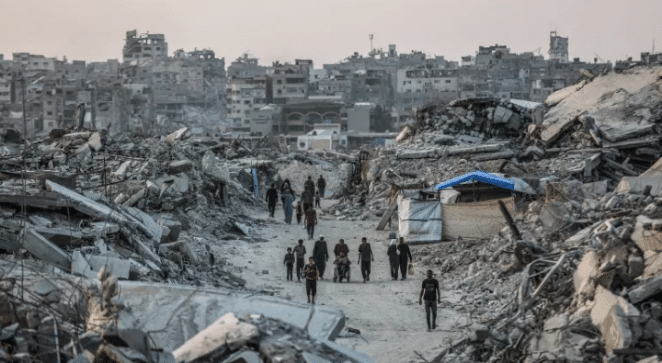
The mayor of a nearby municipality described the situation as unbearable, saying that entire streets have been reduced to rubble and that infrastructure damage has reached critical levels.
Despite the declared ceasefire, both sides have accused each other of violations, with growing fears that renewed violence could spiral into a wider confrontation engulfing neighboring territories.
The latest attacks have also reignited discussions among diplomats about whether existing peace frameworks can survive amid the persistent cycles of destruction, displacement, and distrust between the opposing parties.
As Israeli air raids hit Gaza City, neighboring southern Lebanon has also come under renewed assault, where drone strikes reportedly targeted vehicles and suspected militant positions over the weekend.
At least four people were confirmed dead following those drone attacks, further heightening tensions in an area that has endured months of near-daily bombardments and sporadic cross-border skirmishes.
Observers noted that such patterns of violence often trigger a domino effect, leading to retaliations that risk derailing delicate peace efforts and deepening humanitarian suffering across both regions.
Diplomatic sources suggested that talks remain ongoing to stabilize the ceasefire, but progress has been slow, hindered by distrust and competing political interests within and beyond the region.
Meanwhile, reconstruction efforts in parts of Gaza continue despite the fresh strikes, with volunteers working tirelessly to restore vital services like water, electricity, and education under dire conditions.
One symbolic moment of hope emerged when Gaza’s 800-year-old school reopened its doors to children eager to resume learning, defying the ruins that surround their classrooms every day.
Parents expressed mixed emotions, balancing pride in their children’s courage with anxiety over safety, as air raid sirens continue to sound unpredictably across multiple neighborhoods in Gaza City.
Regional analysts said the latest wave of attacks shows that the ceasefire’s durability depends largely on diplomatic persistence and mutual restraint, which appear increasingly fragile under present circumstances.
Efforts by international mediators to sustain peace have met with repeated obstacles, as disagreements over security guarantees, prisoner exchanges, and humanitarian corridors persist without tangible resolution.
Military analysts argue that these air raids may also reflect political signaling, designed to demonstrate control and deterrence even amid promises of de-escalation and reconstruction initiatives.
In southern Lebanon, local officials reported mounting anxiety among civilians as drones hovered over towns, sparking fears of renewed confrontations between rival forces entrenched along the volatile border.
Many residents fled their homes, clutching essential belongings, as thick plumes of smoke rose into the air following a targeted drone strike that destroyed a vehicle near a rural roadway.
Emergency responders worked tirelessly to contain the fires and evacuate the wounded, though limited resources and access restrictions complicated efforts to deliver immediate medical and logistical support.
Eyewitnesses said the strike shattered the uneasy calm that had persisted for weeks, prompting renewed calls from international agencies for an immediate end to hostilities across affected zones.
As Israeli air raids hit Gaza City, pressure is mounting on all sides to adhere to the ceasefire’s terms and prioritize humanitarian relief for displaced and wounded civilians.
Children, in particular, continue to bear the brunt of the conflict’s consequences, with thousands now without stable shelter or access to consistent schooling and healthcare services.
International aid convoys remain delayed at border crossings, hindered by security checks and intermittent fighting that make it difficult to deliver food, fuel, and medical assistance where needed most.
Human rights observers described the situation as catastrophic, noting that each new strike not only deepens the human toll but also erodes confidence in diplomatic promises of recovery.
Local medics continue to plead for the establishment of safe corridors that would allow ambulances and supply trucks to reach the hardest-hit zones without obstruction or renewed violence.
The persistence of destruction has also raised broader questions about accountability and proportionality, with advocacy groups urging investigations into the legality of recent military actions under international law.
Some regional commentators said the continuation of air raids may indicate a shift in strategy, emphasizing deterrence over dialogue, even as peace envoys struggle to maintain communication channels.
While some diplomats remain cautiously optimistic, they acknowledge that the longer airstrikes persist, the harder it becomes to rebuild trust or restore meaningful cooperation between opposing sides.
Economic conditions in Gaza have further deteriorated, with markets half-empty, unemployment soaring, and infrastructure damage hampering any realistic prospects for sustained recovery in the near term.
As families sift through debris to salvage belongings, many express exhaustion, saying they have lived too long under cycles of fear, destruction, and broken promises of peace and reconstruction.
Experts argue that beyond the immediate humanitarian crisis, the psychological toll of constant bombardment could leave generational scars that hinder future reconciliation and social rebuilding efforts.
The international community faces renewed pressure to move beyond symbolic condemnations and commit to concrete measures that ensure protection of civilians and accountability for all violations.
As Israeli air raids hit Gaza City once again, the chorus of global appeals grows louder, demanding an end to the suffering and a genuine pursuit of lasting peace.
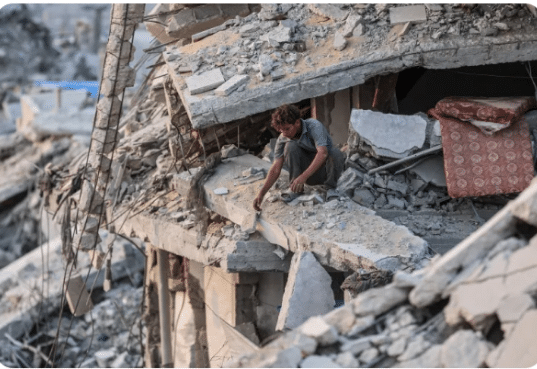
Still, many remain skeptical, recalling similar pleas that have faded into silence in past conflicts, leaving behind only ruins and the memories of what once was home.
Every explosion adds another layer to a decades-long narrative of despair, where hope and fear coexist under skies too often lit by the fire of falling ordnance.
Residents pray for dawns without sirens, for nights without trembling walls, and for a future where peace is more than a temporary pause between airstrikes.
Until then, the people of Gaza continue to endure, their resilience a testament to survival amid destruction, waiting for the day when the skies finally fall silent.
About The Author