

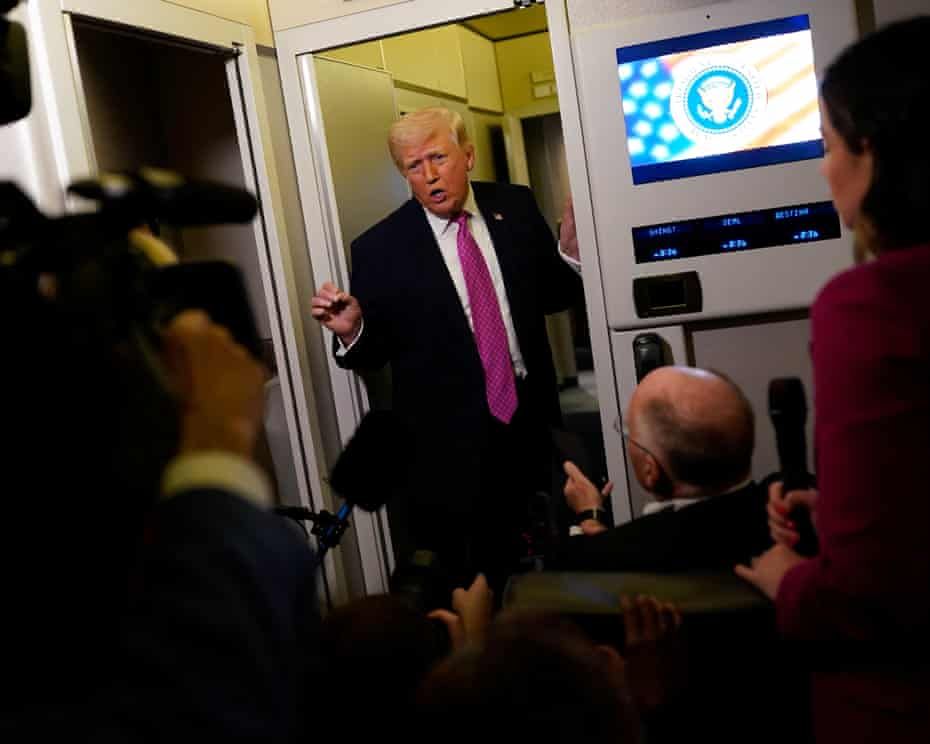
US President Donald Trump said Iran’s new leaders very reasonable, describing ongoing contacts between Washington and Tehran as both direct and indirect amid rising regional tensions and diplomacy efforts.
The statement comes during a fragile moment in the Middle East, where military buildups, diplomatic outreach, and shifting leadership dynamics are shaping the next phase of relations between both countries significantly.
Trump emphasized confidence in a potential agreement, noting that discussions were progressing, although uncertainty remains about whether both sides can overcome longstanding mistrust and reach a lasting resolution soon.
He suggested that recent developments had already altered Iran’s political landscape, referencing the killing of senior figures and implying that a new leadership structure had emerged following significant military actions.
The crisis began escalating after strikes earlier this year targeted key Iranian leadership figures, dramatically shifting the balance of power and prompting global concern about the risk of wider regional instability.
Among those killed was Ayatollah Ali Khamenei, whose death marked a historic turning point and triggered swift succession by his son Mojtaba Khamenei.
Observers note that leadership transitions in Iran are often complex, but this rapid shift has introduced new dynamics that may influence negotiations with the United States and regional actors moving forward.
Trump’s characterization of Iran’s new leaders very reasonable signals a possible shift in tone compared to previous rhetoric, suggesting openness to dialogue despite ongoing military and political pressures.
Meanwhile, additional US troops have been deployed to the Middle East, reinforcing American presence and signaling readiness amid concerns that tensions could escalate into broader confrontation if diplomacy fails.
Tehran has responded cautiously, warning that it will not accept humiliation or coercion, maintaining a firm stance while also leaving room for engagement through intermediaries and indirect communication channels.
Pakistan has emerged as a key diplomatic bridge, offering to host talks aimed at reducing tensions and facilitating dialogue between Washington and Tehran during this critical period of uncertainty.
According to Ishaq Dar, discussions are underway to organize meaningful negotiations that could help bring an end to the ongoing conflict and establish a framework for future cooperation.
Islamabad’s involvement highlights the importance of neutral intermediaries in resolving complex geopolitical disputes, especially when direct communication between primary actors remains sensitive or politically challenging.
Despite these efforts, uncertainty persists over whether both the US and Iran will formally agree to participate in proposed talks, leaving the diplomatic process in a tentative and evolving state.
Trump acknowledged this uncertainty, stating that while he believes a deal is likely, there remains a possibility that negotiations could collapse due to entrenched differences and competing strategic interests.
The situation is further complicated by the involvement of regional allies, particularly Israel, whose security concerns and military actions could influence the trajectory of any diplomatic breakthrough.
Analysts warn that any miscalculation could quickly escalate tensions, especially given the concentration of military assets and heightened alert levels across multiple countries in the region currently.
The role of backchannel communications has become increasingly significant, allowing both sides to explore options without committing publicly, thereby reducing political risks associated with formal negotiations.
Trump’s remarks suggest that such channels are actively being used, reflecting a pragmatic approach to diplomacy that balances public messaging with private engagement behind the scenes.
At the same time, domestic political considerations in both countries may shape the pace and direction of talks, as leaders navigate internal pressures alongside international expectations.
In Iran, the new leadership faces the challenge of consolidating authority while responding to external threats, making diplomatic decisions particularly sensitive during this transitional phase.
For the United States, maintaining strategic influence in the Middle East remains a priority, with military deployments serving as both deterrence and leverage in negotiations with adversaries.
The broader international community is closely monitoring developments, as the outcome of US-Iran relations could have significant implications for global energy markets and regional stability overall.
Oil prices have already shown signs of volatility, reflecting market sensitivity to geopolitical risks and the potential impact of conflict or cooperation on supply chains worldwide.
Diplomatic observers emphasize that sustained dialogue will be essential to prevent further escalation, urging all parties to prioritize negotiation over confrontation in resolving their differences.
Pakistan’s mediation efforts underscore the importance of regional actors in facilitating peace, particularly when traditional diplomatic channels are strained or insufficient to address complex disputes.
However, challenges remain, including differing expectations, historical grievances, and competing interests that could hinder progress toward a comprehensive agreement between both nations.
Trump’s optimism about reaching a deal reflects a belief that current conditions may be more favorable than in the past, despite the risks and uncertainties that continue to surround the situation.
His repeated assertion that Iran’s new leaders very reasonable indicates a strategic effort to frame the narrative in a way that supports engagement and potential compromise.
Critics, however, caution that such statements may oversimplify the complexities of Iranian politics and underestimate the challenges involved in achieving meaningful and lasting agreements.
They argue that while leadership changes can create opportunities, they do not automatically resolve underlying tensions or guarantee alignment of interests between opposing sides.
Nevertheless, the possibility of talks represents a significant development, offering a pathway toward de-escalation and potential normalization of relations after years of hostility and mistrust.
Regional stability will depend not only on US-Iran relations but also on the actions of other stakeholders, including neighboring countries and international organizations involved in the process.
The coming days are expected to be critical, with potential announcements regarding talks in Islamabad and further indications of whether both sides are willing to engage formally.
As diplomatic efforts continue, the balance between military readiness and negotiation will remain a defining feature of the current phase of the crisis in the Middle East region.
Ultimately, the success of these efforts will depend on the willingness of all parties to make concessions and prioritize long-term stability over short-term strategic gains.
Read also: ‘We will set them on fire’: Iran warns US troops as Marines arrive
Trump’s comments have added a new dimension to the discourse, highlighting both the opportunities and uncertainties that characterize this evolving geopolitical landscape today.
While optimism exists, the path forward remains uncertain, requiring careful navigation of complex political, military, and diplomatic factors influencing the relationship between the United States and Iran.
The international community will continue to watch closely, hoping that dialogue prevails and that tensions can be reduced through constructive engagement and mutual understanding between both nations.