

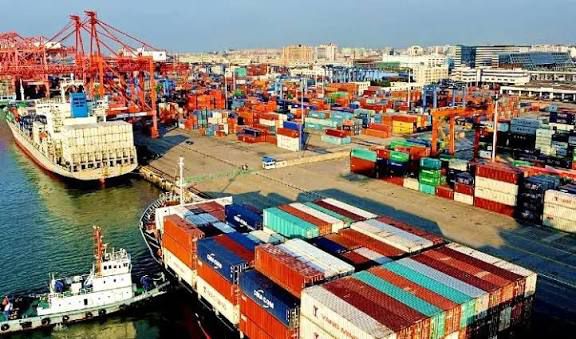
Nigeria’s maritime and trade ecosystem is undergoing a strategic reset as authorities intensify efforts to diversify export earnings beyond crude oil. In a renewed push to reposition the country within global trade value chains, the Nigerian Ports Authority has rolled out a multi-layered framework aimed at strengthening non-oil exports through infrastructure upgrades, process efficiency, and digital transformation.
NPA non-oil exports strategy gains momentum with infrastructure, automation push
The NPA’s latest initiative signals a deliberate pivot towards unlocking the vast potential of non-oil exports, particularly in agro-allied products and small-scale manufacturing.
Speaking at the 37th Enugu International Trade Fair, the agency’s Managing Director, Abubakar Dantsoho, outlined a roadmap anchored on eliminating systemic bottlenecks that have historically constrained Nigeria’s export competitiveness.
Central to the NPA non-oil exports strategy is the recognition of regional trade corridors as catalysts for growth. Dantsoho identified Enugu as a strategic gateway to the South-East, noting that its proximity to key agricultural belts positions it as a critical node for export expansion.
This geographic advantage, he explained, is being leveraged to integrate hinterland production hubs with port infrastructure, thereby improving logistics efficiency.
The NPA’s approach reflects a broader policy shift towards decentralising export processing and improving cargo evacuation from inland regions.
By enhancing connectivity between production zones and maritime gateways, the authority aims to reduce turnaround time and logistics costs—two major impediments to Nigeria’s non-oil export growth.
A major pillar of the NPA non-oil exports strategy is the rehabilitation and modernisation of eastern ports. Facilities in Onne, Warri, and Calabar are undergoing upgrades to boost vessel traffic and operational capacity.
These investments are expected to rebalance cargo flows, which have long been concentrated in Lagos ports, and stimulate economic activity across other regions.
Beyond physical infrastructure, the NPA is also supporting the development of deep seaports to accommodate larger vessels and enhance Nigeria’s competitiveness in international shipping. This aligns with global maritime trends, where scale and efficiency increasingly determine trade viability.
Another critical component of the reform agenda is the deployment of Export Process Terminals (EPTs). These terminals function as integrated logistics hubs designed to streamline export procedures.
By consolidating documentation, packaging, certification, and cargo handling into a single platform, the EPTs significantly reduce bureaucratic delays that previously undermined export timelines.
According to industry analysts, the introduction of EPTs represents a structural shift in Nigeria’s export logistics architecture.
For years, exporters have grappled with fragmented processes involving multiple agencies, leading to inefficiencies and increased costs.
The EPT model addresses this challenge by offering a one-stop solution that enhances transparency and operational efficiency.
Complementing this is the planned rollout of the National Single Window system, a globally recognised digital platform that connects all stakeholders within the trade ecosystem. Through automation, the NPA intends to minimise human interference, curb inefficiencies, and improve transaction speed.
The emphasis on automation within the NPA non-oil exports strategy is particularly significant in the context of Nigeria’s ease-of-doing-business reforms. By digitising processes, the authority aims to reduce corruption risks, enhance data accuracy, and provide real-time visibility into cargo movement.
Stakeholders have long advocated for such reforms, arguing that manual processes not only slow down operations but also create opportunities for rent-seeking behaviour.
The transition to a digital-first system is therefore expected to boost investor confidence and attract more players into the export value chain.
In addition, the NPA is collaborating with the Nigerian Export Promotion Council to link Export Process Terminals with Domestic Export Warehouses across the country.
This integration is designed to strengthen supply chain efficiency by ensuring that export-ready goods can be aggregated closer to production centres before being transported to ports.
The broader implication of this strategy is the creation of a more inclusive export ecosystem. Small and medium-sized enterprises, which often lack the capacity to navigate complex export procedures, stand to benefit significantly from simplified processes and improved access to infrastructure.
Dantsoho emphasised that trade remains one of the most effective levers for economic transformation, particularly in a country seeking to reduce its dependence on oil revenues.
By facilitating access to international markets, the NPA aims to drive foreign exchange earnings, support job creation, and stimulate industrial growth.
However, analysts caution that the success of the NPA non-oil exports strategy will depend on sustained policy consistency and inter-agency coordination.
While infrastructure and process reforms are critical, complementary factors such as stable power supply, access to financing, and regulatory clarity will also play a decisive role.
There is also the question of execution risk. Large-scale infrastructure projects and digital transformations require robust governance frameworks to ensure timely delivery and cost efficiency. Any delays or implementation gaps could undermine the intended impact of the reforms.
Nevertheless, the NPA’s renewed focus on non-oil exports marks a significant step towards economic diversification. With global demand shifting and oil revenues becoming increasingly volatile, Nigeria’s ability to build a resilient export base will be crucial in shaping its long-term economic trajectory.
As the NPA non-oil exports strategy unfolds, stakeholders across the public and private sectors will be watching closely to assess its effectiveness in translating policy intent into measurable outcomes.
Read more news at ireport247news.com
About The Author
