

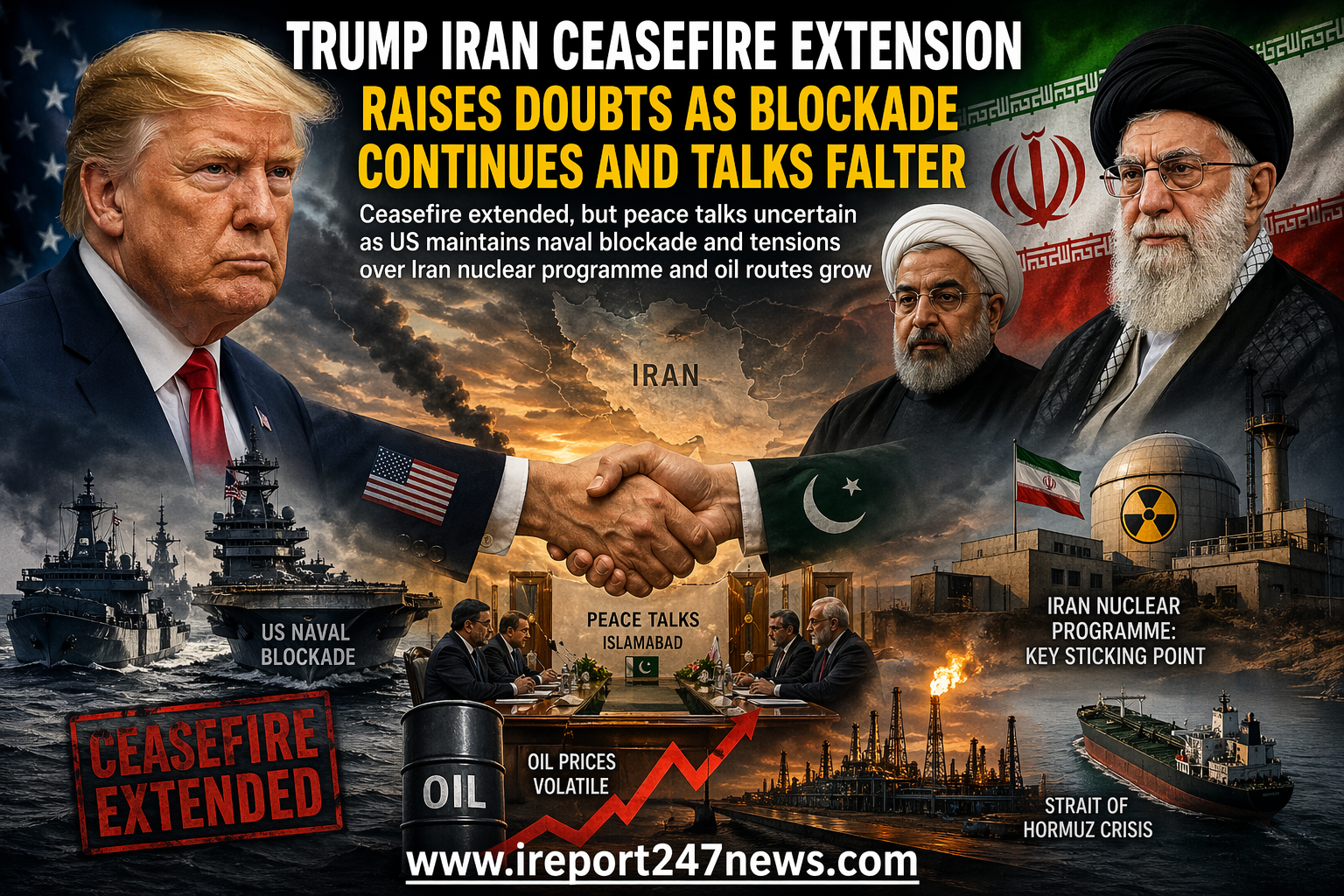
Trump Iran ceasefire extension dominates global headlines as the first paragraph confirms Trump Iran ceasefire extension remains uncertain, with peace talks fragile and regional tensions still high despite Washington’s announcement.
Ceasefire declared, but uncertainty deepens
U.S. President Donald Trump said the United States would prolong the truce to allow negotiations more time, but questions persist over whether Tehran or its adversaries will comply.
According to Reuters, the move followed mediation efforts led by Pakistan, which has hosted talks aimed at ending a conflict that has killed thousands and destabilised global markets.
The crisis is also driving volatility in global oil prices, with analysts warning that prolonged disruption in the Strait of Hormuz could trigger wider economic instability and inflation spikes worldwide.
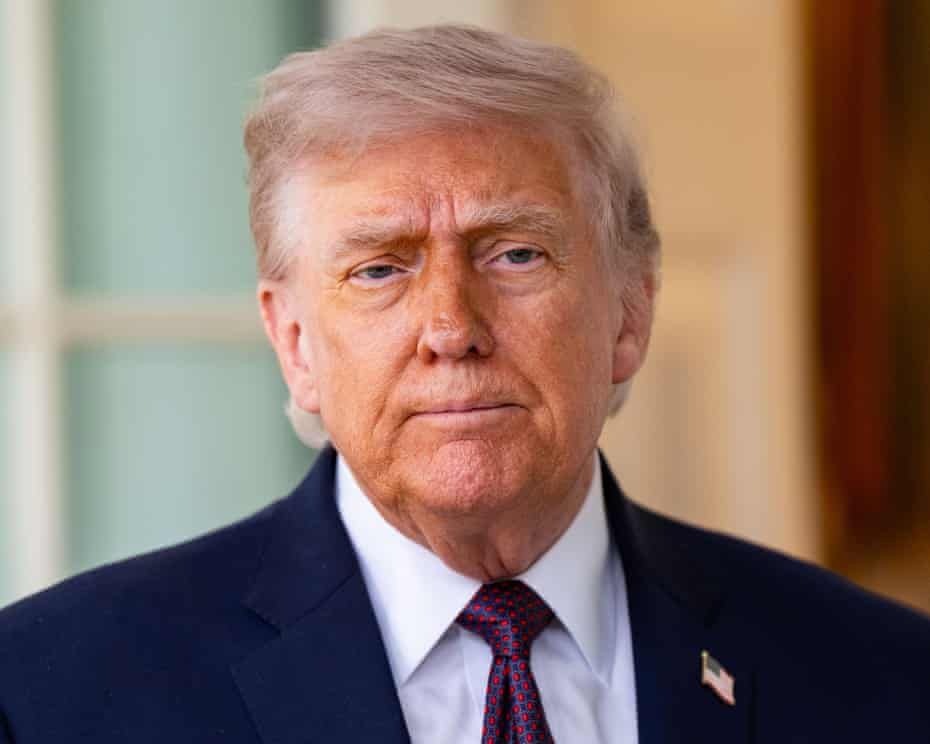
Trump wrote that Washington would “hold our Attack on the Country of Iran” pending a “unified proposal,” signalling a pause rather than a clear path to peace.
However, Iranian-linked outlets quickly pushed back. Tasnim News Agency, tied to the Revolutionary Guards, insisted Tehran never requested an extension and warned it could break the naval blockade “by force.”
Blockade strategy fuels tensions
Despite the ceasefire declaration, the United States is maintaining a naval blockade on Iranian trade routes—an action Tehran describes as “piracy at sea and state terrorism.”
Iranian officials have consistently argued that such measures contradict any genuine peace effort. An adviser to parliamentary speaker Mohammad Baqer Qalibaf dismissed Trump’s announcement, suggesting it “carried little weight.”
Contradictions in Washington’s messaging
Trump’s rhetoric has swung sharply between escalation and restraint. Just weeks ago, he warned a “whole civilization will die,” yet now signals openness to dialogue.
Hours before announcing the extension, he told CNBC the U.S. military was “raring to go,” highlighting internal inconsistencies that analysts say are unsettling allies and markets.
United Nations Secretary-General António Guterres has criticised earlier U.S. threats against infrastructure, stressing that international law prohibits targeting civilians.
Regional fallout and global stakes
The war, launched on February 28 with U.S. and Israeli strikes, has expanded across the Middle East, drawing in multiple actors and closing key trade routes.
Israeli Prime Minister Benjamin Netanyahu has long advocated regime change in Iran, but Washington’s shifting goals have created uncertainty about the conflict’s endgame.
More than 5,000 civilians have reportedly died, with widespread displacement across Iran and Lebanon. The Strait of Hormuz, a critical oil corridor, remains severely disrupted, amplifying concerns over global oil prices.
Markets reacted cautiously to the ceasefire extension. Oil prices dipped slightly while currency markets fluctuated, reflecting ongoing uncertainty tied to the broader Iran nuclear programme dispute.
Fragile diplomacy and nuclear tensions
Peace talks in Islamabad remain precarious. U.S. Vice President JD Vance has yet to join negotiations, raising doubts about Washington’s commitment.
Iranian officials told Reuters they would only engage if the U.S. abandoned “pressure and threats,” rejecting any framework resembling surrender.
A central sticking point remains the Iran nuclear programme. Trump has pushed to remove enriched uranium stockpiles, while Tehran insists its programme is peaceful and protected under international agreements.
Going forward?
The Trump Iran ceasefire extension reflects more than a diplomatic pause—it exposes deeper strategic divides.
First, the continuation of the naval blockade suggests Washington is using economic pressure as leverage, even while advocating peace. This dual-track approach risks prolonging mistrust.
Second, Iran’s scepticism highlights a credibility gap. Without reciprocal concessions, Tehran is unlikely to commit fully to negotiations.
Third, global economic stakes are rising. The Strait of Hormuz disruption threatens energy security, making the conflict a worldwide concern rather than a regional issue tied directly to global oil prices.
Finally, internal political dynamics in both countries could shape outcomes. Leadership pressures, public sentiment, and military positioning may ultimately determine whether talks succeed or collapse.
The Trump Iran ceasefire extension offers a temporary reprieve but little clarity. With conflicting signals, ongoing military pressure, and fragile diplomacy, the path to lasting peace remains uncertain.
Read also: Trump Iran bombing threat: Trump says US will resume bombing Iran as ceasefire nears end
Will this ceasefire lead to real negotiations or merely delay further escalation? Share your thoughts in the comment box below.
About The Author
