

The European Union has designated Iran’s Revolutionary Guard Corps a terrorist organization, marking a historic escalation in the bloc’s stance toward Tehran.
The decision follows mounting concern over the Guard’s role in violently suppressing mass protests and its broader influence in regional conflicts. European leaders have emphasized that this action reflects a strong commitment to human rights and accountability.
European Commission President Ursula von der Leyen said the move was “long overdue,” adding that “‘terrorist’ is indeed how you call a regime that crushes its own people’s protests in blood.”
EU foreign ministers unanimously agreed that the Revolutionary Guard’s systematic repression of civilians and protesters constitutes a form of terrorism under European standards.
EU officials noted that the designation provides new legal tools, including asset freezes, travel bans, and criminal penalties for anyone providing material support to the Guard.
While largely symbolic in some respects, the decision is intended to convey a clear message that violent suppression of peaceful dissent cannot be tolerated.
The Revolutionary Guard, established after Iran’s 1979 Islamic Revolution and operating under the Supreme Leader, has long been accused of violent domestic repression and supporting armed groups abroad.
Its activities have drawn international criticism, particularly for targeting civilians during demonstrations and orchestrating crackdowns that involve lethal force.
Kaja Kallas, the EU foreign policy chief, emphasized that “repression cannot go unanswered,” linking the decision directly to the Guard’s conduct against protesters and asserting that the bloc would uphold international human rights standards.

European lawmakers have framed the move as consistent with the EU’s commitment to democracy, stressing that collective action is necessary to address systematic abuses.
The mass protests in Iran that prompted the designation were fueled by socio-economic grievances, political dissatisfaction, and demands for personal freedoms.
Security forces, including the Revolutionary Guard, reportedly killed thousands of demonstrators, detained tens of thousands more, and carried out widespread acts of intimidation. Human rights advocates have documented torture, unfair trials, and targeted attacks against peaceful activists.
The EU’s decision follows pressure from member states that argued previous measures, such as economic sanctions, were insufficient to deter the Guard’s behavior.
By officially designating the IRGC a terrorist organization, the bloc intends to elevate accountability and demonstrate that actions causing widespread civilian harm are unacceptable.
Iran reacted strongly to the designation, with government officials condemning the decision and warning of diplomatic consequences.
Foreign Minister Abbas Araghchi described the designation as a “stunt” and a “strategic mistake,” accusing the EU of following American political interests rather than adhering to international law.
Iranian lawmakers responded by passing a resolution labeling all European Union military forces as terrorist groups in retaliation.
Parliament Speaker Mohammad Baqer Qalibaf stated, “By trying to hit the Revolutionary Guards … the Europeans actually shot themselves in the foot and once again made a decision against the interests of their people by blindly obeying the Americans.”
The retaliatory designation of EU armies as terrorist groups was accompanied by a display in parliament, where lawmakers wore Revolutionary Guard uniforms to demonstrate opposition to European measures.
Iran described the EU’s action as politicized and claimed that the Guard is a legitimate military institution acting in defense of national security.
Security analysts have warned that the EU’s terrorist designation of the IRGC may complicate diplomatic efforts, including negotiations on nuclear issues, regional stability, and conflict resolution.
While the designation signals a firm stance on human rights, some experts caution that it could limit channels for dialogue between European countries and Iran.
Despite concerns over potential diplomatic fallout, supporters of the EU decision argue that accountability is essential to uphold international norms.
By explicitly naming the Revolutionary Guard a terrorist organization, the EU aligns its policies with its stated principles, showing solidarity with protesters and human rights advocates in Iran.
The mass protests in Iran and the Guard’s violent suppression have been a focal point of international attention for years. Many observers see the EU’s designation as overdue, reflecting longstanding frustration with Tehran’s lack of responsiveness to diplomatic pressure.
The Revolutionary Guard’s role in protest crackdowns and its involvement in regional conflicts have been cited repeatedly as reasons for decisive action.
European officials stressed that the designation targets the Guard specifically and is not aimed at the Iranian people or civil society organizations. By focusing on the IRGC, the EU seeks to signal that systematic repression carried out by state-linked forces is unacceptable, while still leaving open channels for engagement with broader Iranian society.
The EU’s terrorist designation of the IRGC may also influence other international actors and allied countries, potentially harmonizing sanctions and legal restrictions on the Guard’s activities.
Analysts note that consistent enforcement and follow-up measures will be critical to the decision’s effectiveness in reducing violence and deterring human rights abuses.
Iranian authorities, however, remain defiant, asserting that any pressure will be met with resistance. Supreme Leader statements and government communications emphasize that the Guard will continue its operations at home and abroad, and that the designation by Europe will not alter Tehran’s strategic calculations.
European leaders acknowledge that the decision carries risks, including the potential for further escalation of tensions in the Middle East. Nonetheless, they argue that taking a principled stand against the Revolutionary Guard’s conduct outweighs potential diplomatic challenges.
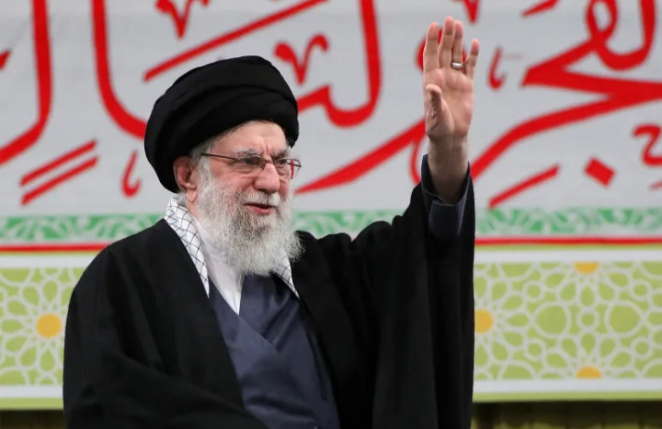
The EU’s terrorist designation of the IRGC is therefore both a symbolic and practical measure, reflecting a broader commitment to human rights and international law.
Lawmakers across Europe hailed the decision as a demonstration of unity and resolve, underscoring the importance of collective action in holding state-linked actors accountable.
By coordinating sanctions and travel restrictions, the EU intends to limit the Guard’s ability to operate internationally and to pressure Tehran toward reforms.
The designation of the IRGC as a terrorist organization comes at a time of heightened geopolitical tension, including ongoing instability in the Middle East and concerns over regional security.
European countries, while mindful of the risks, have argued that moral and legal obligations to protect human rights require decisive measures against organizations involved in violent suppression of civilians.
In conclusion, the EU designates Iran’s Revolutionary Guard Corps a terrorist organization as a landmark policy decision. It reflects deep concern over the Revolutionary Guard’s role in protest crackdowns, systematic abuses, and destabilizing activities abroad.
The designation provides legal tools to enforce sanctions, underscores European unity, and sends a strong signal to Tehran that violent repression and attacks on civilians will not be tolerated. While the designation may complicate diplomatic engagement, it represents a firm stance on accountability and human rights.
Read also: UK police officers with criminal convictions remain in service despite repeated reform pledges
About The Author


