

The Islamabad suicide bombing has plunged Pakistan into grief and disbelief, with survivors recounting moments of terror and confusion after the devastating blast ripped through the capital’s judicial district.
At least twelve people lost their lives in the Islamabad suicide bombing, while more than thirty others sustained serious injuries, leaving the country grappling with renewed fears of insecurity and political instability.
Witnesses described the attack as an eruption of chaos that shattered the afternoon calm, turning an ordinary day of legal proceedings into a nightmare filled with panic and smoke.
One young lawyer recalled hearing a thunderous explosion that sent debris flying across the courthouse complex, forcing hundreds to flee as flames engulfed nearby vehicles and buildings.
Security officials reported that the suicide attacker detonated explosives at the entrance of the district court, striking at one of Islamabad’s most secured public spaces during a busy working hour.
Emergency services rushed to the scene within minutes, rescuing survivors and ferrying the wounded to nearby hospitals as rescue workers struggled to navigate blocked roads and crowds of onlookers.

The Islamabad suicide bombing marks one of the deadliest assaults on the capital in recent years, heightening tensions across South Asia and prompting an exchange of accusations among regional powers.
Pakistan’s leadership quickly blamed India-backed militant proxies operating from Afghan territory, insisting the assault was a coordinated attempt to destabilize Islamabad and sow discord among its institutions.
India dismissed the allegations as “baseless and politically motivated,” accusing Pakistan of exploiting the tragedy to distract from its internal political upheaval and the controversial constitutional amendment debate.
Analysts observed that the timing of the Islamabad suicide bombing coincides with Pakistan’s deepening political crisis, with the government under pressure over military reforms and allegations of judicial interference.
The explosion was heard across several neighborhoods, sparking widespread panic as residents feared a series of coordinated strikes similar to previous large-scale attacks on government and civilian targets.
Video clips circulating online captured smoke billowing over the court compound, mangled cars on fire, and civilians screaming for help as first responders worked tirelessly to contain the destruction.
Several witnesses described scenes of “utter pandemonium,” with people tripping over one another in desperate attempts to escape through gates blocked by security forces.
Lawyers inside the courthouse recounted how windows shattered violently and parts of the ceiling collapsed, covering the hallways with dust and shards of glass within seconds.
Some survivors said the head of the suicide bomber was found near the security checkpoint, underscoring the force of the detonation and the meticulous planning behind the deadly attack.
Authorities imposed a cordon around the area immediately after the Islamabad suicide bombing, restricting media access and deploying additional troops to prevent secondary attacks or interference with forensic work.
Dozens of journalists gathered outside the site, interviewing survivors and lawyers who spoke of the confusion that followed as police evacuated people from multiple exits under strict supervision.
Witnesses confirmed that more than two thousand individuals were present inside the judicial complex when the explosion occurred, including judges, litigants, and administrative personnel.
Many survivors attributed their escape to luck, explaining that moments before the blast they had moved away from the cafeteria where the bomber appeared to target the largest gathering.
A lawyer who narrowly survived said the moment the explosion erupted, he saw people running in every direction, screaming for help as the air filled with smoke and dust.
He described seeing colleagues bleeding and lying motionless while others attempted to administer first aid using their own clothes and handkerchiefs as makeshift bandages.
The Islamabad suicide bombing has reignited debates over Pakistan’s counterterrorism strategy and intelligence coordination, as questions arise over how attackers breached security in a highly protected zone.
Officials admitted that despite heightened alerts in recent months, the complexity of detecting lone suicide attackers remains a challenge, particularly in densely populated urban areas.
Security analysts noted that militant factions continue to exploit political divisions within Pakistan, capitalizing on internal unrest to launch attacks that undermine public confidence in the state.
Regional experts also warned that deteriorating ties between Pakistan and its neighbors could lead to further escalation, with militants exploiting cross-border tensions for ideological and strategic gain.
Prime Minister Shehbaz Sharif condemned the bombing as a “cowardly act of terror,” vowing that those responsible would face justice and promising a thorough investigation into the security lapses.
Government officials ordered a nationwide security review, increasing patrols in major cities and deploying additional forces around public institutions and judicial buildings across the country.
Opposition leaders, meanwhile, criticized the government’s handling of national security, urging unity but accusing authorities of neglecting intelligence coordination and emergency preparedness.
Human rights groups expressed concern that the Islamabad suicide bombing could be used to justify harsher crackdowns or the expansion of military influence over civilian institutions.
International observers called for restraint and transparency, encouraging Islamabad to cooperate with neighboring governments in tracking down the perpetrators and preventing retaliatory measures.
As night fell, rescue teams continued to search through debris, while grieving families gathered at hospitals seeking information about loved ones missing since the explosion.
Doctors at Islamabad’s main trauma center reported performing multiple emergency surgeries, noting that several victims remained in critical condition due to severe blast injuries and burns.
The tragedy has sparked an outpouring of sympathy nationwide, with political parties, civil society organizations, and citizens holding vigils to honor those killed in the Islamabad suicide bombing.
Across social media, messages of solidarity poured in under hashtags calling for peace and resilience, as users shared images of candlelight gatherings in memory of the victims.
Psychologists warned of long-term trauma for survivors, many of whom witnessed horrific scenes and may struggle with post-traumatic stress in the months ahead.
The Islamabad suicide bombing has also reignited memories of previous terror incidents that targeted Pakistan’s judiciary, law enforcement, and educational institutions over the past decade.
Analysts say the attack reflects a continuing shift in extremist tactics, with smaller, high-impact strikes designed to capture attention and destabilize the national mood.
In the aftermath, the government urged citizens to remain calm, insisting that Pakistan’s resolve to combat terrorism remains unbroken despite repeated attempts to spread fear and division.
Security experts argue that the success of Pakistan’s counterterrorism effort depends not only on force but on addressing the political and socioeconomic roots of radicalization.
Calls have intensified for regional cooperation to tackle militancy, with observers stressing that cross-border intelligence sharing and dialogue are crucial to preventing future attacks.
Despite grief and anger, many in Islamabad have expressed determination to carry on with daily life, refusing to let the Islamabad suicide bombing paralyze their sense of normalcy.
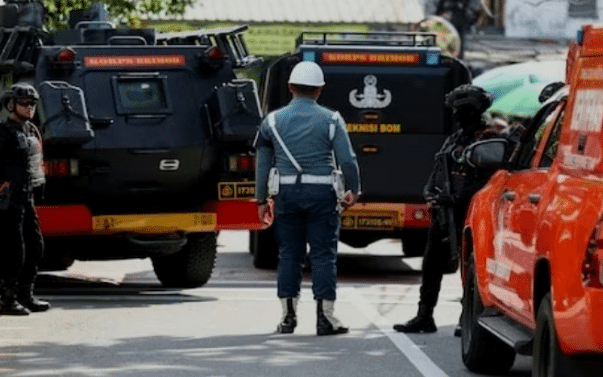
Lawyers who survived returned to work the next day, symbolizing defiance and resilience, even as security checks intensified at government offices and judicial complexes nationwide.
Candlelit vigils continue in the capital, reflecting both mourning and unity, as Pakistan confronts yet another test of endurance in its long battle against extremism.


