

Donald Trump has escalated the national debate on artificial intelligence as he signs an executive order that asserts federal supremacy and ensures Trump blocks state AI laws.
The order centralizes AI governance under Washington control, intensifying a federal AI policy conflict while challenging states attempting to impose independent rules on the rapidly evolving artificial intelligence sector.
Trump insisted that a single nationwide framework is essential, warning that fifty divergent state regulations would stifle innovation and hinder U.S. competitiveness in the global artificial intelligence race.
At the signing, he highlighted Silicon Valley’s support, claiming companies will relocate overseas if forced to comply with a patchwork of state rules rather than a single national standard.
Republicans previously tried to legislate a ten-year moratorium on state AI regulation, but bipartisan opposition defeated the measure, leaving Trump to achieve similar goals through executive action and federal directives.
The executive order formally revives that failed effort, making it clear the administration intends Trump blocks state AI laws and challenges any state attempting regulatory authority over AI systems.
A federal AI Litigation Task Force is created, tasked exclusively with identifying, reviewing, and legally contesting state regulations perceived as obstructing national AI development or conflicting with Washington priorities.
California’s disclosure requirements and Colorado’s algorithmic risk assessments are likely targets, as Trump’s order signals the administration’s determination to prioritize corporate freedom over state-led AI protections.
Civil liberties advocates warn the order concentrates power in Washington, elevating corporate influence, and allowing Silicon Valley influence on AI to dominate without sufficient safeguards for vulnerable populations.
Teri Olle of Economic Security California Action said Trump’s move hands over control of transformative technologies to tech executives, ignoring both public welfare and state efforts to regulate AI responsibly.
The administration frames the order as promoting innovation, but critics insist it sidelines necessary oversight, creating a federal AI policy conflict that could expose children and workers to unregulated AI systems.
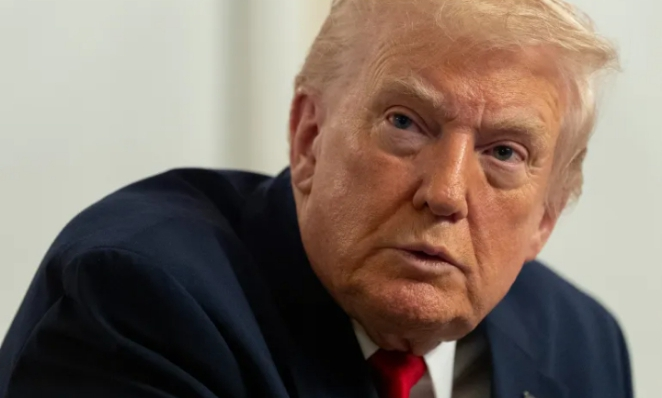
Trump repeatedly emphasizes the dangers of “woke” ideology influencing AI outputs, portraying state regulations as politically motivated obstacles that could slow the deployment of advanced generative technologies nationwide.
On Truth Social, Trump warned that U.S. AI leadership is at risk if states enforce restrictive rules, reiterating that Trump blocks state AI laws to prevent fragmented, slow-moving approval processes.
Silicon Valley CEOs have praised the directive, noting it eliminates inconsistent regulations that would otherwise impose heavy compliance costs, aligning private sector interests with federal AI policy conflict ambitions.
The AI Litigation Task Force will consult closely with the special adviser for AI and crypto, billionaire David Sacks, ensuring a direct line between government enforcement and industry priorities.
Sacks’ influence consolidates Silicon Valley influence on AI policy decisions, placing the tech industry’s interests at the center of which state laws are challenged or invalidated federally.
Sacha Haworth, Tech Oversight Project director, condemned the order, calling it “bad policy” that disregards ordinary citizens and empowers powerful CEOs while weakening state autonomy over AI regulation.
Civil rights groups predict prolonged legal battles, asserting that Trump blocks state AI laws while undermining experimental state-led safeguards designed to manage the risks of rapidly developing AI systems.
Federal officials claim the measure promotes innovation, yet experts warn it could erode public trust, concentrate technological power, and escalate the state AI regulation battle nationwide.
Attorneys general from multiple states have promised legal challenges, arguing the order exceeds presidential authority and infringes on states’ constitutional rights to enact protective measures for residents.
Courts will likely face arguments balancing federal ambitions against local autonomy, creating high-stakes litigation that could determine whether Trump blocks state AI laws effectively or oversteps constitutional limits.
The clash underscores the broader stakes: who should control AI development, how regulatory responsibility is divided, and whether rapid innovation justifies sidelining public safety concerns in the United States.
Advocates argue state-level experimentation is crucial to manage AI’s environmental impacts, prevent algorithmic discrimination, and safeguard citizens against misuse of autonomous systems deployed by corporations.
Trump’s administration prioritizes rapid AI deployment over cautious oversight, framing the policy as necessary to maintain U.S. leadership in the global AI arms race against China and other competitors.
Republicans defending the order argue that bureaucratic delays from diverse state regulations threaten national interests, while opponents highlight the societal risks of consolidating authority under federal and corporate guidance.
The federal AI policy conflict ignited by the order is unprecedented, as it explicitly targets states attempting to implement protective measures and positions Washington as the ultimate authority over artificial intelligence.
Industry supporters claim Trump blocks state AI laws, preventing costly regulatory duplication and providing clarity that accelerates innovation, investment, and economic competitiveness in a sector central to the U.S. economy.
Civil rights groups disagree, arguing that concentrating power and relying on industry input alone amplifies Silicon Valley influence on AI, risking unsafe, discriminatory, or exploitative systems reaching the public unchecked.
The AI Litigation Task Force is now empowered to aggressively pursue legal actions against states, signaling a new era in which federal authorities may routinely challenge local AI regulations.
Trump’s order also clarifies that any law requiring AI models to modify outputs will be scrutinized and potentially litigated, targeting progressive regulatory initiatives in California, Colorado, and elsewhere.
Critics warn this approach sets a precedent where executive authority can nullify state safeguards, forcing the country into a top-down regulatory regime dominated by tech executives and federal policy makers.
Legal analysts expect multiple court challenges, assessing whether the president can legally enforce Trump blocks state AI laws, particularly when states argue protections are essential for public health and civil rights.
While federal leaders argue uniformity is necessary, opponents maintain that diverse state approaches provide valuable testing grounds for effective AI oversight, which the order now threatens to undermine entirely.
The controversy highlights tensions between innovation and accountability, demonstrating how executive directives can reshape governance, influence industry behavior, and escalate federal AI policy conflict without congressional approval.
State officials maintain that oversight is critical for mitigating algorithmic bias, discrimination, misinformation, and potential harm to children, workers, and vulnerable communities increasingly affected by artificial intelligence.
Trump’s directive signals Washington’s intent to preemptively assert control over AI development, ensuring Silicon Valley influence on AI remains unchecked, while constraining state experimentation and protective initiatives.
The unfolding conflict marks a historic escalation in federal-state tensions, with courts, advocacy groups, and industry leaders all vying to shape the trajectory of AI governance in America.
As legal challenges emerge, Trump blocks state AI laws, reinforcing a federal-first approach that prioritizes rapid deployment and innovation over nuanced, state-specific risk mitigation strategies.
Observers warn the executive order may set long-term implications for technology regulation, civil liberties, and corporate influence, establishing a national precedent with global ramifications for artificial intelligence policy.
Trump’s decisive action highlights the administration’s strategy: centralize authority, minimize state interference, empower industry, and aggressively confront legal or political opposition to federal AI directives.
In doing so, the order positions the United States at the forefront of the AI arms race but raises serious questions about democratic accountability, equity, and public safety.Read
Read also: US moves to require visitors to provide five years of social media history
The tension between state autonomy and federal authority is now at the center of the AI debate, reflecting broader struggles over technological power, societal risk, and who ultimately governs innovation.
As the litigation battles begin, the outcome will determine if states retain meaningful control over AI safeguards or whether federal and industry-aligned forces can dominate regulation nationally.
The executive order ensures Trump blocks state AI laws while simultaneously elevating Silicon Valley influence on AI policy, demonstrating the administration’s willingness to confront dissenting states and critics.
Federal and state authorities now enter a high-stakes conflict over control, oversight, and accountability, shaping the future trajectory of AI in America for years to come.


