US President Donald Trump has approved exports of Nvidia H200 chips to China, marking a major departure from previous export controls and shifting America’s technology policy approach significantly.
Trump announced the decision on Truth Social, stating the policy allows sales to “approved customers” under strict conditions to protect national security and maintain oversight of sensitive technologies.
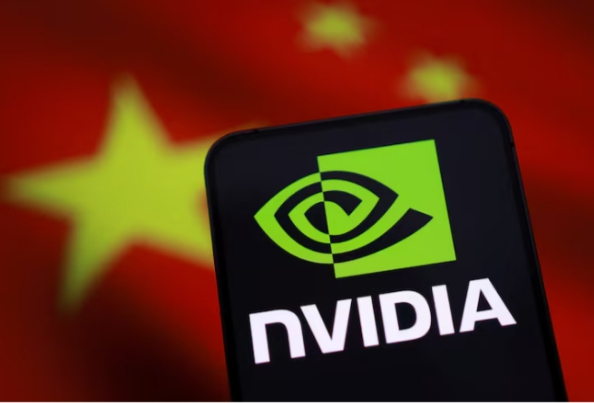
The H200 chip, launched in 2023, is Nvidia’s most powerful AI chip outside the Blackwell series, nearly six times more powerful than the prior H20 generation, analysts reported.
Nvidia CEO Jensen Huang welcomed the decision, emphasizing that allowing exports supports American jobs, strengthens domestic manufacturing, and ensures the company remains competitive in global AI and semiconductor markets.
Shares of Nvidia rose over two percent after-hours following Trump’s announcement, reflecting investor optimism about the potential revenue from expanded Chinese sales and improved commercial opportunities globally.
Trump criticized the Biden administration’s prior policy, arguing it forced companies to produce downgraded chips “nobody wanted,” which limited competitiveness while failing to protect America’s technological leadership effectively.
The policy framework requires 25 percent of revenues from H200 chip sales to China to be paid to the US government, increasing oversight while benefiting American taxpayers financially.
Tilly Zhang, Chinese tech expert at Gavekal Dragonomics, said the decision reflects market realities and the challenge of fully blocking China’s technological progress in AI and semiconductor sectors.
Zhang told newsmen, “the priority is moving away from purely blocking or slowing China’s tech progress, more towards competing for market share and securing commercial benefits effectively.”
Under the agreement, the most advanced Blackwell chips remain restricted, ensuring sensitive next-generation technologies are unavailable to Chinese firms, addressing some national security concerns, Trump administration officials clarified.
Critics immediately expressed concern. Senator Elizabeth Warren called the decision “selling out US security,” citing Department of Justice probes into illegal AI chip shipments potentially strengthening China’s AI capabilities.
Chris McGuire, senior fellow at the Council on Foreign Relations, warned exports might allow Chinese AI companies to close the gap with US frontier models rapidly.
McGuire explained, “Loosening export controls on AI chips risks undermining the administration’s efforts to ensure the US AI stack dominates globally and maintains strategic advantage over China.”
The move signals a shift in US strategy, focusing on commercial competition and global market share rather than purely attempting to contain China’s technological development through export restrictions.
Under Biden, Nvidia and other chipmakers were confined to selling downgraded versions of their products to China, severely limiting revenue potential while aiming to curb Chinese AI advancement.
The Trump policy allows full H200 chip performance for approved Chinese customers, reflecting a balance between national security concerns and the commercial imperatives of American tech companies like Nvidia.
The H200 chip is widely used in AI research, cloud computing, and commercial data centers, making it a highly strategic product for both global markets and national security concerns.
Analysts suggest Chinese AI firms will accelerate adoption of high-performance computing through these exports, potentially narrowing the technology gap with US competitors in AI development and cloud infrastructure.
Economists argue American exports and domestic chip manufacturing will benefit, as revenue from H200 sales boosts corporate growth while supporting high-paying jobs in US-based semiconductor facilities.
Trump emphasized the policy would “support American jobs” and enhance manufacturing competitiveness, asserting that balanced technology exports can strengthen both the economy and America’s influence in global markets.
Global supply chains may also be influenced, as China’s access to H200 chips could stabilize semiconductor markets while increasing international competition in AI technology development.
The Trump administration maintains oversight mechanisms for exported chips, ensuring compliance with national security measures and preventing proliferation of sensitive AI capabilities in foreign markets.
Bipartisan legislation has been proposed to restrict H200 chip exports, with lawmakers citing strategic risks and the need to maintain US dominance in artificial intelligence and technology sectors.
Despite political opposition, Trump defended the policy as economically and strategically prudent, asserting that it encourages American competitiveness while acknowledging market realities and the limits of containment policies.
Experts predict the policy may accelerate AI innovation on both sides, creating incentives for faster development and competition in semiconductor manufacturing and artificial intelligence applications worldwide.
Trump’s approach reflects a broader shift in US-China tech relations, moving from containment to regulated engagement, focusing on economic benefits and strategic oversight simultaneously, analysts explained.
The H200 policy underscores the intersection of national security, economic growth, and global technology competition, balancing America’s strategic interests with the commercial realities of multinational corporations.
China’s response to the export approval has not yet been formally announced, though observers expect accelerated AI deployment and investment in high-performance computing infrastructure across Chinese technology companies.
By permitting H200 chip exports, the US sets a precedent for future engagement with China in AI technology while maintaining oversight and selectively protecting the most sensitive hardware innovations.
The agreement represents a compromise between political, economic, and security considerations, demonstrating the challenges of regulating cutting-edge technology in a globally competitive AI and semiconductor industry.
With the global race for AI dominance intensifying, the Trump administration’s policy may influence other countries’ technology policies, highlighting the balance between innovation, market access, and national security priorities.
This policy shift also raises questions about the long-term US strategy for maintaining AI superiority and the ethical and strategic implications of allowing advanced technology transfers to potential competitors.
Nvidia forecasts increased revenue from H200 sales, even amid concerns about the AI bubble, reflecting confidence in global demand and the company’s ability to navigate complex regulatory landscapes effectively.
The US decision may also impact international AI collaborations, investment patterns, and research priorities, as firms weigh access to advanced chips against compliance with national security restrictions.
Trump’s announcement has ignited debates over technology leadership, trade policy, and security, with supporters praising economic foresight while critics warn of strategic risks to America’s technological dominance.
The H200 export policy will likely remain a key point of discussion in Congress, media, and international forums, highlighting the intersection of technology, politics, and global economic strategy.
Nvidia and other chipmakers are expected to continue lobbying for market access while cooperating with government oversight, ensuring commercial goals align with national security and strategic objectives under Trump’s administration.
Observers note that the decision may accelerate US-China technology competition, as China leverages access to H200 chips to build advanced AI infrastructure and compete globally in data center capabilities.
Experts argue that careful monitoring will be required to prevent unauthorized technology transfers while maximizing economic benefits for American companies and preserving the US’s strategic advantage in AI leadership.
Trump’s move illustrates a new era of regulated engagement, where economic incentives, market dynamics, and security considerations converge to shape US policy toward China in strategic technology sectors.

The export approval underscores a broader trend of balancing technological openness with protective measures, reflecting the complexities of managing global innovation, security risks, and competitive pressures in AI development.
By allowing H200 chip sales under oversight, the Trump administration aims to strengthen American industry, support jobs, and ensure national security while participating in the lucrative and rapidly evolving global AI market.