Donald Trump’s reaction to released Epstein documents has intensified the Trump Epstein files controversy, raising questions about reputations, political accountability, transparency laws, and justice for survivors nationwide.
Donald Trump broke his silence after the Epstein files release, warning that reputations of people who “innocently met” Jeffrey Epstein risk damage amid renewed public scrutiny.
Speaking at Mar-a-Lago, Trump expressed sympathy for prominent figures whose images appeared, arguing photographs alone should not imply wrongdoing or guilt without corroborating evidence.
“I don’t like the pictures of other people being shown,” Trump said, insisting that many encounters occurred socially, without knowledge of Epstein’s criminal activities or intentions.
The president highlighted former president Bill Clinton, stating, “I like Bill Clinton,” while lamenting the political fallout caused by resurfacing images circulating widely online.
Trump suggested bipartisan responsibility, claiming Democrats and “a couple of bad Republicans” demanded disclosure, thereby exposing numerous figures to public judgment and speculation.
The Trump Epstein files controversy has reopened debates about accountability, public curiosity, and the balance between transparency and protection of innocent associations in democratic societies.
Jeffrey Epstein’s extensive social network included politicians, financiers, and academics, complicating interpretations of photographs and documents released under federal transparency mandates.
Epstein, a wealthy financier, cultivated elite relationships for decades, later becoming infamous after sex-trafficking charges and his death in federal custody during 2019.
Trump argued that “everybody was friendly with this guy,” suggesting Epstein’s social reach blurred lines between casual encounters and culpable involvement.
Critics counter that transparency is necessary to rebuild trust, especially after years of secrecy surrounding Epstein’s contacts and alleged enablers within powerful institutions.
The Justice Department began releasing files following passage of the Epstein Files Transparency Act, legislation mandating comprehensive disclosure of related materials.
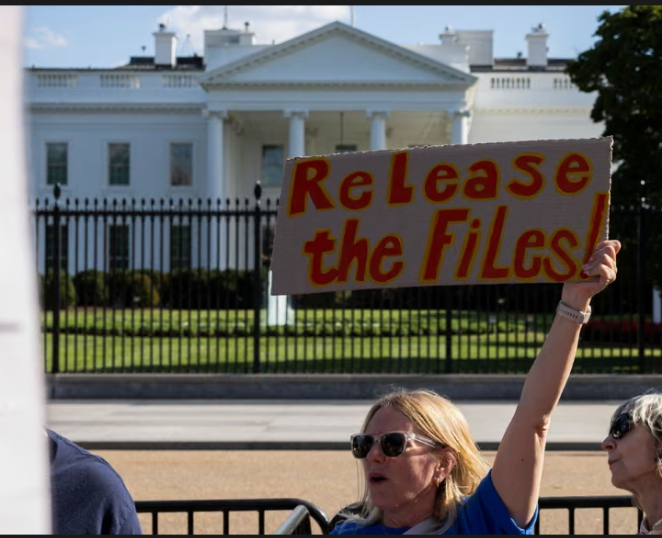
Although the act required full release, only one batch has emerged, fueling criticism from lawmakers, survivors, and advocacy groups demanding accountability and completeness.
Senate leaders have threatened legal action, alleging selective disclosure may mislead the public while shielding certain individuals from scrutiny.
Trump dismissed the files as a “hoax,” framing the controversy as a distraction from Republican achievements and policy initiatives underway nationally.
“What this whole thing is with Epstein is a way of trying to deflect,” Trump claimed, citing military shipbuilding and economic priorities instead.
Observers note that downplaying the issue contrasts sharply with public demands for clarity surrounding Epstein’s influence and potential institutional failures.
The Trump Epstein files controversy has therefore become both a legal battle and a political flashpoint shaping media narratives and partisan messaging.
Former treasury secretary Larry Summers was cited by Trump as an example of reputational harm following revelations of prior correspondence with Epstein.
Summers announced a step back from public life after emails surfaced, illustrating the lasting consequences of association regardless of proven misconduct.
Such cases intensify debate over whether exposure constitutes justice or collateral damage inflicted by incomplete contextual disclosure.
Clinton’s spokesperson, Angel Urena, called for complete transparency, urging release of any remaining materials referencing Clinton, including photographs and correspondence.
“Someone or something is being protected,” Urena said, asserting selective disclosure undermines confidence in the Justice Department’s impartiality.
Urena emphasized that those repeatedly cleared require no protection, advocating comprehensive release to dispel lingering suspicion and speculation.
Survivors of Epstein’s abuse have echoed similar calls, arguing transparency is essential for accountability, closure, and systemic reform within justice institutions.
Advocates warn that partial releases risk retraumatizing victims while enabling political actors to manipulate narratives for strategic advantage.
Epstein’s death, officially ruled a suicide, continues to fuel mistrust, conspiracy theories, and demands for independent investigation into custodial failures.
Within this context, Trump’s remarks have drawn criticism for centering reputational harm over survivor experiences and systemic accountability.
Supporters argue Trump is highlighting fairness, cautioning against trial-by-association in an era dominated by viral images and rapid judgment.
The controversy underscores tensions between openness and privacy, especially when documents implicate individuals without clear evidence of criminal involvement.
Legal experts stress that photographs alone lack probative value, urging careful interpretation alongside corroborating testimony and verified records.
Nevertheless, public pressure remains intense, reflecting widespread skepticism toward elites and institutions historically perceived as unaccountable.
Media coverage has amplified scrutiny, with images circulating rapidly, shaping perceptions before official explanations can provide nuance.
The Trump Epstein files controversy thus illustrates the power of visual evidence within modern political communication and public discourse.
It also raises ethical questions about releasing sensitive materials without sufficient context, potentially harming innocent parties irreversibly.
Congressional oversight committees continue monitoring the Justice Department’s compliance with disclosure requirements mandated by federal law.
Failure to release remaining documents may prompt litigation, further politicizing an already volatile issue during a polarized political climate.
Trump’s framing positions himself as defender of reputations, yet critics argue his long association with Epstein complicates that stance.
Historical records show Trump and Epstein socialized, though Trump has denied involvement in criminal conduct or knowledge thereof.
This duality intensifies scrutiny, reinforcing calls for consistent standards regardless of political affiliation or personal alliances.
Ultimately, the Trump Epstein files controversy reflects broader struggles over truth, power, and accountability within American political culture.
Read also: Chris Rea death: ‘Driving Home For Christmas’ singer dies aged 74 after short illness
As disclosures continue, public trust hinges on transparent processes that balance justice for survivors with fairness toward those peripherally connected.
The unfolding debate suggests the Epstein saga will remain a defining test for institutional credibility, political integrity, and democratic accountability.