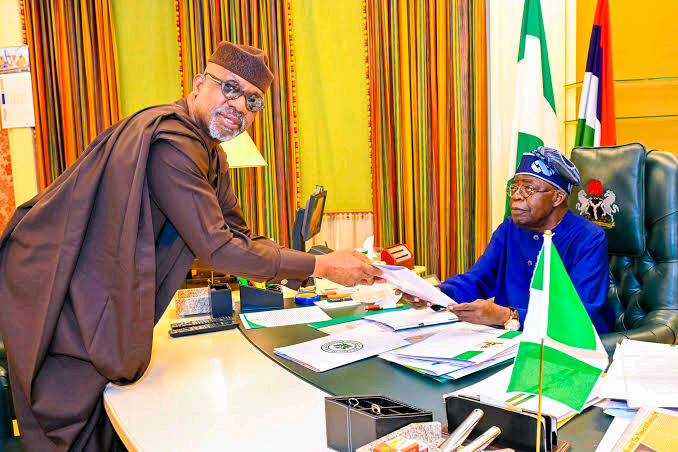
President Bola Tinubu’s approval for the commencement of commercial oil drilling in Ogun State has opened a new chapter in Nigeria’s energy and coastal economic development strategy, with far-reaching implications for local communities, maritime security, and national revenue generation.
The approval, which covers oil exploration activities at Tongeji Island in Ogun Waterside Local Government Area, was disclosed by Governor Dapo Abiodun during a courtesy visit by senior officers of the Nigerian Navy’s Western Naval Command to the Government House in Abeokuta.
The decision also coincided with renewed presidential backing for the long-delayed Olokola Deep Seaport project, a move widely seen as a major boost to Ogun State’s strategic economic ambitions.

According to the governor, the twin projects reflect the Federal Government’s growing focus on unlocking underutilised coastal assets while promoting inclusive growth in Nigeria’s littoral regions.
Abiodun explained that the approval for oil drilling would immediately trigger increased economic activities in Ogun’s coastal belt, particularly among fishing settlements and island communities that have historically remained on the margins of national development planning.
“Mr President has approved the commencement of commercial oil drilling operations at Tongeji Island, and going forward, you will begin to see a lot of activities there,” the governor said.
Commercial Oil Drilling in Ogun and Nigeria’s Coastal Economy
The approval of commercial oil drilling in Ogun marks a significant expansion of Nigeria’s oil production geography beyond its traditional Niger Delta base.
Industry analysts say the development could help diversify crude output sources while reducing pressure on long-established oil-producing states.
For Ogun State, the project represents more than just oil extraction. Government officials say it is expected to catalyse infrastructure development, job creation, and small-scale enterprise growth across Ogun Waterside and neighbouring communities.
Abiodun noted that the initiative was designed to promote economic inclusion, particularly for residents of Tongeji Island and surrounding riverine settlements, who are expected to benefit from auxiliary services linked to drilling operations, logistics, security, and community development programmes.
The governor also emphasised that the presence of the Nigerian Navy would be critical in ensuring that oil exploration activities are protected from sabotage, smuggling, and cross-border criminal incursions.
Olokola Deep Seaport Back on Track
Alongside the oil drilling approval, President Tinubu has also given the green light for the immediate take-off of the Olokola Deep Seaport, a multibillion-dollar project that has been stalled for years due to regulatory, funding, and investor confidence challenges.
Abiodun described the revival of the port as a personal intervention by the President, revealing that multiple high-level meetings had been held in recent weeks to accelerate the project’s implementation.
“Our proposed Olokola Port, which has been on the drawing board for several years, is now back on the table. In the last two weeks alone, we have held several meetings on Olokola, and Mr President has clearly expressed his desire to see the port become a reality,” he said.
The governor disclosed that Tinubu had directed that construction work should be significantly advanced between now and next year, a timeline that suggests urgency in easing Nigeria’s port congestion crisis.
Once completed, the Olokola Deep Seaport is expected to complement existing ports in Lagos by providing an alternative logistics corridor, particularly for bulk cargo and oil-related exports.
Abiodun revealed that the new seaport and its surrounding infrastructure would be developed under a broader concept known as the Blue Marine Economic Zone, reflecting Ogun State’s ambition to leverage its coastline for maritime trade, energy, and industrial growth.
The zone is expected to integrate port operations, oil and gas services, fisheries, ship repair facilities, and export-oriented manufacturing clusters. Officials believe this integrated approach could position Ogun as a major maritime and energy hub in the South-West.
The governor added that the planned coastal road infrastructure would further strengthen the zone’s logistics advantage by providing an alternative route to Lagos, thereby reducing traffic bottlenecks and improving turnaround time for cargo movement.
Security, Navy Partnership and Border Protection
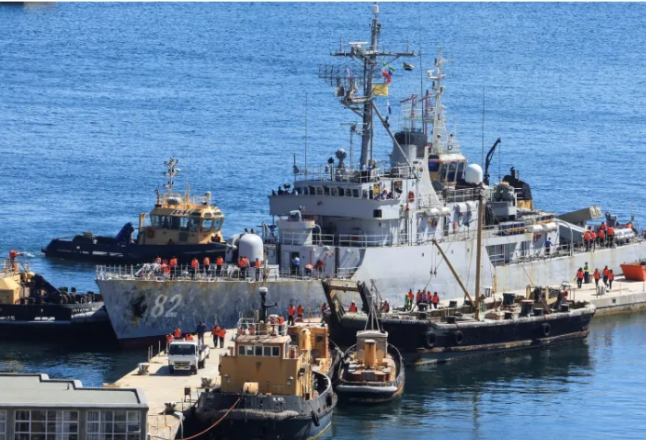
During the visit, Abiodun commended the Nigerian Navy for establishing a Forward Operations Base at Tongeji Island, describing it as a strategic move that would safeguard both the oil drilling operations and Nigeria’s territorial integrity.
Ogun State shares a porous border with the Republic of Benin, making it vulnerable to smuggling, illegal bunkering, and other transnational crimes. The governor said the enhanced naval presence would deter criminal elements and prevent unauthorised movements along the waterways.
Rear Admiral Abubakar Abdullahi Mustapha, Flag Officer Commanding Western Naval Command, confirmed that the naval outpost at Tongeji Island would be upgraded in response to the area’s growing strategic importance.
He described Ogun State as critical to national security, noting that the command’s mandate included securing Nigeria’s maritime borders and supporting economic assets such as ports and oil facilities.
“The visit is aimed at strengthening synergy between the Nigerian Navy and the Ogun State Government, particularly as we work to safeguard border areas and protect emerging economic infrastructure,” Mustapha said.
Social Impact and Community Development
Beyond security and revenue, the Ogun State Government said it was committed to improving living conditions in coastal communities affected by the oil drilling project. Abiodun disclosed that plans were underway to provide basic amenities, including improved access roads, healthcare services, and social infrastructure.
He stressed that sustainable development would be prioritised to ensure that host communities benefit directly from the economic opportunities created by commercial oil drilling in Ogun.
Describing Rear Admiral Mustapha as a seasoned officer, the governor expressed confidence that the collaboration between the state government and the Navy would strengthen peace, stability, and economic progress across Ogun State.
With presidential backing now secured for both oil drilling and the Olokola Deep Seaport, stakeholders believe Ogun State is poised to play a more prominent role in Nigeria’s evolving energy and maritime economy.
About The Author