Iran BRICS naval drills have placed South Africa at the centre of an escalating diplomatic dispute involving the United States, internal government divisions, and rising tensions within the BRICS bloc.
The controversy erupted after Iran’s navy participated in joint maritime exercises hosted by South Africa earlier this month, despite reported objections from President Cyril Ramaphosa.
South African authorities have since launched an internal inquiry to determine how Iranian warships remained involved after alleged instructions for Tehran’s withdrawal.
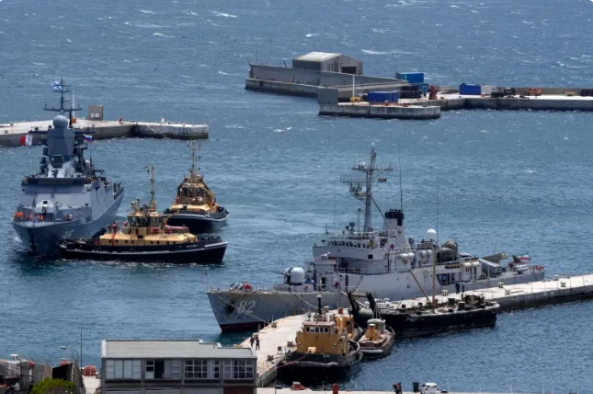
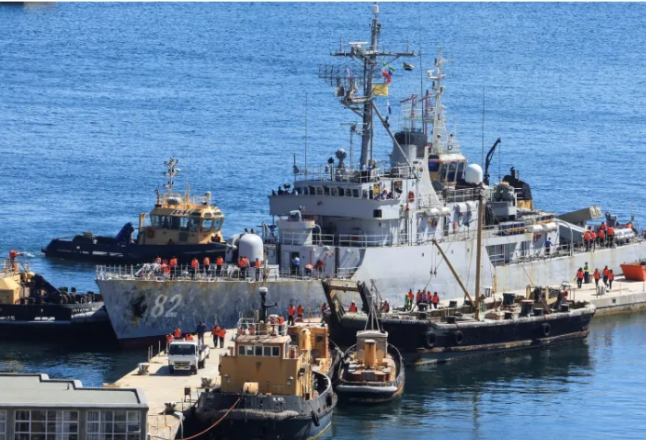
The naval drills, known as Will for Peace 2026, were conducted in South African waters near Simon’s Town, a strategic naval base close to Cape Town.
They brought together vessels from several BRICS nations, expanding the group’s role beyond economics into visible military and security cooperation.
BRICS now includes Brazil, Russia, India, China, South Africa, Iran, Egypt, Ethiopia, Indonesia, and the United Arab Emirates, reflecting its rapid geopolitical expansion.
While South Africa has previously hosted naval exercises with China and Russia, Iran’s involvement significantly raised the diplomatic stakes.
Iran joined the drills amid intense international scrutiny over its violent crackdown on mass anti-government protests that erupted late last year.
Thousands were reportedly killed or detained during the unrest, prompting condemnation from Western governments and human rights organisations.
The United States reacted angrily, arguing that welcoming Iran’s navy contradicted South Africa’s stated commitment to democracy and human rights.
Washington accused Pretoria of undermining its own moral authority by engaging militarily with a government facing serious human rights allegations.
According to South African media reports, President Ramaphosa privately ordered Iran to withdraw from the exercises before they officially began.
However, three Iranian vessels already deployed reportedly remained active throughout the drills, fuelling claims of insubordination within the military.
The US embassy in South Africa issued an unusually blunt statement accusing the country of “cozying up to Iran” during a moment of repression.
It argued that hosting Iranian security forces was incompatible with the freedoms South Africans had fought to secure during the anti-apartheid struggle.
South African officials initially defended the exercises as routine, stressing that they were planned long before recent US-Iran tensions escalated.
The defence ministry described the drills as essential for maritime safety, search-and-rescue coordination, and improving naval interoperability.
Military commanders emphasised that the exercises aimed to protect shipping lanes vital to global trade rather than project aggressive military power.
China led the training programme, while Iran and China deployed destroyers, and Russia and the UAE contributed smaller corvette-class warships.
South Africa participated with a frigate, while Brazil, Ethiopia, and Indonesia attended only as observers.
India, the current chair of BRICS, conspicuously opted out and publicly distanced itself from the exercises.
New Delhi stressed that the drills were not an institutional BRICS activity and did not reflect a consensus among all member states.
Analysts say India’s absence reflects its careful balancing act between deepening BRICS ties and maintaining strategic relations with Washington.
Iran BRICS naval drills have therefore highlighted internal divisions within the bloc over how far security cooperation should extend.
The controversy also exposed growing strains between South Africa’s civilian leadership and its military establishment.
Opposition parties accused the defence ministry of undermining presidential authority and risking economic retaliation from Western partners.
The Democratic Alliance warned that South Africa was increasingly perceived as aligned with authoritarian regimes rather than a neutral global actor.
South Africa already faces US tariffs on certain exports and diplomatic friction over its genocide case against Israel at the International Court of Justice.
Critics argue that the naval drills provided Washington with additional justification to escalate political and economic pressure on Pretoria.
South African officials later shifted tone, insisting that presidential instructions had been followed and announcing a formal inquiry into the matter.
Defence Minister Angie Motshekga said the investigation would clarify whether Ramaphosa’s orders were misinterpreted or ignored.
The outcome of the inquiry is expected to influence future military engagements involving BRICS partners, particularly Iran.
Iran BRICS naval drills also intensified scrutiny of Pretoria’s broader foreign policy orientation amid a rapidly polarising global order.
Supporters argue South Africa has the right to pursue non-aligned partnerships without Western interference or double standards.
They note that the US itself maintains relations with controversial allies while criticising others for similar engagements.
Opponents counter that neutrality should not extend to military cooperation with governments accused of mass repression.
The drills occurred against the backdrop of worsening US-Iran relations following last year’s direct conflict between Iran and Israel.
That conflict saw US strikes on Iranian nuclear sites and retaliatory Iranian attacks on American interests in the Gulf region.
By hosting Iranian warships, South Africa inadvertently positioned itself within that broader confrontation.
For BRICS, the episode underscores unresolved questions about whether the bloc is evolving into a geopolitical counterweight to Western alliances.
While originally conceived as an economic grouping, BRICS has steadily expanded into security, finance, and diplomatic coordination.
Iran’s recent inclusion has accelerated Western perceptions of BRICS as an anti-US alignment, despite members’ denials.
Iran BRICS naval drills may therefore mark a turning point in how the bloc is viewed internationally.
Whether South Africa recalibrates its approach will depend on domestic political pressures and the inquiry’s findings.
What is clear is that the drills have exposed fault lines within BRICS and heightened South Africa’s diplomatic balancing challenge.
About The Author