

President Bola Ahmed Tinubu has intensified calls for State Police Reform, formally asking the Nigerian Senate to initiate constitutional changes that would allow individual states to establish their own police structures.
The appeal was made during an interfaith Ramadan breaking of fast with senators at the Presidential Villa in Abuja, where the President underscored the urgency of restructuring Nigeria’s security framework.
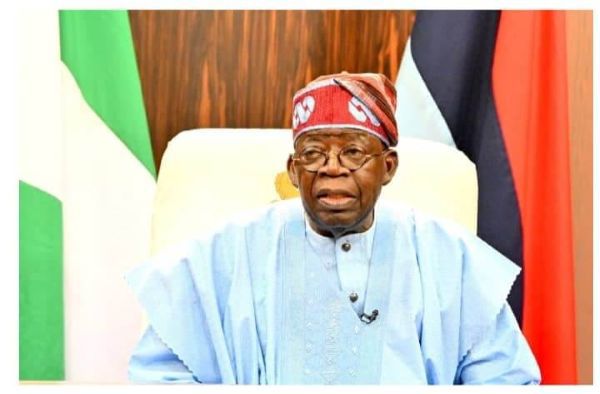
Addressing lawmakers, Tinubu said Nigeria’s security challenges have evolved beyond what the current centralized policing system can effectively manage.
He pointed to persistent terrorism, rural banditry, and insurgency as clear signals that a new approach is necessary.
According to him, State Police Reform is not merely a political proposition but a practical solution aimed at strengthening grassroots security and enabling local authorities to respond swiftly to threats within their jurisdictions.
The President described the proposed Constitutional Amendment as a patriotic duty that demands bipartisan commitment.
He reminded senators that the 1999 Constitution, though foundational, was not designed to remain static in the face of emerging realities.
By embedding state-controlled policing within the constitutional framework, he argued, Nigeria would be aligning its governance structure with present-day security demands.
Tinubu stressed that the country’s forests and rural corridors have increasingly become safe havens for criminal groups.
He maintained that empowering states through State Police Reform would allow for better intelligence gathering and coordinated community-level enforcement.
He urged lawmakers to approach the amendment process thoughtfully, noting that national unity must remain central to the discussions.
Framing his request within the broader theme of national solidarity, the President called for collective responsibility among all arms of government.
He said the vision of Nigeria’s founding leaders was rooted in cooperation rather than division.
For him, advancing State Police Reform represents a continuation of that democratic journey—one that balances federal authority with state-level initiative.
Beyond security matters, Tinubu used the occasion to acknowledge the legislature’s role in supporting his administration’s economic direction.
He credited the Senate for standing behind policies that he described as difficult but necessary.
In particular, he defended the removal of petrol subsidies and reforms within the foreign exchange system, saying they were crucial in restoring fiscal discipline.
According to the President, eliminating the subsidy regime curtailed what he called systemic leakages and abuse.
He argued that Nigeria is gradually moving toward economic stability as a result of these changes.
While acknowledging that reforms often attract criticism, Tinubu maintained that responsible leadership requires long-term thinking over short-term popularity.
The President also addressed claims from opposition figures who accuse his administration of weakening alternative political platforms.
Without naming individuals, he rejected suggestions that dissenting voices were being suppressed.
He said political realignments and defections are personal decisions made within the democratic space, not outcomes of coercion.
In his response, Senate President Godswill Akpabio assured the President of the chamber’s continued collaboration.
He noted that proposals from the executive branch consistently receive prompt attention and detailed review.
According to Akpabio, the Senate remains committed to examining every bill on its merit, especially those touching on National Security and governance reforms.
Akpabio explained that legislative scrutiny sometimes occurs quietly, away from social media debates, but always with national interest in mind.
He expressed optimism that ongoing cooperation between the executive and legislature would yield measurable benefits for Nigerians in the coming years.
Observers say the renewed push for State Police Reform may spark fresh debate across political and civil society circles.
While supporters argue that decentralizing policing will improve accountability and rapid response, critics have previously raised concerns about potential misuse at the state level.
Nonetheless, the President’s direct appeal to lawmakers signals that the matter could soon dominate legislative discussions.
As Nigeria continues to confront complex security threats and economic adjustments, the intersection of Constitutional Amendment, Economic Reforms, and National Security appears central to the administration’s agenda.
Ireport247news
About The Author


