The Thailand-Cambodia border conflict has intensified again as fresh clashes erupted despite diplomatic efforts, underscoring fragile ceasefire hopes and deepening humanitarian concerns across contested frontier communities.
According to reports, the renewed violence marks one of the deadliest phases of the Thailand-Cambodia border conflict, unfolding just hours before regional leaders convened emergency talks in Kuala Lumpur.
Cambodia’s Defence Ministry accused Thai forces of deploying fighter jets, alleging aerial bombardments and prohibited weapons, claims Bangkok firmly denies amid mounting regional and international scrutiny.
Thai media outlets reported heavy exchanges of fire along the border, stating Cambodian units used artillery and rockets, igniting fires that destroyed homes and critical civilian infrastructure.
The Thailand-Cambodia border conflict has displaced hundreds of thousands, forcing families to flee villages, abandon livelihoods, and seek shelter in overcrowded camps lacking adequate food and medical care.
Cambodian authorities estimate more than half a million civilians have been displaced internally, while Thai officials report similar upheaval affecting border districts under sustained shelling.
Both governments blame each other for violating previous ceasefire commitments, deepening mistrust that complicates mediation efforts led by the Association of Southeast Asian Nations.
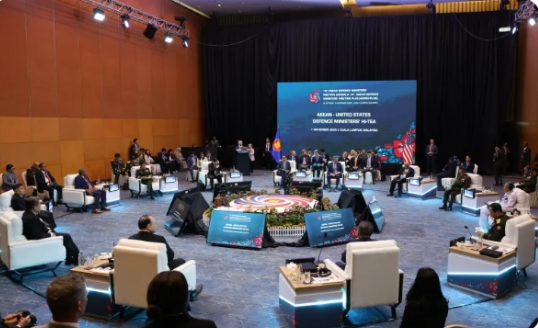
ASEAN foreign ministers gathered in Malaysia seeking to revive a fragile truce, emphasizing dialogue, restraint, and regional stability amid fears of wider escalation.
Malaysia, serving as ASEAN chair, has positioned itself as a neutral broker, urging immediate cessation of hostilities and humanitarian access for affected populations.
The Thailand-Cambodia border conflict has historical roots tied to disputed boundaries, colonial-era maps, and contested sovereignty over border territories.
Tensions have periodically flared for decades, but analysts say current fighting is unusually intense, involving heavier weaponry and expanded military deployments.
Observers warn prolonged clashes risk destabilizing mainland Southeast Asia, threatening trade routes, cross-border commerce, and regional investment confidence.
Border towns once dependent on tourism and trade now face devastation, with damaged markets, shuttered casinos, and disrupted supply chains.
Human rights organizations have called for independent investigations into alleged violations, including civilian harm and the reported use of banned weapons.
Both Thailand and Cambodia reject accusations of targeting civilians, insisting military actions are defensive responses to provocations across the border.
The Thailand-Cambodia border conflict has drawn global attention, with major powers urging restraint while supporting ASEAN-led diplomatic initiatives.
The United States publicly endorsed Malaysia’s mediation efforts, encouraging both sides to recommit to dialogue and uphold international humanitarian law.
China, a key regional actor with ties to both governments, called for calm and expressed readiness to support peaceful resolution mechanisms.
Read also:Israeli death penalty bill violates international law, Palestinian analysts warn
Despite diplomatic pressure, fighting continued on multiple fronts, highlighting the gap between political negotiations and realities on the ground.
Analysts suggest domestic political pressures in both countries may be influencing hardline military postures, complicating compromise at the negotiating table.
In Cambodia, nationalist sentiment has surged, with officials portraying resistance as a defense of sovereignty and territorial integrity.
Thai leaders, facing internal security concerns, have emphasized protecting border communities and preventing further incursions.
The Thailand-Cambodia border conflict has also strained bilateral relations beyond military channels, affecting trade agreements and cultural exchanges.
Regional economists warn sustained instability could undermine ASEAN’s broader vision of economic integration and collective security.
Humanitarian agencies report shortages of clean water, shelter materials, and medical supplies in displacement camps along the frontier.
Children and elderly residents are among the most vulnerable, facing trauma, disrupted education, and limited access to healthcare services.
International aid groups have appealed for safe corridors to deliver assistance, urging both militaries to respect humanitarian principles.
ASEAN’s credibility as a conflict mediator is being tested, with critics questioning its consensus-based approach during active hostilities.
Supporters argue ASEAN remains uniquely positioned to de-escalate the Thailand-Cambodia border conflict through sustained engagement and regional trust.
The Kuala Lumpur talks represent the first direct meeting between the two governments since fighting resumed earlier this month.
Diplomats hope face-to-face dialogue can reduce miscalculations, clarify accusations, and lay groundwork for a monitored ceasefire.
Previous ceasefires collapsed quickly, underscoring the need for verification mechanisms and confidence-building measures.
Experts suggest joint border patrols, demilitarized zones, and third-party monitoring could help stabilize the situation.
The Thailand-Cambodia border conflict also highlights unresolved border demarcation issues inherited from colonial-era agreements.
Legal experts note international arbitration remains an option, though both sides have historically resisted external rulings.
Public opinion in both countries remains polarized, fueled by social media narratives and nationalistic rhetoric.
Misinformation has complicated crisis management, prompting calls for transparent communication from official sources.
Journalists covering the conflict face access restrictions and security risks, limiting independent verification of battlefield claims.
Despite challenges, civil society groups in Thailand and Cambodia have called for peace, urging leaders to prioritize civilian lives.
Religious leaders and community elders along the border have organized local mediation efforts to prevent further violence.
The Thailand-Cambodia border conflict underscores the human cost of unresolved disputes, with ordinary people bearing the brunt of geopolitical tensions.
As ASEAN deliberations continue, expectations remain cautious, tempered by ongoing reports of sporadic fighting.
Diplomats stress any durable solution must address security concerns while tackling humanitarian needs and political grievances.
Failure to halt violence risks entrenching hostility and prolonging displacement, reconstruction challenges, and regional instability.
For now, the region watches anxiously, hoping diplomacy can succeed where military force has failed.

The outcome of current talks may shape not only the Thailand-Cambodia border conflict, but ASEAN’s future role in regional peacekeeping.