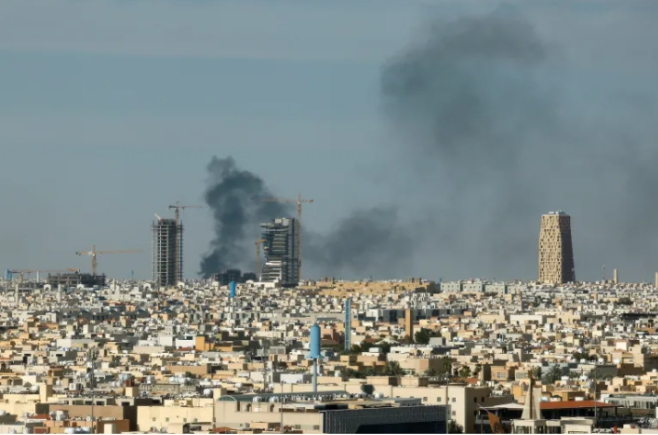
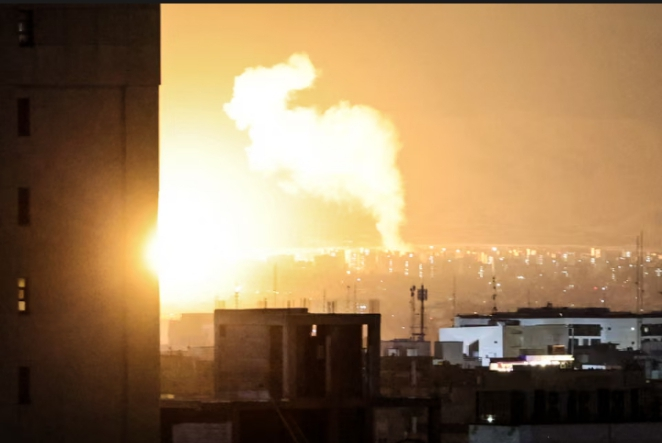
The phrase “Tehran night of terror” quickly spread among residents as explosions rocked the Iranian capital overnight, leaving thousands frightened, sleepless and uncertain about what the next hours might bring.
Residents across the sprawling city said the bombardment was among the “most terrifying nights” they had experienced since the conflict intensified, with explosions echoing through neighbourhoods and shaking homes repeatedly.
Many Tehran residents described the sounds of fighter jets roaring overhead followed by powerful blasts. One witness said the explosions felt “so close that the walls trembled.”
A teacher living in central Tehran said she spent the night awake listening to the blasts. “I thought the ceiling might collapse,” she said, describing a moment she believed death was imminent.
The teacher, who asked not to be identified, said the fear was overwhelming. “We are caught between forces far beyond ordinary people,” she explained during a brief message sent abroad.

For many families, the Tehran night of terror unfolded in darkness as electricity outages and an internet blackout made it difficult to gather information about what was happening around them.
Several residents said they relied on phone calls or encrypted messages to communicate with friends abroad. “We don’t know what is real anymore,” one young student said.
Iranian authorities reportedly limited internet access during the bombardment, making independent verification of events inside the city difficult for journalists and international observers.
Despite the lack of reliable information, residents said they could clearly hear the intensity of the strikes. “The explosions came in waves,” one witness said.
People described identifying the sounds of different weapons. “You can tell when it’s a missile or air defence,” said one man who had been watching the night sky.
He added that streaks of light crossing the sky were visible from rooftops. “It looked like a storm of fire above the city,” he said quietly.
Some residents said the psychological toll of the air raids may prove as damaging as the physical destruction left behind by the explosions.
A young mother said she struggled to comfort her child during the bombardment. “He kept asking if we were going to die tonight,” she said.
Across Tehran, families gathered in basements or hallways hoping the interior walls would provide protection from potential blasts nearby.
One resident said the silence between explosions was often the most frightening moment of the night.
“You wait and wonder when the next one will hit,” he explained. “Those few seconds feel endless.”
Another Tehran resident who fled the city described the attacks as relentless. “It felt like the whole sky was exploding,” he said.
He said he eventually decided to leave with relatives early in the morning. “We packed quickly and drove away,” he said.
Some highways leading out of the capital reportedly saw increased traffic as people attempted to escape potential further attacks.
However, not everyone had the means or ability to leave the city during the night.
A university student said he and his family remained in their apartment, listening to explosions while watching the windows shake violently.
“We thought the glass would shatter,” he said.
The Tehran night of terror also caused concern about cultural landmarks and historic buildings located throughout the capital.
Images circulating online showed damage to structures near historic sites, although the full extent of destruction remains unclear.
Residents also expressed fear that civilian neighbourhoods might be caught in the crossfire if military targets are located nearby.
One witness said: “Even if they aim at military facilities, we live close to them.”
He added that civilians often become the “unseen victims” of large-scale conflicts.
As morning arrived, many residents said the atmosphere across Tehran felt tense and strangely quiet.
Streets that are normally crowded appeared subdued, with fewer cars and pedestrians visible in several districts.
Only a handful of shops opened in some neighbourhoods as residents cautiously stepped outside to assess the situation.
One man said he walked through his neighbourhood expecting to see heavy destruction.
“I feared everything would be ruins,” he admitted.
Although some buildings showed signs of damage, other areas appeared relatively intact, offering temporary relief to residents.
Still, uncertainty continued to dominate conversations among those who remained in the city.
A human rights activist said many people were struggling emotionally with the ongoing war.
“People are exhausted,” she said. “They have endured years of hardship and now this conflict adds another layer of fear.”
According to her, reactions to the bombardment vary widely among the population.
Some residents blame foreign powers for the strikes, while others criticize Iran’s leadership for allowing tensions to escalate.
“Everyone has a different interpretation,” she explained.
However, most citizens share a common concern for the safety of ordinary civilians caught in the middle.
Another resident compared the situation to a “trap” where citizens have little control over their fate.
“No matter who wins or loses politically, it is ordinary people who suffer,” he said.
A former political prisoner living in western Tehran said residents feel stuck between competing powers.
“People feel like pawns,” she explained.
She described the mood as one of deep anxiety mixed with frustration about the lack of control over events shaping their lives.
For many Tehran residents, the Tehran night of terror reinforced the fear that the conflict could escalate further in the coming days.
Military analysts have warned that continued strikes could intensify if diplomatic efforts fail to reduce tensions.
Residents say they hope international leaders will seek negotiations before the situation worsens.
“War does not solve anything,” one student said.
Others worry that the destruction could escalate dramatically if the conflict spreads to more densely populated areas of the city.
A taxi driver said he fears the capital could face sustained bombardment if fighting continues.
“We pray that tonight will be quieter,” he said.
But many residents remain skeptical that calm will return soon.
Another witness said people have begun preparing for more difficult nights ahead.
“Everyone keeps emergency bags ready now,” he said.
These bags often include water, documents, medicine and basic supplies in case families need to flee quickly.
Some residents have also started identifying nearby shelters or safer locations within buildings.
A volunteer medic said communities are quietly organizing to help neighbours if the situation deteriorates further.
“People help each other during crises,” he said.
Despite fear and exhaustion, acts of solidarity have emerged across the capital.
Neighbours share food, information and support as they navigate the uncertain days ahead.
One woman said a stranger offered her family shelter during the bombardment.
“He simply opened his door and said, ‘Come inside if you are scared,’” she recalled.
Moments like these have helped residents maintain hope despite the devastating atmosphere surrounding them.
Yet the memories of the Tehran night of terror will likely remain deeply etched in the minds of those who experienced it.
As one resident said quietly, “You never forget the night you truly believed you might die.”
For now, Tehran waits anxiously for the next development in a conflict that has already transformed daily life.
Many residents say they simply hope the coming nights will bring silence instead of explosions.
But until then, the echoes of that terrifying night continue to haunt the city.
Read also: Trump White House propaganda video mocked online after Hollywood characters used to promote “justice the American way”