

Syria ceasefire clashes broke out on Monday across parts of northeastern Syria, barely a day after the Syrian government and the Kurdish-led Syrian Democratic Forces (SDF) signed a ceasefire agreement intended to end weeks of deadly fighting that displaced tens of thousands of civilians.
The clashes were reported near strategic locations including prisons holding ISIL detainees, oil-rich regions in Deir Ezzor, and towns in Hasakah and Raqqa, according to statements from both sides and Syrian state media.
The renewed violence has cast doubt on the durability of the fragile truce announced on Sunday.
A spokesperson for the Kurdish People’s Protection Units (YPG), which forms the backbone of the SDF, said fighting was taking place around a prison in the town of al-Shadadi that holds thousands of ISIL fighters.
“Armed groups are involved in the attack around the prison,” YPG spokesperson Siyamend Ali said, without specifying which factions were responsible.
The SDF accused government-affiliated forces of continuing attacks despite the ceasefire, describing the situation as “highly dangerous.” In a statement released by its media centre, the SDF said factions linked to Damascus were attempting to advance towards al-Aqtan prison near Raqqa.
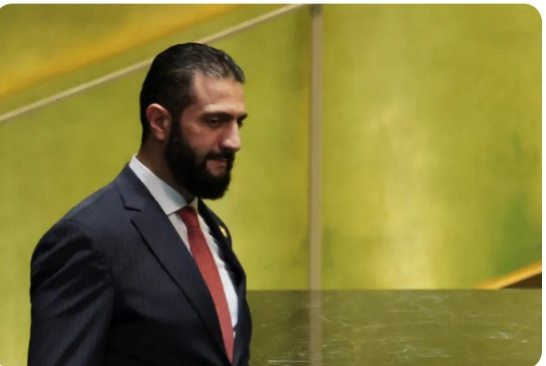
“Such actions could lead to serious security repercussions that threaten stability and open the door to a return of chaos and terrorism,” the statement warned.
Syrian state media, however, blamed “terrorist groups” and remnants of the former regime for attempting to derail the agreement.
The state news agency SANA reported that three Syrian soldiers were killed and others wounded in attacks near Aleppo and the Tishrin Dam area.
“Some terrorist groups from the PKK and remnants of the former regime are attempting to disrupt the implementation of the agreement,” SANA quoted a military source as saying.
Despite the unrest, Syrian government forces continued to deploy into formerly SDF-controlled territory under the terms of the ceasefire.
An official from Syria’s Defence Ministry confirmed that government-affiliated forces had reached the outskirts of Hasakah, a key city in the country’s northeast.
Under the agreement, the SDF had permitted Syrian troops to enter several areas as part of a broader plan to integrate Kurdish-led forces into the national army and return public institutions to state control.
Syrian President Ahmed al-Sharaa has outlined steps to restore federal authority in the northeast, including security oversight and administrative control in Hasakah and Raqqa.
One of the most sensitive aspects of the deal involves responsibility for prisons housing thousands of captured ISIL fighters.
Under the integration agreement, control of these facilities was to be transferred to the Syrian government — a move that has heightened tensions amid Syria ceasefire clashes near detention centres.
Government troops have also seized control of the al-Omar and al-Tanak oilfields in Deir Ezzor, fulfilling a key condition of a March 2025 agreement between Damascus and the SDF. The oilfields are considered critical to Syria’s economic recovery after more than a decade of war.
Analysts warn that any instability around ISIL detention facilities could have regional consequences. “The collapse of security at these prisons would be a nightmare scenario,” one regional security analyst told newsmen. “It risks an ISIL resurgence not just in Syria, but beyond.
France announced it would convene a national security meeting on Monday, with Syria among the key issues on the agenda. French officials said they were closely monitoring developments and reiterated their support for the ceasefire framework, despite concerns over ongoing violence.
Meanwhile, President al-Sharaa is set to become Syria’s first leader to attend the World Economic Forum in Davos later this week, a symbolic step aimed at reintroducing Syria to global diplomatic and economic discussions.
“Syria is entering a new phase of stability and reconstruction,” a Syrian official said ahead of the Davos meeting, despite the renewed clashes.
The outbreak of Syria ceasefire clashes highlights the deep mistrust between Damascus and the Kurdish-led forces, even as both sides publicly commit to unity and integration.
Previous agreements between the two parties have failed to hold, often collapsing amid disputes over security control and political authority.
Residents in affected areas expressed cautious concern, with some fearing that the ceasefire could unravel entirely if violence continues. “We hoped the fighting was over,” said a resident of Raqqa. “But the sounds of gunfire tell us nothing is certain yet.”
As negotiations continue and deployments expand, the coming days will be crucial in determining whether the ceasefire can survive — or whether Syria is once again sliding back into open conflict.
Security sources say the renewed confrontations underline the complexity of implementing the ceasefire on the ground, particularly in mixed-control areas where rival forces operate in close proximity.
Local commanders from both sides have accused each other of provocation, while civilians report sporadic gunfire, roadblocks and increased military patrols across key towns in northeastern Syria.
In Hasakah and its surrounding countryside, residents described a tense atmosphere as government-affiliated forces moved closer to urban centres previously administered by the SDF.
Shops opened cautiously and schools remained partially closed, with many families choosing to stay indoors amid uncertainty over whether fighting could escalate further.
Humanitarian organisations have also raised concerns over the potential impact of renewed violence on displaced populations.
Aid agencies estimate that tens of thousands of people were forced from their homes during the weeks of fighting that preceded the ceasefire, and warn that even limited clashes could trigger fresh displacement in already overstretched communities.
The presence of ISIL detainees at the centre of the clashes has drawn particular international concern. Western officials have repeatedly warned that instability around detention facilities could allow hardened fighters to escape, undermining years of efforts to contain the group following its territorial defeat in Syria and Iraq.
The United States, which has long backed the SDF in the fight against ISIL, has not issued an immediate public response to the latest fighting but has previously urged all sides to avoid actions that could jeopardise counterterrorism operations. Washington has also supported negotiated arrangements to prevent clashes between Kurdish-led forces and Damascus.
Regional analysts say the ceasefire represents a significant political shift, but one that remains fragile without clear mechanisms for enforcement and trust-building.
While the integration of SDF fighters into the Syrian army is seen as a major concession, disagreements over command structures, local governance and security responsibilities persist.
Economically, the outcome of the truce carries major implications for Syria’s recovery. Control of oil and gas fields in the northeast could provide much-needed revenue for a state battered by years of sanctions and war, but only if stability can be maintained and infrastructure protected from sabotage or renewed fighting.
Diplomatic sources say President Ahmed al-Sharaa’s planned appearance at the World Economic Forum is intended to signal a return to international engagement.
However, ongoing Syria ceasefire clashes risk undermining that message by reinforcing perceptions that the conflict remains unresolved despite political agreements.
For many Syrians, the ceasefire has brought cautious hope mixed with deep scepticism. Years of failed truces and broken promises have left communities wary of celebrating too early, even as some families have begun returning to areas recently abandoned during the fighting.
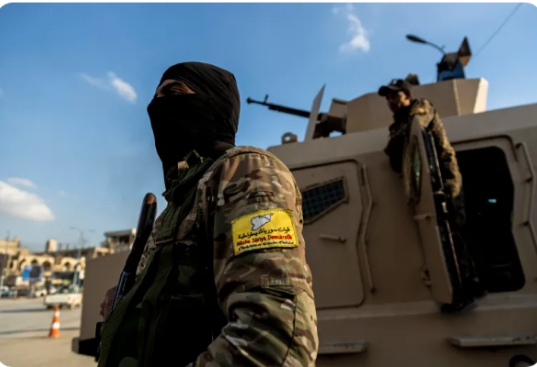
Observers note that the coming weeks will be decisive, as both sides test the limits of the agreement while international actors watch closely for signs of escalation or compromise.
Whether the ceasefire evolves into a durable settlement or collapses under renewed pressure may shape Syria’s political and security landscape for years to come.
Read more here: Ireport247news
About The Author


