

South Africa allowed 153 Palestinian passengers to disembark after a harrowing 12-hour plane ordeal, exposing bureaucratic delays, humanitarian challenges, and the critical role of civil society support.
The plane ordeal began after the chartered flight landed from Kenya, but passengers were initially prevented from leaving due to missing departure stamps in their passports.
South Africa’s Border Management Authority confirmed that passengers could disembark once Gift of the Givers guaranteed accommodation and basic support during their temporary stay in the country.
Authorities explained that the Palestinian refugees had not indicated the length of their stay or provided an address, causing delays under standard immigration protocols for entry.
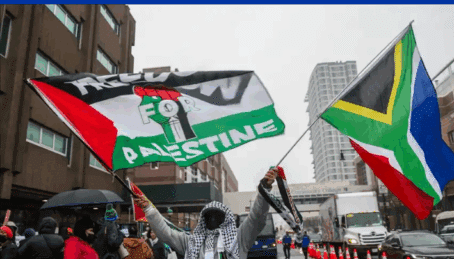
The plane ordeal sparked public outrage in South Africa, a nation widely recognized for its strong support for Palestinian rights and opposition to Israel’s actions in Gaza.
This was the second chartered flight in recent weeks, following a plane carrying 176 Palestinians, some of whom moved onward to other destinations, highlighting ongoing humanitarian challenges.
Imtiaz Sooliman, founder of Gift of the Givers, said he did not know who organized the flight but described the passengers as deeply traumatized by years of violence in Gaza.
“These people are suffering after two years of genocide,” Sooliman said, explaining that many had endured extreme hardship before arriving in South Africa under difficult conditions.
The first flight highlighted Israel’s approach of moving civilians without proper documentation, increasing the complexity of international travel and creating situations like this plane ordeal.
Sooliman noted Israel deliberately did not stamp passports, worsening the suffering of Palestinian refugees and leaving them stranded in foreign countries without legal entry papers.
Humanitarian organizations quickly intervened to provide immediate support, including food, medical care, and temporary accommodation, ensuring that the plane ordeal did not lead to further hardship.
South Africa’s Home Affairs Ministry confirmed that the assurances from Gift of the Givers enabled authorities to process passengers and allow entry under immigration regulations.
Social worker Nigel Branken said passengers had been instructed by Israeli authorities to leave all belongings behind at an air force base before boarding the flight, increasing stress.
“Clearly, Israel is involved in forcibly relocating civilians, stripping them of documentation, and creating situations like this plane ordeal to displace people,” Branken told reporters.
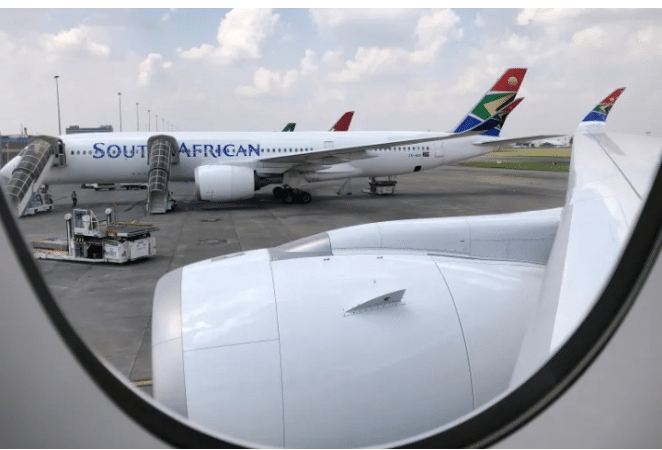
The chartered flight, operated by Global Airways, landed at OR Tambo International Airport, which serves Johannesburg and Pretoria, in the early morning hours, setting the stage for the plane ordeal.
Of the 153 passengers, 130 remained in South Africa while 23 were transferred to other countries, demonstrating the logistical complexities of handling displaced Palestinian refugees.
The plane ordeal highlights the bureaucratic challenges Palestinians face even during legal travel, intensified by international conflict and the lack of standard documentation from Israel.
South African public reaction reflected outrage at the extended wait, emphasizing solidarity with Palestinians and criticizing delays that prolonged suffering during the plane ordeal.
The episode revealed the broader difficulties for Palestinian refugees, including restricted mobility, missing documentation, and the psychological impact of forced displacement from conflict zones.
Sooliman emphasized that the passengers were victims of Israel’s operational measures, describing the removal from Gaza as systematic displacement contributing to the plane ordeal they experienced.
He added that feedback from previous arrivals indicated Israel transported Palestinians without clear documentation, leaving them stranded upon arrival in third-party countries like South Africa.
South African authorities confirmed that the passengers were eligible for 90-day visa-exempt travel, but missing departure stamps initially prevented entry, prolonging the plane ordeal.
The BMA stated that travelers could enter if they met all conditions, including providing a local address and adhering to South Africa’s immigration rules during their stay.
Humanitarian intervention proved critical, as the assurances from Gift of the Givers allowed the plane ordeal to end without further distress for the passengers.
Branken described accounts from passengers forced to leave belongings behind, emphasizing the dehumanizing nature of the plane ordeal and the stress it imposed on already traumatized individuals.
The 12-hour wait became a symbolic example of the obstacles Palestinian refugees face, showing how even friendly countries cannot prevent bureaucratic hurdles during international travel.
South Africa has consistently opposed Israel’s actions in Gaza, pursuing cases at the International Criminal Court, highlighting a commitment to human rights and protection for Palestinian refugees.
President Cyril Ramaphosa has stressed that justice and accountability are essential for peace and healing, reinforcing South Africa’s role in supporting displaced Palestinians affected by the plane ordeal.
Public support was evident, with widespread media coverage and social media outrage focusing on the prolonged detention of passengers and the need for immediate humanitarian action.
Sooliman and other aid organizers stressed the psychological trauma endured, noting that passengers had survived years of bombardments, displacement, and lack of basic necessities in Gaza before the plane ordeal.
The first flight carrying 176 Palestinians faced similar challenges, with some passengers transferred to other countries while others remained under local humanitarian supervision.
South Africa’s response highlighted the critical role of civil society in facilitating humanitarian support, bridging gaps left by bureaucratic procedures, and ending situations like the plane ordeal.
Aid groups coordinated accommodations, food, medical care, and counseling, ensuring passengers were protected and supported immediately upon arrival in South Africa.
Observers noted that Israel’s removal of passport stamps complicates international travel, making displaced Palestinians more vulnerable during the plane ordeal and in foreign countries.
The incident underscores the importance of global civil society advocacy, emphasizing that displaced civilians must be supported regardless of political tensions affecting international travel.
Legal experts argue that South Africa’s actions demonstrate a commitment to international law and human rights, particularly in relation to Palestinian refugees and emergency humanitarian situations.
The BMA’s resolution balanced border security and humanitarian needs, ensuring passengers were processed legally while minimizing the plane ordeal’s impact on vulnerable civilians.
Public discourse emphasized solidarity with Palestinians and the need for predictable procedures to prevent prolonged distress during international displacement and plane ordeals.
Sooliman noted that passengers were physically and psychologically exhausted, having endured weeks of uncertainty, displacement, and bureaucratic delays before arriving in South Africa.
Social workers and volunteers arranged temporary accommodations, medical assistance, and counseling, reflecting a comprehensive approach to mitigating suffering caused by the plane ordeal.
The operation demonstrated the importance of communication between airlines, governments, and aid organizations in avoiding prolonged waiting and stress during humanitarian crises.
South Africa’s response set an example for other nations, showing that proactive intervention can prevent situations like the ordeal from worsening for displaced Palestinians.
Analysts highlight the international responsibility to protect civilians fleeing conflict zones, ensuring safe travel, legal recognition, and access to basic humanitarian support during crises.
The ordeal serves as a reminder of the human cost of the Israel-Palestine conflict, particularly for civilians caught between bureaucracy, politics, and displacement.
The BMA and Gift of the Givers collaboration illustrates the potential for government and civil society coordination to resolve urgent humanitarian situations efficiently.
While 130 Palestinians remain in South Africa, authorities continue coordinating transfers for the remaining passengers to other countries, ensuring continuity of support and safety.
The incident draws attention to forced displacement and refugee protection, emphasizing the need for international frameworks to facilitate safe travel and basic humanitarian access.
South Africa’s intervention reinforces its role as a strong advocate for Palestinian rights while ensuring immigration regulations are respected, showing a balance between law and humanitarianism.
Sooliman reiterated that the passengers were leaving extreme hardship, surviving bombing, displacement, and lack of resources in Gaza before enduring the ordeal.
The humanitarian effort included food, medical assistance, and psychological support, helping passengers recover from trauma and adjust to temporary accommodations during their stay in South Africa.
Social workers emphasized ongoing monitoring, ensuring displaced Palestinians received necessary legal, social, and psychological support throughout their temporary stay.
The 12-hour plane ordeal at OR Tambo International Airport highlights the systemic challenges Palestinian refugees face, including bureaucratic delays, limited documentation, and stress from forced displacement.
South Africa’s intervention and coordinated humanitarian response demonstrate how rapid action can reduce suffering for displaced populations and prevent similar ordeals in the future.
Gift of the Givers and other organizations continue providing comprehensive assistance to arriving Palestinians, ensuring immediate safety, food, and shelter, and mitigating long-term effects of the ordeal.
Public awareness and advocacy played a vital role in resolving the incident, showing how civil society pressure can influence government decisions to protect vulnerable displaced populations.
The arrival and processing of 153 Palestinians exemplify the importance of humanitarian intervention, legal frameworks, and international solidarity in preventing unnecessary suffering during conflict-related displacement and plane ordeals.
About The Author


