
US–Israel attack on Iran has dramatically escalated regional tensions after coordinated airstrikes triggered powerful explosions across central Tehran early Saturday morning, officials confirmed.
US president Donald Trump described the operation as the start of “major combat operations” and warned Iran’s leadership that consequences would be decisive.
In a televised address, Trump urged citizens to “take over your government,” declaring that “the hour of your freedom is at hand.”
Explosions were reported near sensitive compounds, including areas linked to Supreme Leader Ayatollah Ali Khamenei, though Iranian media said he was relocated to safety.
The Pentagon stated the first wave targeted senior commanders and facilities tied to missile development and nuclear infrastructure.
Israeli authorities declared a nationwide emergency, instructing civilians to remain near shelters amid expectations of immediate retaliation.
Within hours, Iran launched what officials called a “crushing response,” firing missiles and drones toward Israeli territory and American installations.
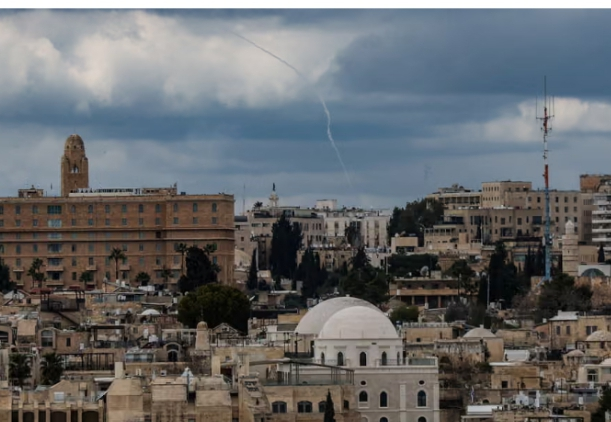
Air raid sirens echoed across Israeli cities as defense systems intercepted incoming projectiles in the night sky.
Blasts were also reported in Bahrain, Abu Dhabi, Kuwait City, and Riyadh following Iranian retaliatory launches.
Iran’s Revolutionary Guards announced there would be “no red lines” in defending national sovereignty against foreign aggression.
State television in Tehran reported multiple impacts across central districts but insisted leadership structures remained operational.
An Iranian official warned the consequences would be “long lasting and extensive” if strikes continued.
The United States had increased its military presence in the region in recent weeks, deploying additional naval assets.
Israeli officials framed the assault as a pre-emptive measure to stop what they described as imminent threats.
Defense sources said intelligence assessments indicated preparations for expanded Iranian drone operations.
Trump later addressed Iranian armed forces directly, urging them to “lay down your weapons” and promising “immunity” for surrender.
He warned that refusal would result in “certain destruction,” escalating rhetoric further.Iran closed its airspace following the attacks, as did Israel, disrupting regional aviation routes.
Airlines diverted flights while neighboring Gulf states heightened security around American bases.
In northern Israel, residents entered underground shelters after authorities activated emergency alerts.Hospitals in Tehran declared emergency status as ambulances responded to blast sites.
Oil markets reacted sharply, with prices rising amid fears of supply disruption.
Diplomatic missions convened urgent consultations at the United Nations headquarters.
European leaders urged “restraint” and warned against steps that could widen the conflict.
Despite international appeals, officials in Washington indicated operations could continue if threats persisted.
Israeli spokespersons reiterated that the strikes were “necessary and defensive.”
Iran’s foreign ministry condemned the action as “a blatant violation of sovereignty.”
Security analysts described the confrontation as one of the most direct clashes between the rivals in decades.
For years, tensions had unfolded through cyber activities and proxy engagements rather than open warfare.
Saturday’s escalation marked a rare instance of overt coordinated military strikes.
Regional governments began reassessing defensive postures amid fears of spillover violence.The United Arab Emirates temporarily suspended civilian flights as a precautionary measure.
Saudi Arabia placed armed forces on heightened readiness amid regional uncertainty.Iranian media broadcast images of smoke rising above government districts in Tehran.

Witnesses described chaotic scenes as emergency crews secured impacted neighborhoods.Israeli emergency services reported injuries caused by falling debris from interceptions.
Global markets showed volatility as investors evaluated geopolitical risks.
Energy analysts warned that disruptions in shipping lanes could affect global supplies.
Diplomats suggested backchannel communications might still be underway despite public hostility.
However, official rhetoric from both governments remained uncompromising.
Trump reiterated that the campaign aimed to ensure “lasting security” for regional allies.
Iranian commanders vowed retaliation would continue “until aggression stops.”
Human rights organizations expressed concern about potential civilian harm.
Internet connectivity in parts of Iran appeared restricted following the strikes.
Observers noted that public appeals for regime change represent a significant escalation.
Israeli messaging in Persian declared to Iranians, “You are not alone.”
Such communications signaled efforts to influence domestic sentiment within Iran.
Military experts cautioned that allied militias could join the confrontation.
Hezbollah and other regional actors were closely monitoring developments.
The scale of missile exchanges underscored the risk of broader regional warfare.
Air defense systems across the Gulf remained on high alert.Shipping companies reviewed maritime routes through strategic waterways.
Emergency meetings were held in multiple capitals to coordinate responses.
US-Israel attack on Iran now stands as a defining geopolitical crisis of 2026.
The coming days will determine whether diplomatic intervention can prevent further escalation.For civilians across the region, uncertainty prevails amid sirens and political ultimatums.
International institutions face mounting pressure to mediate between the adversaries.
Security analysts emphasize that sustained confrontation could destabilize energy markets.
Political leaders worldwide continue urging immediate de-escalation.
Whether this conflict expands or contracts will depend on decisions made in Washington and Tehran.
For now, military operations and retaliatory strikes continue shaping regional dynamics.
The trajectory of US-Israel attack on Iran will influence Middle East stability for years to come.
Read also: Explosive US-Iran strike threat as Washington urges citizens to leave Israel
About The Author