Understanding Today’s Canadian Dollar to Naira Exchange Rate
The Canadian Dollar to Naira exchange rate opened the new month on a cautious but closely watched note as December trading activity began across formal and informal foreign exchange windows.
As of Monday, December 1, Nigeria’s currency markets reflected the lingering volatility that has characterised the country’s FX environment for much of the year.
Traders, remittance receivers, travellers and small importers continued to rely on real-time online conversion platforms and the parallel market for clarity, given limited official supply of the Canadian dollar (CAD) across authorised forex channels.
Market data from multiple currency tracking platforms indicated that the Canadian dollar traded within the range of ₦1,028 to ₦1,037 at the mid-market rate.
These mid-market benchmarks, derived from global currency valuation systems, typically represent the theoretical midpoint between international buying and selling prices.
However, they often differ from what Nigerian consumers face domestically due to liquidity constraints and local market distortions.
In contrast, the parallel market—which remains the most accessible FX window for many Nigerians—quoted the Canadian dollar at approximately ₦1,035 for buying and ₦1,043 for selling, although traders across cities such as Lagos, Abuja, Port Harcourt and Kano recorded slight variations.
By midday on Monday, bureaux-de-change operators reported relatively stable demand, especially from travellers heading to Canada for school resumption, holiday visits and work-permit migration programmes.
Why the Canadian Dollar to Naira Exchange Rate Remains Divergent
Analysts say the persistent divergence between the mid-market and parallel market lanes of the Canadian Dollar to Naira exchange rate is largely driven by structural FX constraints.
Limited official supply of CAD in commercial banks has pushed retail users to the parallel market, exerting upward pressure on informal pricing.
Market watchers highlight three major factors contributing to the spread:
Limited Official CAD Liquidity
The Central Bank of Nigeria has prioritised the US dollar for most FX interventions, leaving CAD, GBP and other currencies with minimal official allocation.
As a result, banks seldom meet consumer demand for CAD-denominated payments such as tuition, visa fees or international business obligations, forcing customers into alternative channels.
Seasonal Demand Pressure
December typically records heightened forex demand as Nigerians travel abroad for holidays, academic deadlines or year-end business settlements.
Canada, being a top destination for students and skilled workers migrating under various provincial programmes, sees significant CAD outflow at this time of the year.
Rate Transmission Inefficiencies
The official market often lags behind global currency trends, while the informal market responds to real-time demand.
This causes parallel market operators to adjust prices quickly, especially during periods of high activity.
These dynamics continue to shape how the Canadian Dollar to Naira exchange rate behaves daily. Analysts caution that the situation may persist until Nigeria’s broader FX liquidity challenges are addressed.
Travellers and Importers Feel the Impact
For many Nigerians who regularly transact in Canadian dollars, the fluctuations present both uncertainty and added financial pressure.
Students paying tuition or proof-of-funds deposits into Canadian schools have expressed concern over inconsistent parallel market rates, which force them to budget higher amounts than they initially planned.
Importers dealing in Canadian-sourced equipment, vehicle parts and industrial materials also face challenges, as unpredictable FX shifts complicate supply chain budgeting.
Some small business owners say the widening exchange range has forced them to delay payments or adjust local pricing for goods sold in Nigerian markets.
Remittance recipients—families receiving money from Canadian-based relatives—experience mixed outcomes.
While those paid in CAD enjoy higher naira value when converting through the parallel market, the benefit is offset by the economic strain faced by senders earning in Canada, where inflation and living costs have risen sharply in recent years
Central Bank Efforts and Market Expectations
Although the Canadian dollar is not one of the CBN’s primary intervention currencies, analysts believe broader reforms in Nigeria’s FX management may help reduce volatility.
In previous months, the apex bank introduced several policies aimed at improving transparency, tightening market regulation and encouraging autonomous FX inflows.
Economists note that if these reforms deepen and the CBN expands its currency intervention basket, the Canadian Dollar to Naira exchange rate could stabilise in the coming months.
However, they warn that December’s seasonal pressures may keep the CAD/NGN rate elevated until early 2026.
Market participants expect trading to remain active throughout the first week of December, especially as travel agencies, international schools and e-commerce businesses begin their year-end transactions.
Outlook for the Canadian Dollar to Naira Exchange Rate
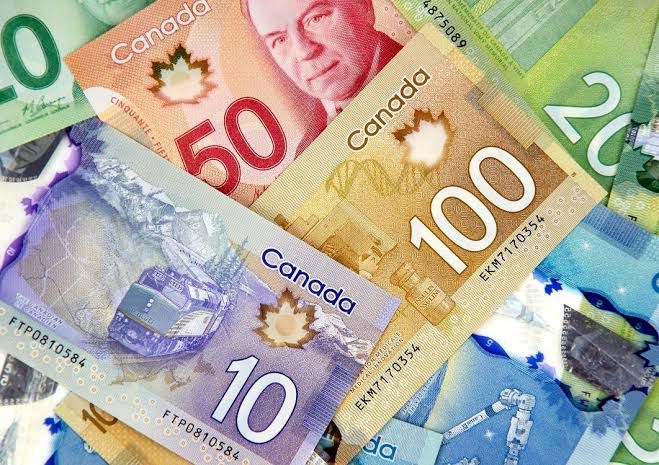
Looking ahead, currency experts anticipate moderate fluctuations driven by:
rising holiday travel demand
increased remittances during the festive season
limited bank-level CAD access
anticipated FX policy reviews in early 2026
While no major shocks are expected in the immediate term, the market remains sensitive to global oil price movements, domestic inflationary trends, and central bank announcements.
For now, traders advise consumers to compare rates across reputable sources and avoid last-minute transactions, which often attract premium pricing.
The Canadian Dollar to Naira exchange rate remains a key indicator of Nigeria’s broader currency challenges as the year draws to a close.
With the CAD trading around ₦1,030 to ₦1,043 across the mid-market and black-market windows, many Nigerians continue to navigate a market shaped by liquidity gaps, seasonal pressure and shifting demand patterns.
As policymakers work to restore stability to the FX environment, December’s rate movements will remain under close observation by both analysts and everyday consumers.
About The Author