Shinzo Abe killer life sentence has become a defining moment in modern Japanese legal and political history, closing a trial that stunned a nation unaccustomed to gun violence.
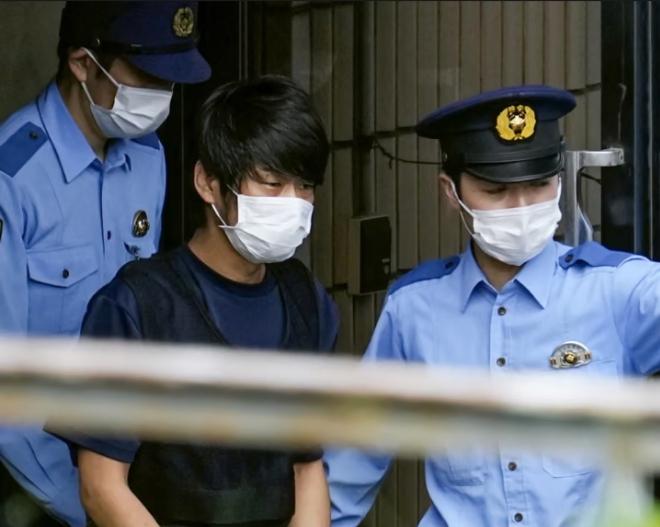
A court in Japan sentenced Tetsuya Yamagami to life imprisonment for the 2022 assassination of former prime minister Shinzo Abe during an election campaign in Nara.
The ruling followed Yamagami’s guilty plea, ending months of testimony that revisited the killing which shocked the public and reverberated across Japanese politics.
Abe, Japan’s longest-serving prime minister, was shot while delivering a campaign speech, an attack that shattered assumptions about public safety in the country.
Judges described the crime as unprecedented in the postwar era, noting the symbolic and emotional damage inflicted on democratic life and public trust.
Prosecutors had sought life imprisonment rather than capital punishment, arguing the killing was deliberate but did not meet standards usually applied to multiple murders.
The defence urged leniency, requesting a sentence of no more than 20 years, citing the defendant’s personal grievances and stated motivations.
The court rejected that appeal, concluding the gravity of the offence and its national consequences justified the harshest available custodial penalty.
Under Japanese law, a life sentence technically allows for parole, though legal experts note many prisoners never regain freedom.
The Shinzo Abe killer life sentence therefore effectively consigns Yamagami to spend the remainder of his life in custody.
Abe died from injuries sustained after being shot from behind with a homemade firearm, an improvised weapon assembled outside conventional gun markets.
Gun crime remains extremely rare in Japan, amplifying the sense of disbelief that followed the assassination in a suburban street.
Security failures were immediately scrutinised, prompting reviews of protection arrangements for political figures nationwide.
Yamagami was detained at the scene after being restrained by security personnel moments after the shooting.
When the trial opened, he admitted responsibility and reiterated his intention to target Abe specifically.
Investigators established that the attack was motivated by resentment toward the Unification Church, commonly known as the Moonies.
Yamagami blamed the organisation for financial hardship within his family, attributing long-term suffering to excessive religious donations.
Court hearings detailed how Abe’s historical links to church-affiliated events influenced the defendant’s choice of target.
Prosecutors said Yamagami believed killing an influential figure would draw public attention to the church’s activities and political ties.
“This act was intended to magnify criticism of the organisation through a crime of national impact,” a prosecutor told the court.
Abe’s association with the church, while indirect, placed him among many politicians exposed during subsequent investigations.
Those revelations triggered public anger and forced Japan’s ruling Liberal Democratic party to distance itself from the group.
The Unification Church later lost its tax-exempt religious status in Japan and was ordered to dissolve.
The case reignited debate over religion, politics, and transparency in a country where such alliances long escaped scrutiny.
Shinzo Abe’s political legacy loomed large throughout proceedings, shaping public reactions to both the crime and the sentence.
Supporters remembered Abe as a dominant figure who reshaped Japan’s security and economic policies over nearly a decade.
Critics argued the trial exposed uncomfortable truths about power networks embedded within postwar Japanese governance.
The Shinzo Abe killer life sentence was welcomed by many as a firm affirmation of the rule of law.
Others expressed conflicted feelings, acknowledging the harm caused while recognising the social issues revealed during the trial.
Thousands signed petitions calling for leniency, reflecting sympathy for children affected by coercive religious fundraising.
Lawmakers cited the case when advancing new legislation to curb aggressive solicitations by religious and other organisations.
Those reforms aimed to protect vulnerable families from financial exploitation and long-term social damage.
International observers followed the trial closely, viewing it as a rare instance of political assassination in an advanced democracy.
Foreign leaders previously condemned Abe’s killing, emphasising solidarity with Japan during a moment of national mourning.
The life sentence underscored Japan’s cautious approach to punishment, balancing severity with restraint.
By rejecting the death penalty, the court aligned with prosecutorial guidance and established sentencing norms.
Read also: Kim Jong-un fires Vice-Premier Yang Sung-ho over factory project troubles
Legal analysts said the judgment would likely influence future cases involving crimes with broad societal impact.
The Shinzo Abe killer life sentence also closed a painful chapter for Abe’s family and political allies.
Memorials continue to mark the site of the attack, serving as reminders of vulnerability even in stable societies.
Japan’s political culture has since placed renewed emphasis on security without abandoning open public campaigning.
As the nation reflects, the verdict stands as both punishment and warning against violence as political expression.
The case will remain a reference point in discussions about extremism, accountability, and democratic resilience in Japan.