Japan-China row deepened sharply after Prime Minister Sanae Takaichi warned that any Taiwan conflict posing an existential threat could justify Japan’s military deployment under self-defence laws.
Beijing condemned her remarks as “dangerous,” accusing Tokyo of “interfering in internal affairs.” Takaichi insisted Japan must “anticipate worst-case scenarios” amid growing uncertainty over Taiwan’s security.
She told parliament, “If force is used in the Taiwan Strait threatening Japan’s survival, it could demand immediate self-defence response.” Her comment reignited debate about Japan’s constitutional military limits.
China’s consul general in Osaka, Xue Jian, escalated tensions by posting online, “We have no choice but cut off that dirty neck.” Tokyo denounced the post as “extremely inappropriate.”
Japan’s Chief Cabinet Secretary Minoru Kihara said the post “violates diplomatic norms,” demanding its deletion. The statement fueled regional anger, prompting Beijing to defend Xue’s “response to provocation.”
Takaichi, Japan’s first female prime minister, refused to retract her comments. “We won’t back down when our nation’s security is threatened,” she told lawmakers. Beijing dismissed her tone as “reckless.”
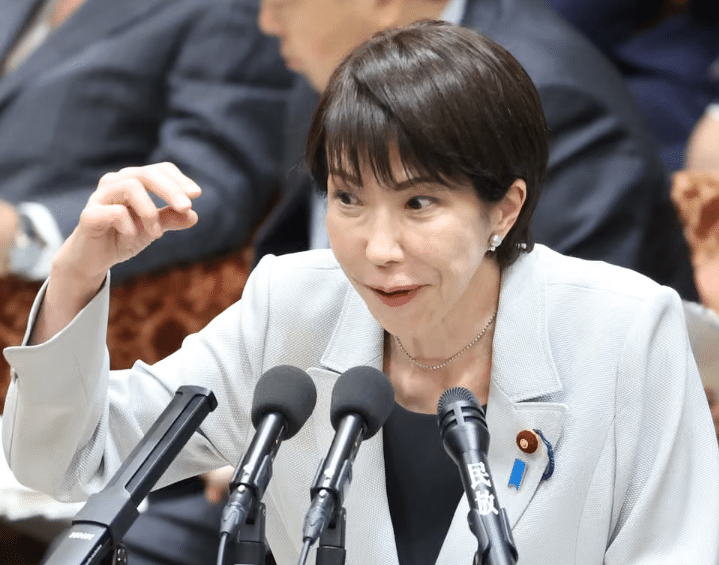
The Taiwan conflict remains central to regional tensions. Taiwan’s government criticized China’s “hostile rhetoric,” stressing that “threatening language against Japan or any partner exceeds diplomatic etiquette.”
Takaichi’s stance follows years of debate over Japan’s 2015 collective self-defence law, allowing action when an ally faces aggression. Critics fear it edges Japan closer to open warfare participation.
Beijing’s foreign ministry warned Japan to “reflect on historical culpability” and stop “sending wrong signals” to Taiwanese independence supporters. The phrase evoked memories of Japan’s prewar expansionism.
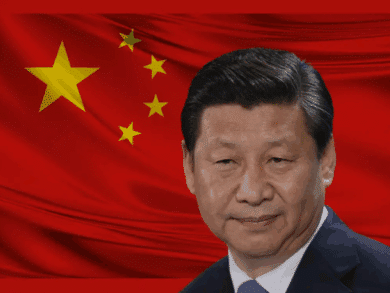
Takaichi’s meeting with Xi Jinping at the APEC summit was meant to stabilize relations. Yet her later discussion with Taiwan’s presidential adviser reignited diplomatic sparks Beijing deemed “egregious.”
“The mask slips—again,” said U.S. ambassador George Glass, accusing China of “threatening democratic nations.” Washington reaffirmed its commitment to Tokyo under their mutual defence treaty.
The Japanese leader’s rhetoric aligns with her conservative mentor, the late Shinzo Abe, who championed stronger deterrence against Chinese pressure. Analysts say her stance marks “continuity with Abe’s doctrine.”
A senior Japanese security official noted, “China’s naval buildup and air intrusions near our territory require firm resolve. Waiting until warships appear off Okinawa would be irresponsible.”
Beijing, meanwhile, accused Tokyo of “amplifying confrontation.” State media called Takaichi “a right-wing nationalist seeking foreign approval.” Her supporters say she’s simply “defending democratic sovereignty.”
Public opinion in Japan is divided. Some citizens see the Taiwan conflict as distant; others fear economic collapse if regional trade routes face military disruption. “War isn’t abstract—it’s our lifeline,” one resident said.
Taiwanese vice president Hsiao Bi-khim recently urged coordinated global deterrence efforts, saying, “Democracies must act before it’s too late.” Her message resonated with Takaichi’s growing concern over “strategic ambiguity.”
The Japan-China row has revived discussions in Tokyo about boosting defence spending. Parliament debates propose faster missile deployment on southern islands near Taiwan for rapid response capability.
A Japanese defence analyst observed, “This crisis proves deterrence works only when credible. Beijing watches every word Takaichi says for signals of Japan’s readiness.”
China continues military drills around Taiwan, sending jets across its median line. Japan’s radar networks monitor the activity “with highest alert,” according to its defence ministry.
Despite rising hostility, diplomats still push dialogue. “We want constructive stability,” Takaichi told reporters, “but stability can’t mean submission to threats.” Her phrasing drew both praise and criticism.
Regional allies view Tokyo’s assertiveness as part of a broader Indo-Pacific shift. Australia and South Korea quietly back Japan’s emphasis on resilience amid fears of cascading conflict.
Some analysts argue the Japan-China row could inadvertently solidify Western support for Taipei. “When Japan stands firm, it signals deterrence credibility,” said an international security scholar.
Still, economic interdependence complicates confrontation. Japan remains China’s key trading partner, and major corporations warn “saber-rattling” risks mutual damage to investment and supply chain networks.
A Beijing-based economist remarked, “Every threat, every nationalist statement drives business uncertainty higher. Political posturing erodes investor confidence across Asia’s two largest economies.”
Meanwhile, public diplomacy suffers. Exchanges, tourism, and cultural ties between Japan and China have declined. “Friendship feels impossible under propaganda pressure,” lamented a former academic delegate.
In Tokyo, opposition parties caution against “provoking war scenarios.” Critics accuse Takaichi of “prioritizing ideology over stability.” Yet polls suggest support for stronger self-defence remains above 60 percent.
Military planners emphasize that Japan’s response would depend on “specific attack circumstances,” not blanket commitments. Yet Beijing interprets even hypothetical readiness as direct challenge to its sovereignty.
Strategically, Taiwan’s location—only 100 kilometers from Japan’s Yonaguni Island—makes neutrality impossible if conflict erupts. “Our proximity means consequences will reach us first,” warned a regional lawmaker.
Japan’s armed forces continue joint training with U.S. counterparts, preparing for potential evacuation missions. Analysts describe these as “symbolic steps reinforcing deterrence while avoiding direct provocation.”
Still, Chinese state outlets accuse Japan of “reviving militarism.” They portray Takaichi as “weaponizing gender symbolism” to mask nationalist ambitions. Her allies call such portrayals “sexist distortion.”
Tokyo’s stance underscores shifting regional dynamics. As one diplomat said, “Asia is witnessing a test of postwar pacifism against modern threats. Japan’s balance is razor-thin but crucial.”
Observers see this Japan-China row as another chapter in Asia’s long struggle between power projection and peace maintenance. Whether diplomacy or deterrence prevails remains an open question.
Takaichi closed her address firmly: “Our peace depends on readiness. Silence invites aggression. Japan will never yield its right to defend its people.” Her words drew thunderous applause.
About The Author