Kim Jong-un fires vice-premier Yang Sung-ho over factory project troubles, publicly blaming him for failures in modernizing the Ryongsong Machine Complex, signaling heightened accountability ahead of North Korea’s first Workers’ Party congress in five years.
The dismissal highlights the leader’s approach to governance, where officials are held personally responsible for setbacks while systemic economic problems remain unaddressed.
Analysts suggest this action is intended to pressure other senior officials to produce measurable results as the nation prepares for a politically high-stakes period.
The Workers’ Party congress, which occurs once every five years, is set to review previous economic projects, establish new priorities, and potentially reshuffle top officials. Kim’s firing of Yang Sung-ho underscores his determination to enforce discipline before the congress.
“Public reprimands are a tool to maintain authority,” said Kwak Gil-sup, head of a North Korea-focused policy center. “Kim Jong-un uses these moments to signal that incompetence will not be tolerated, particularly when the regime is under scrutiny.”
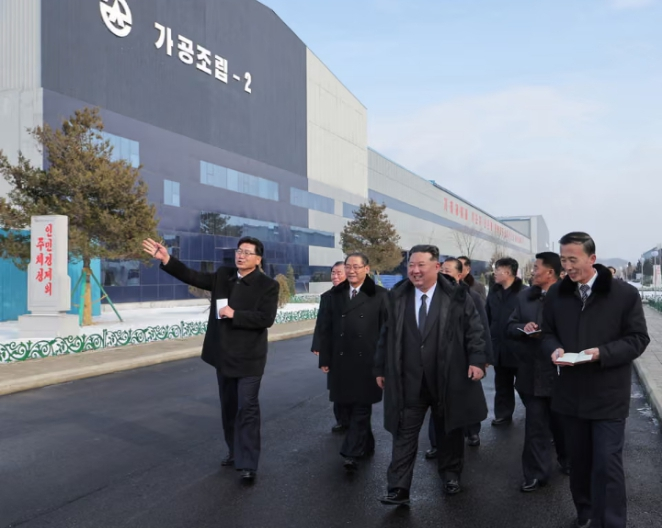
According to reports, Kim criticized Yang for causing “unnecessary man-made confusion” at the Ryongsong Machine Complex, a key industrial site undergoing modernization.
The leader stated that the project incurred “not a small amount of economic loss” due to irresponsible officials. Kim had previously confronted Yang during a December party meeting and monitored his performance closely, but reportedly found that Yang displayed “no sense of responsibility.” Experts note that this public chastisement is typical of Kim’s hands-on management style.
“To speak figuratively, he was like a goat yoked to pull an ox cart,” Kim said, emphasizing the mismatch between Yang’s capabilities and the task at hand. The metaphor serves both as a warning and a symbolic demonstration of accountability.
Kwak Gil-sup explained, “By using vivid imagery, Kim communicates expectations to all officials: they must align competence with responsibility, or face direct consequences.” Such tactics create tension among senior officials while reinforcing the leader’s authority.
Observers highlight that the Ryongsong project’s issues likely stem from broader structural problems within North Korea’s economy. Moon Seong-mook, an expert at the Korea Research Institute for National Strategy, noted, “the country has overinvested in weapons programs at the expense of industrial modernization.
Officials like Yang bear the blame, but systemic inefficiencies are the real obstacle.” The centralized economy, international sanctions, and limited resources make industrial projects difficult to execute successfully, regardless of individual leadership.
Despite these challenges, North Korea’s economy has shown modest growth. South Korea’s central bank estimated a 3.7% expansion in 2024, but most of the gains benefited the ruling elite and weapons sector, not the general population.
Analysts argue that focusing resources on military development limits the country’s capacity to achieve rapid economic progress. “Structural constraints are as significant as leadership failures,” Moon added, “and Kim’s public criticism obscures this reality by attributing setbacks to subordinates.”
The upcoming Workers’ Party congress is expected to reinforce a policy of cooperation with allied nations, including Russia and China, to support gradual economic development.
Analysts suggest the congress may also address prospects for restarting long-dormant diplomacy with the United States. However, nuclear and missile programs remain central to the regime’s priorities.
Kwak explained, “Kim will use the congress to send a dual message: advancing strategic programs while appearing committed to economic progress, even if constrained by structural issues.”
Publicly removing Yang Sung-ho also reinforces Kim’s message that accountability is personal, not just institutional.
By highlighting the vice-premier’s failures, the leader signals to other officials that performance standards are stringent and observable.
Experts say this approach aims to motivate officials to deliver results in key sectors while maintaining centralized control. “This is not just a reprimand; it is a strategic tool to manage perceptions within the leadership,” Kwak noted.
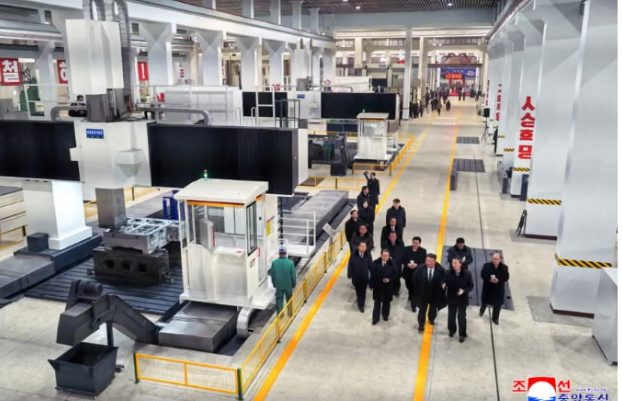
North Korea’s industrial modernization efforts have historically faced obstacles due to misaligned priorities, resource scarcity, and logistical limitations. The Ryongsong Machine Complex, central to these efforts, exemplifies these challenges.
“The complex is intended to drive industrial output, but structural weaknesses and mismanagement have slowed progress,” Moon explained.
This combination of limited resources, central planning, and international sanctions amplifies the likelihood of project delays, regardless of leadership involvement.
Kim’s leadership style frequently combines public criticism, symbolic gestures, and strategic messaging. Firing a vice-premier before a major congress demonstrates the dual objectives of accountability and intimidation.
Officials are expected to demonstrate tangible results under scrutiny. Kwak highlighted, “Kim’s public reprimands create internal pressure. Officials understand that failure is not tolerated, and that consequences will be visible and potentially severe.”
The consequences of Kim’s approach extend beyond the leadership to the country’s broader economic prospects. Limited investment in industrial projects, combined with centralization and sanctions, reduces the feasibility of rapid development.
Yet public accountability measures, such as firing Yang, are designed to project competence and authority. Moon emphasized, “The narrative of individual failure is useful for the regime to explain economic stagnation, even if the underlying causes are structural.”
Observers are closely monitoring the upcoming party congress for indications of economic strategy, foreign policy initiatives, and adjustments in personnel.
The congress may serve as a platform for Kim to formally declare his objectives of simultaneously advancing nuclear capabilities and industrial modernization.
“Expect a dual emphasis on military strength and controlled economic messaging,” Kwak predicted. Such announcements are designed to consolidate power while signaling continuity and ambition to domestic and international audiences.
In addition to internal management, analysts are watching for external diplomatic movements. Kim’s interactions with Russia, China, and potentially the United States may shape future economic opportunities.
A planned visit to Beijing by former U.S. officials could revive dialogue, though substantive changes in trade or sanctions relief remain uncertain. “Kim’s moves at home and abroad are coordinated to reinforce regime stability,” Moon said, “and public dismissals like Yang’s are part of this broader strategy.”
Ultimately, Kim Jong-un fires vice-premier Yang Sung-ho over factory project troubles to enforce discipline, project authority, and prepare the leadership for the critical Workers’ Party congress.
While the public criticism targets individual responsibility, systemic challenges remain the dominant factor affecting North Korea’s industrial and economic performance.
Experts emphasize that this episode reflects both Kim’s leadership style and the constraints of a highly centralized, resource-constrained economy.