Serbia’s Vucic angers Russia after publicly confirming readiness to sell ammunition to the European Union, sparking fresh diplomatic tension and questions about Serbia’s shifting geopolitical loyalties.
Russia has demanded clarification from Belgrade following President Aleksandar Vucic’s statement suggesting Serbia could sell large quantities of ammunition to EU buyers, potentially reaching Ukraine through indirect channels.
Moscow’s Foreign Ministry spokeswoman, Maria Zakharova, said Vucic’s remarks require an “immediate explanation,” stressing that Serbia had repeatedly promised Russia its weapons would never reach Ukrainian forces.
The controversy erupted after Vucic told Euronews that Serbia would sell its ammunition stocks “to whomever we can,” acknowledging that such sales might occasionally end up in conflict zones.
“We have workers to pay, factories to run, and obligations to meet,” Vucic said, insisting Serbia’s actions were motivated by economic necessity, not political disloyalty to Russia.
During his interview on The Europe Conversation, the Serbian leader appeared unapologetic, saying that while Belgrade would try to avoid warzone sales, “it happens from time to time.”
Vucic’s remarks quickly drew international attention, particularly because Serbia remains the only European nation not to impose sanctions on Moscow since Russia’s invasion of Ukraine in 2022.
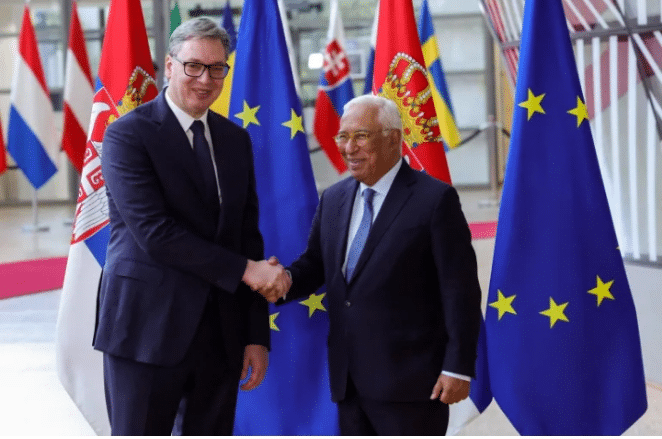
His comments also came as Serbia faces renewed scrutiny from the European Union over democratic standards, corruption, and its ambiguous stance between East and West.
Last week, Vucic told Germany’s Cicero magazine that he had offered his “friends in the EU” the opportunity to purchase Serbia’s large stockpiles of mortar shells.
When pressed on whether those weapons could reach Kyiv, Vucic replied, “The buyers can do what they want with it,” signaling limited control over post-sale transfers.
Russia reacted strongly, recalling earlier allegations in May that Serbian defense firms had supplied ammunition indirectly to Ukraine through third-party contracts worth hundreds of millions of dollars.
At the time, the Kremlin issued a rare rebuke against Serbia, traditionally one of Moscow’s closest European allies, expressing disappointment and calling the claims “deeply concerning.”
Despite denials from Belgrade, Russian state media amplified those accusations, portraying Serbia’s weapons exports as a betrayal amid the ongoing Russia-Ukraine war.
Analysts say the latest uproar underscores the delicate balance Vucic has tried to maintain — nurturing Serbia’s EU aspirations while keeping historical and cultural ties with Russia intact.
Serbia began formal EU membership talks in 2009, yet progress has been slow, partly due to democratic backsliding and its refusal to align fully with the bloc’s foreign policies.
The European Commission’s 2025 progress report, released this week, sharply criticized Belgrade for “polarization” and for tolerating anti-EU rhetoric from senior officials and state-controlled media outlets.
The report also cited ongoing corruption scandals and social unrest, including massive protests over the deadly Novi Sad railway station collapse that killed sixteen people last year.
On the first anniversary of that tragedy, about 100,000 Serbians marched in the capital and across major cities, demanding accountability and the resignation of top government officials.
The protests, fueled by anger over mismanagement and economic inequality, have intensified political pressure on Vucic, who has ruled Serbia for over a decade.
In response, his ruling Serbian Progressive Party organized counter-protests outside parliament, bussing in supporters from rural areas to showcase continued backing for the government.
EU officials say Vucic’s handling of these domestic crises, combined with his controversial ammunition remarks, could further complicate Serbia’s already sluggish accession process.
European Commission President Ursula von der Leyen urged Belgrade last month to “get concrete” about its EU membership ambitions, saying Serbia must prove its commitment to shared democratic values.
“We live in a fractured world with widening gaps between democracies and autocracies,” von der Leyen said beside Vucic, emphasizing that the European Union “knows exactly where it stands.”
Her statement was widely interpreted as a challenge to Vucic’s balancing act — one that often pits Serbia’s EU hopes against its dependence on Russian energy and support.
Serbia continues to rely heavily on Russian gas supplies and maintains military cooperation agreements with Moscow despite repeated warnings from Brussels and Washington.
Analysts note that Serbia’s Vucic angers Russia precisely because he is attempting to pivot toward Western partnerships without severing old loyalties, a stance that frustrates both sides.
Political scientist Marko Savic told Belgrade Times that Vucic’s approach reflects “a survival strategy rather than a coherent foreign policy,” designed to keep Serbia’s options open.
“Vucic knows he cannot afford to alienate either Brussels or Moscow,” Savic said. “But this balancing act grows harder every time he speaks publicly.”
Meanwhile, Russia’s patience appears to be thinning. Zakharova warned that Serbia must clarify its position and ensure that no weapon sales contribute to “hostile actions against Russian forces.”
The Kremlin’s rebuke has triggered speculation that Moscow could retaliate economically or politically, possibly by scaling back energy cooperation or delaying joint defense projects.
However, Vucic seems determined to maintain Serbia’s independence, declaring that “no one can dictate to us whom we sell our products to or how we support our economy.”
Economists argue that Serbia’s defense exports are critical to its struggling economy, generating hundreds of millions annually and sustaining thousands of industrial jobs.
Yet critics within Serbia accuse the president of prioritizing profit over principle, warning that continued ambiguity risks alienating both Russia and the European Union simultaneously.
Opposition politician Dragan Djilas said Vucic’s rhetoric “confirms Serbia’s moral confusion,” adding that “we cannot pretend to be neutral while selling arms to both sides indirectly.”
Serbian media outlets remain divided, with pro-government stations defending the sales as economic pragmatism, while independent journalists accuse Vucic of reckless opportunism.
In Moscow, the controversy has stirred nationalist outrage. Russian commentators accused Belgrade of “betrayal” and warned that Serbia risks losing Moscow’s protection over Kosovo.
That issue remains deeply sensitive, as Russia has consistently backed Serbia’s refusal to recognize Kosovo’s independence since its 2008 secession.
Some European analysts suggest that Russia’s response reflects fear of losing influence in the Balkans, a region long considered part of Moscow’s strategic orbit.
“Serbia is the last Russian foothold in Europe,” said Polish analyst Katarzyna Nowak. “If Vucic leans further West, it symbolizes the end of an era for Moscow.”
Vucic, however, insists Serbia will remain “a bridge between East and West,” arguing that pragmatic diplomacy — not ideological alignment — serves his country’s best interests.
In a televised address following the backlash, he reaffirmed Serbia’s sovereignty, declaring: “We are not anyone’s colony. We choose our path based on our needs.”
Still, critics argue that his words expose deeper contradictions in Serbia’s foreign policy, which often oscillates between courting Western investment and invoking Slavic solidarity.
As the EU weighs its next move, Brussels faces the challenge of integrating a nation that publicly defends Russian ties while seeking European benefits.
Meanwhile, Serbia’s Vucic angers Russia further by signaling an openness to joint security initiatives with NATO members, though still short of full alignment with the Western alliance.
Diplomatic observers believe the latest tensions could serve as a turning point — either pushing Serbia decisively toward the EU or isolating it from both blocs.
For now, Belgrade’s foreign policy remains a tightrope act. Vucic continues to speak of balance, but with every remark, that balance appears increasingly fragile.
As Serbia navigates the pressure from both Moscow and Brussels, the world watches to see which direction Vucic ultimately chooses — pragmatism or allegiance.
About The Author