Across Ukraine’s southern frontlines, Russians fighting against Russia are emerging as one of the conflict’s most dangerous and unpredictable forces, directly challenging Vladimir Putin’s authority.
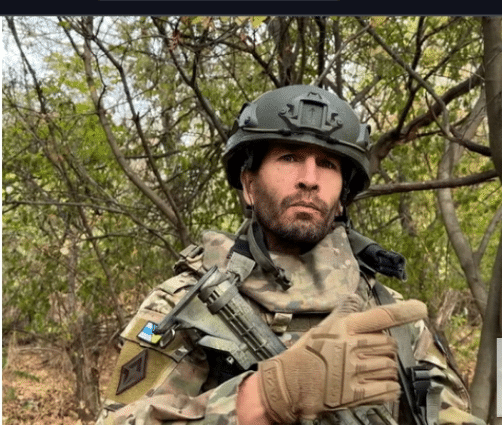
Lazzy, a Russian defector, explains why he joined the Ukraine army: “I saw the corruption, the cronyism, the blood on the streets. Putin has ruined my country. I had no choice.”
The Freedom of Russia Legion, an organized unit of Russian defectors, operates under Kyiv’s military intelligence, bringing insider knowledge and fierce ideological commitment to Ukraine army operations.
“Anyone in Russia can still buy gasoline and set railways on fire,” Lazzy says. “It’s not easy, but possible. It’s dangerous. Yet doing nothing was worse than fighting.”
Russian infrastructure, from refineries to power stations, has been repeatedly targeted by drone attacks coordinated with defectors’ intelligence, hampering Moscow’s logistics while bolstering Ukraine’s tactical position.

Ceasar, a veteran in the Ukraine army, joined the fight three and a half years ago, inspired by a desire to challenge Putin directly and defend Ukrainian civilians.
“I do not feel guilty killing Russians who enforce tyranny,” Ceasar says bluntly. “They support atrocities, they murder, they rape. Putin has destroyed Ukraine and my homeland alike.”
FSB surveillance and Russian secret services make internal resistance almost impossible in Russia, but across the border, defectors operate relatively freely, striking Russian infrastructure and undermining morale.
The southern frontlines are a dispersed battlefield. Two or three men per bunker, constant artillery, and drone attacks define daily life for Russians fighting against Russia in Ukraine.
“The most dangerous part is moving from position to position,” Ceasar adds. “Every step could be your last. The drones, the snipers—they’re relentless.”
Volodymyr Zelensky has toured the West to secure long-range missiles and air defence systems, providing critical support for Ukraine army units including foreign volunteers and Russian defectors.
Lazzy describes one operation targeting railway switching systems: “We burned electrical networks, delayed Russian supply lines. It was precise, not reckless. Every strike was calculated to save Ukrainian lives.”
The Freedom of Russia Legion fields several hundred men, all Russians, risking execution as traitors in Moscow if captured, yet their resolve remains unshaken on southern frontlines.
Drone attacks have reshaped the battlefield, giving the Ukraine army the ability to strike Russian convoys, bombers, and Russian infrastructure, making defectors’ insider knowledge a force multiplier against Putin’s forces.
“The Legion is not here for glory,” Lazzy says. “We fight because Russia deserves better, because Putin’s regime must fall. Every mission is a statement against tyranny.”
Russian defectors like Ceasar operate with a mixture of ideology and practical strategy. Monarchist sympathies, religious conviction, and moral outrage against atrocities fuel their determination.
Ukraine army soldiers report that operating alongside Russian defectors increases morale, strengthens planning, and introduces unpredictability that Russian troops on the southern frontlines struggle to counter.
“Every operation, every sabotage, every intelligence report—it matters,” a Ukraine army officer explains. “These men know Russian tactics. They know Russian infrastructure. They are a nightmare for Moscow.”
Ceasar recalls his first engagement in Ukraine: “I was terrified. But seeing the destruction Russian troops wrought on civilians, the choice was obvious: either fight or accept complicity.”
Across southern frontlines, drone attacks coordinate with Legion operations, striking Russian refineries, power stations, and transport hubs, reducing Moscow’s capacity to supply frontlines during the critical winter months.
FSB networks inside Russia attempt to identify defectors and saboteurs, but the Legion’s secrecy, mobility, and local knowledge often allow them to evade capture successfully.
Lazzy reflects: “Crossing the border into Ukraine was the hardest decision. Leaving my family, my life—but fighting here feels like reclaiming what Russia could have been.”
The moral weight is heavy. Fighting one’s own countrymen, witnessing destruction, and surviving relentless attacks requires a combination of ideology, discipline, and psychological endurance.
Ceasar adds: “History will judge. I know killing Russians on these missions is harsh, but they support oppression. Putin has destroyed everything, and resistance is justice.”
Ukraine army units rely on defectors’ knowledge for reconnaissance, sabotage, and intelligence on Russian infrastructure. Drone attacks guided by these insights have delayed Moscow’s operations repeatedly.
Southern frontlines are increasingly fragmented. Small units, including defectors, must coordinate movements to avoid drone detection while maintaining pressure on Russian supply and communication lines.
Volodymyr Zelensky’s advocacy for long-range missiles ensures defectors can strike deep into occupied territory and Russian rear areas, enhancing their impact on Putin’s military strategy.
“The winter will be harsh,” Lazzy says. “Drone attacks can’t fly in snow or fog, Russian troops may advance, but we’ve survived worse. We’ll endure. We fight for a free Russia.”
Ceasar emphasizes ideological commitment: “We are patriots in exile. Every operation against Russian infrastructure, every strike with drone attacks, every life saved—it’s a statement against dictatorship.”
The Freedom of Russia Legion represents a fusion of ideology, military skill, and moral conviction, showing how Russian defectors can influence warfare beyond conventional troop deployments.
Russians fighting against Russia challenge assumptions of loyalty, demonstrating that even inside Moscow’s heartland, individuals are willing to risk life and liberty to oppose Vladimir Putin.
Lazzy notes: “We are Russians fighting against Russia. That’s our reality. But fighting here, on Ukraine army’s side, feels like defending truth and justice against tyranny.”
Drone attacks, when combined with Legion operations, demonstrate the evolving nature of modern conflict—where asymmetric tactics, insider knowledge, and ideological conviction shape outcomes as much as artillery.
Ceasar reflects on personal transformation: “I have learned fear, endurance, and loyalty in ways no textbook could teach. We are forged by fire, but we endure for a purpose.”
Across southern frontlines, Ukraine army forces adapt around defectors’ strengths, integrating Russian insider knowledge into broader military strategy to maximize impact while minimizing casualties.
FSB networks have struggled to infiltrate operations. Russian defectors’ anonymity, mobility, and ideological resolve prevent Moscow from fully countering their sabotage of Russian infrastructure.
“The Freedom of Russia Legion is a warning to Putin,” Lazzy says. “Even his own citizens can fight against Russia for justice. Fear cannot maintain control forever.”
Drone attacks, sabotage missions, and coordinated intelligence from defectors force Moscow to stretch forces thin, protect key Russian infrastructure, and reconsider the loyalty of troops on southern frontlines.
For defectors, the fight is existential and moral: each operation reinforces the conviction that Russians fighting against Russia are not merely soldiers, but agents of change and resistance.
Ceasar concludes: “We risk everything, but history will remember courage, not fear. We fight against tyranny, against Vladimir Putin, and for a Russia that deserves freedom and justice.”
The presence of Russian defectors underscores the conflict’s ideological dimension, showing the war is not only territorial but moral, and that individual conscience can reshape the battlefield.
Ukraine army units, integrating defectors, drone attacks, and intelligence, demonstrate how asymmetric strategies, motivated by ideology, can confront larger, conventionally superior forces with tactical precision.
Lazzy and Ceasar embody the human consequences of resistance. Every strike, every intelligence report, every day survived in Ukraine army operations is a testament to courage and commitment to oppose tyranny.
Russians fighting against Russia, operating within the Freedom of Russia Legion, continue to shape operations, morale, and strategy, providing Ukraine army with a unique edge on southern frontlines.

Through drone attacks, sabotage, and frontline engagements, Russian defectors are not just fighting for Ukraine—they are actively challenging Vladimir Putin’s control, risking execution, and redefining loyalty in modern warfare.
About The Author