

Senate Republicans have successfully blocked a Venezuela war powers resolution that aimed to limit President Trump’s ability to authorize military operations without prior approval from Congress.
The vote represents a sharp partisan split in Washington and underscores ongoing tensions over the balance of power between the legislative and executive branches when it comes to the use of military force.
The resolution initially gained traction after a surprise U.S. operation earlier this month led to the capture of Venezuelan President Nicolás Maduro.
The move sparked a wave of debate about whether the president should have consulted Congress before taking military action.
A group of five Republican senators initially broke ranks to support the resolution alongside Democrats, a rare public rebuke of President Trump from within his own party.
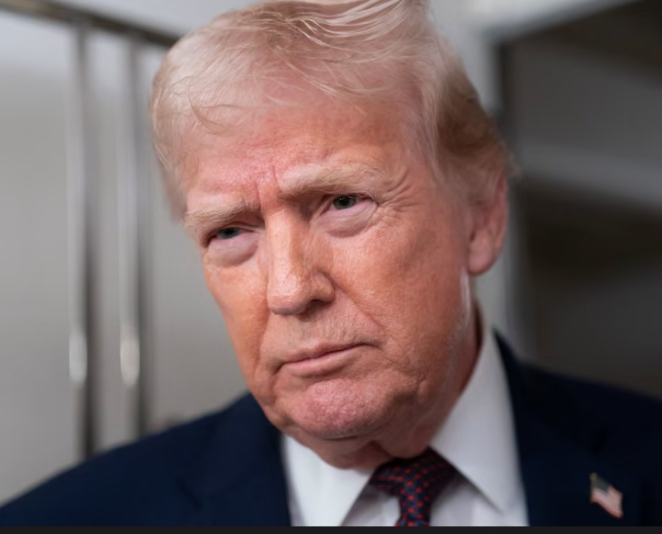
President Trump reacted angrily to the initial votes, calling for the Republican defectors to face political consequences.
“Republicans should be ashamed of the Senators that just voted with Democrats in attempting to take away our powers to fight and defend the United States of America,” Trump wrote in a public statement.
His reaction highlighted the high-stakes political pressures influencing Senate decision-making on foreign policy.
By the time of the final vote, Senate Majority Leader John Thune, R-S.D., had successfully persuaded two of the five Republicans who had previously sided with Democrats to oppose the resolution.
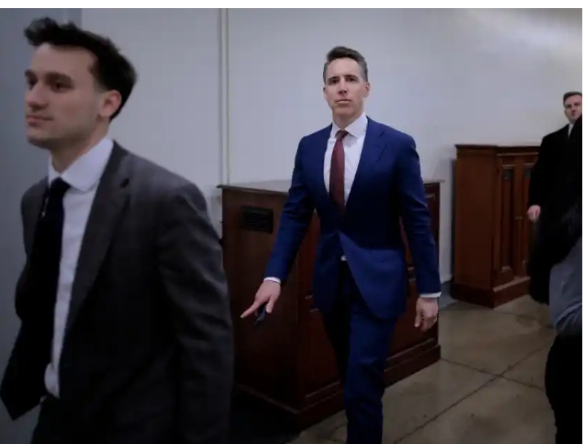
The final vote ended in a 51-to-50 split, with Vice President JD Vance casting the tie-breaking vote. Senators Josh Hawley, R-Mo., and Todd Young, R-Ind., both reversed their earlier support for the measure after receiving assurances from White House and national security officials.
Senator Hawley explained that discussions with Secretary of State Marco Rubio alleviated his concerns about U.S. intervention in Venezuela.
Meanwhile, Senator Young cited commitments from senior officials that American forces were not currently deployed in Venezuela and that Congress would be consulted before any major military operations were authorized.
“I have received assurances that if President Trump determines American forces are needed in significant operations in Venezuela, the Administration will seek congressional authorization in advance,” Young stated.
Three Republicans who had supported the resolution initially — Susan Collins of Maine, Lisa Murkowski of Alaska, and Rand Paul of Kentucky — remained steadfast in their support for congressional oversight.
Their continued backing reflects broader divisions within the party regarding the role of Congress in authorizing military action.
Democrats, meanwhile, expressed disappointment over the resolution’s defeat. Many have been pushing for increased congressional control over war powers following the Venezuela operation.
“This vote is a setback for accountability and oversight, but it does not end our efforts,” said one Senate Democratic leader.
Lawmakers have emphasized that similar resolutions may be introduced in the future, particularly as concerns grow about U.S. military involvement in regions such as Iran and Greenland.
The debate over the use of military force abroad is not new. Historically, Congress has wrestled with its constitutional authority to declare war versus the president’s powers as commander-in-chief.
Read also:Iran signals quick trials and executions for protesters despite US warnings
In recent years, presidents of both parties have taken military action without explicit congressional approval, leading to repeated calls from lawmakers to clarify or restrict executive authority.
Analysts note that the Venezuela resolution was part of a broader strategy by Senate Democrats to assert legislative influence over foreign policy.
While the resolution failed, it signals ongoing friction between Congress and the White House over how military decisions are made and communicated. The episode also illustrates the impact of party loyalty and political negotiation on high-stakes security issues.
The political stakes extend beyond Venezuela. President Trump has publicly hinted at potential military involvement in other nations, prompting lawmakers from both parties to examine mechanisms that could prevent unilateral actions.
The failure of the resolution underscores the challenges Congress faces in reasserting authority when executive and party priorities are closely aligned.
Observers also point to the role of individual senators in shaping outcomes.
The decisions of Senators Hawley and Young demonstrate how personal discussions and assurances from administration officials can sway critical votes.
Conversely, steadfast opposition from Collins, Murkowski, and Paul reflects a segment of the Republican Party that prioritizes legal oversight and congressional input, even in the face of party pressure.
The debate over war powers extends to public opinion, with many Americans questioning the limits of presidential authority in foreign interventions.
Advocacy groups and policy experts have argued that requiring congressional approval ensures democratic accountability and prevents sudden escalations of military conflict.
Supporters of the resolution contend that such oversight is essential for maintaining a balance of power and protecting U.S. interests abroad.
In addition to political maneuvering, the resolution highlights the strategic importance of Venezuela in U.S. foreign policy.
Analysts note that the country’s geopolitical position, natural resources, and political instability make it a focal point for international security concerns. Decisions regarding military engagement in Venezuela carry implications not only for U.S. troops but also for regional stability in Latin America.
Despite the resolution’s failure, congressional Democrats have vowed to continue pursuing measures that strengthen legislative oversight of military operations.
Several have proposed introducing revised war powers bills that address specific concerns raised by the administration, including emergency deployments and intelligence-gathering operations.
These efforts suggest that the conversation over congressional authority in foreign affairs will remain a contentious issue in the coming months.
The vote also has ramifications for internal Republican politics. Party leaders have faced the difficult task of balancing loyalty to the president with the individual priorities of senators representing diverse constituencies.
The public disagreements over the Venezuela resolution reveal underlying tensions that could influence upcoming elections and legislative negotiations.
Overall, the blocking of the Venezuela war powers resolution marks a critical moment in U.S. governance, reflecting deep divisions over the scope of presidential authority, the role of Congress, and the mechanisms of accountability in military decision-making.
While the measure did not pass, it has set the stage for continued debate over how the United States engages in foreign conflicts and who holds ultimate authority in determining military actions.
With President Trump’s foreign policy agenda evolving rapidly, Congress faces pressure to clarify its role in authorizing military force.
The failure of the resolution has not ended these discussions but has instead intensified scrutiny on the interplay between executive power, legislative oversight, and party politics in shaping U.S. actions abroad.


