

Fresh fighting has erupted in eastern Yemen’s Hadramout province, igniting clashes between Saudi-backed forces and the UAE-supported Southern Transitional Council near the Saudi border.
The confrontation marks a dangerous escalation in Yemen’s long-running conflict, shifting the battleground eastward and exposing widening fractures among regional allies previously aligned against the Houthis.
Hadramout, Yemen’s largest governorate, borders Saudi Arabia and holds immense strategic value due to its energy resources, military installations, and access routes connecting the Arabian Sea.
Saudi-backed governor Salem al-Khanbashi announced operations to reclaim key military bases, insisting the campaign aims to restore order and prevent the province descending into chaos.
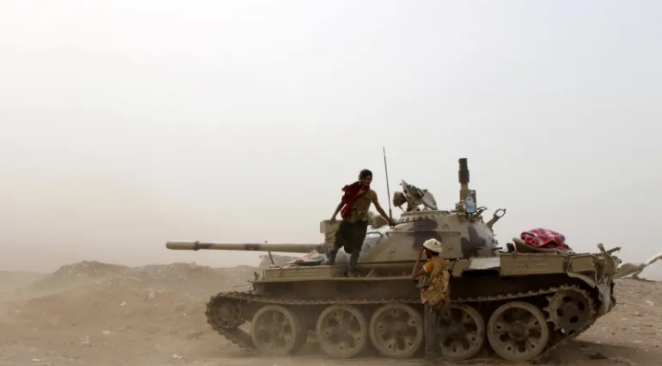
Separatist forces from the Southern Transitional Council, however, accused Saudi Arabia of launching air strikes against their positions near the border, allegations Riyadh has not formally confirmed.
The STC, backed politically and militarily by the United Arab Emirates, seized several areas of Hadramout and neighbouring al-Mahra in late 2025, triggering Saudi alarm.
Riyadh views the growing separatist footprint along its southern frontier as a direct national security threat, particularly amid ongoing instability across Yemen’s fragmented political landscape.
Air strikes reported in recent hours killed several STC fighters, marking the first fatalities caused by Saudi-led coalition fire since the separatists’ recent territorial advances.
Footage circulating online showed armoured vehicles burning at al-Khashaa base, the largest military installation in Hadramout, following intense clashes between rival Yemeni factions.
Governor al-Khanbashi confirmed his forces captured al-Khashaa and are advancing toward Seiyun, a key inland city critical to controlling eastern Yemen’s security architecture.
In a televised address, al-Khanbashi urged separatist fighters to withdraw peacefully, stressing the operation was not a declaration of war but a move to safeguard regional stability.
Yemen’s internationally recognised government later appointed al-Khanbashi overall commander of the Homeland Shield forces, granting sweeping military and administrative authority within Hadramout.
The Southern Transitional Council rejected the move, framing it as an attempt to marginalise southern aspirations and roll back gains achieved through years of armed mobilisation.
STC leader Aidarous al-Zubaidi escalated rhetoric by announcing a two-year transitional period leading to a referendum on independence for southern Yemen.
He called for international sponsorship of talks to guarantee southern rights, signalling renewed push toward secession despite mounting military pressure from Saudi-backed forces.
Analysts say the announcement deepens fears of prolonged fragmentation, with Yemen increasingly divided between Houthi-controlled north, separatist south, and contested eastern regions.
Saudi Arabia’s response has been deliberately restrained, according to regional analysts, focusing on limited air strikes designed to pressure separatists without triggering wider conflict.
Political analyst Khaled Batarfi described the attacks as surgical, intended to force STC units back to Aden and reaffirm obedience to Yemen’s recognised government.
Batarfi also suggested upcoming changes within Yemen’s Presidential Leadership Council, predicting increased representation for Hadramout to stabilise eastern provinces politically.
Beyond the battlefield, Saudi Arabia announced deployment of Royal Navy units in the Arabian Sea to counter smuggling and protect vital international shipping lanes.
The naval move underscores Riyadh’s broader security concerns, linking Yemen’s instability with maritime threats affecting global trade routes and regional energy supplies.
The crisis has highlighted growing tensions between Saudi Arabia and the United Arab Emirates, longtime partners now backing rival factions within Yemen’s fractured political system.
While Saudi Arabia supports Yemen’s recognised government, the UAE continues backing the STC, seeing southern autonomy as key to safeguarding its regional interests.
Yemen analysts warn the power struggle is no longer purely domestic, but part of a larger regional contest involving Gulf states, Israel, Iran, and global powers.
Control over Yemen affects access to the Red Sea and Bab al-Mandab strait, a chokepoint critical to international commerce and regional military calculations.
Houthi leaders, who control the capital Sanaa, have rejected both Saudi-backed governance and UAE-supported separatism, positioning themselves as dominant national powerbrokers.
Despite southern fighting, OPEC+ delegates say escalating tensions are unlikely to affect oil output policy, easing concerns about immediate global energy market disruptions.
Still, observers caution that prolonged instability in Yemen’s east could eventually threaten pipelines, ports, and cross-border infrastructure vital to Gulf economies.
Historically, southern Yemen’s grievances date back decades, including failed secession attempts following unification with the north in 1990.
The STC’s formation in 2017 revived southern nationalism, transforming political discontent into an organised military force with international backing.
As fighting intensifies, civilians face renewed uncertainty, with fears that eastern Yemen could become the next prolonged front in an already devastating war.

With regional powers now openly clashing through proxies, Yemen’s conflict appears further from resolution, risking deeper fragmentation and long-term regional instability.
Read also: CIA tells Trump: Ukraine did not target Putin in deadly drone strikes


