FG bans sand mining within 10km of River Niger to protect bridges. CCTV centre installed for security, tolling awaits completed access roads.
The Federal Government has announced a ban on sand mining within a 10-kilometer radius of the River Niger, citing the need to protect the First and Second Niger Bridges from potential structural damage.

The decision, officials say, is part of a broader strategy to safeguard critical federal infrastructure across Nigeria.
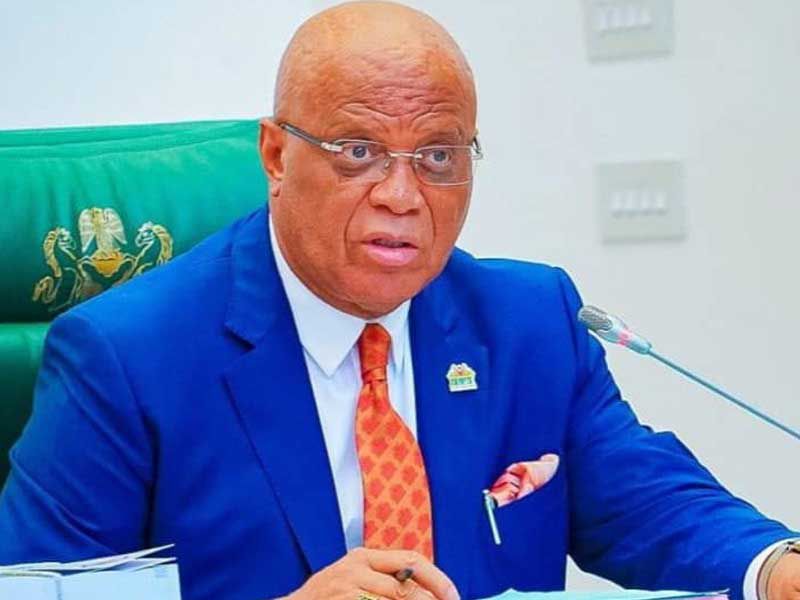
Minister of Works, Mr. David Umahi, made the disclosure on Friday, January 16, in Asaba, during the commissioning of the Second Niger Bridge Closed-Circuit Television (CCTV) Monitoring Centre.
According to him, the Federal Executive Council (FEC) approved the ban on sand mining following studies that highlighted the risk posed by unregulated extraction of river sand in areas surrounding the bridges.
“The decision to prohibit sand mining in this area is a proactive measure to protect our national assets,” Umahi said.
“The First and Second Niger Bridges are key economic corridors, facilitating the movement of goods and people across the South-East and South-South regions of Nigeria. It is crucial that their structural integrity is maintained.”
Sand mining has long been a contentious issue in the Niger River region, with several private operators and informal miners extracting sand for construction purposes.
While sand is a valuable resource for Nigeria’s growing construction industry, experts warn that excessive and unregulated mining near bridge foundations can lead to erosion and weakening of structural supports.
In addition to banning sand mining, Umahi announced that toll collection on the Second Niger Bridge will not commence until all access and bypass roads connecting the bridge in Anambra and Delta States are fully completed.
“The tollgate is ready,” he said, “but we will not start tolling until the supporting roads are completed to ensure smooth traffic flow and prevent congestion.”
The newly commissioned CCTV Monitoring Centre at the bridge aims to enhance security and operational efficiency.
According to the Minister, police and other security agencies will monitor the highway from the centre and respond to any emergencies within five minutes.
“Our goal is to eliminate physical checkpoints along the highway. Security operatives will be stationed at the CCTV centre to ensure rapid response to incidents,” Umahi explained.
Officials emphasized that the ban on sand mining will be strictly enforced.
Umahi directed the Delta State Police Command to ensure full compliance, arrest offenders, and prevent any attempts to circumvent the ban.
Authorities believe that this step is crucial not only for protecting the bridges but also for reducing environmental degradation in the river ecosystem caused by indiscriminate sand extraction.
Economic analysts note that the protection of the Second Niger Bridge, in particular, is vital given its role in facilitating trade and transportation between Nigeria’s oil-rich South-South and the commercial hub of South-East.
Any damage to the bridge due to uncontrolled sand mining could result in massive economic losses and disrupt the movement of goods across the region.
The Federal Government has also assured the public that the ban on sand mining is being paired with increased investment in infrastructure and monitoring technologies.
The CCTV Monitoring Centre, equipped with high-definition cameras and rapid response communication systems, is designed to provide real-time surveillance of the bridge and surrounding roads.
Officials say this initiative will complement other security measures to ensure uninterrupted movement of vehicles and goods.
Environmental experts have welcomed the ban on sand mining, noting that river ecosystems are highly sensitive to unregulated extraction activities.
“Sand mining in riverbeds destabilizes the natural flow of water, causes erosion, and can eventually threaten human settlements and infrastructure,” said an environmental consultant familiar with the Niger River project.
“The government’s intervention is timely and necessary.”
Meanwhile, local communities near the River Niger have expressed mixed reactions. Some artisanal miners worry about loss of income, while residents living close to the bridges have welcomed the move, citing safety concerns.
Authorities have assured miners that alternative sources of sand outside the restricted 10-kilometer zone will be made available, along with formal licensing procedures to regulate extraction safely.
Minister Umahi further highlighted that tolling and access roads are integral to the overall project, ensuring that the Second Niger Bridge functions efficiently as a modern transportation corridor.
“Once completed, the access roads will link seamlessly with the bridge, making travel faster and safer. Toll collection will then commence, but only after all infrastructure components are fully operational,” he said.
The Federal Government’s decision to ban sand mining near the River Niger reflects a growing recognition of the need to balance economic development with infrastructure preservation and environmental protection.
By combining regulatory enforcement, modern surveillance technology, and public engagement, authorities aim to secure the bridges for future generations while maintaining their role as vital transport arteries.
Ireport247news
About The Author