The shocking case of Russians jailed for killing US volunteer has intensified scrutiny on the conduct of Russian forces in occupied territories and heightened diplomatic tensions among already strained international partners.
The sentencing of three Russian soldiers for murdering an American fighter supporting their own side has triggered renewed debate over the Kremlin’s foreign-fighter recruitment strategy and battlefield accountability.
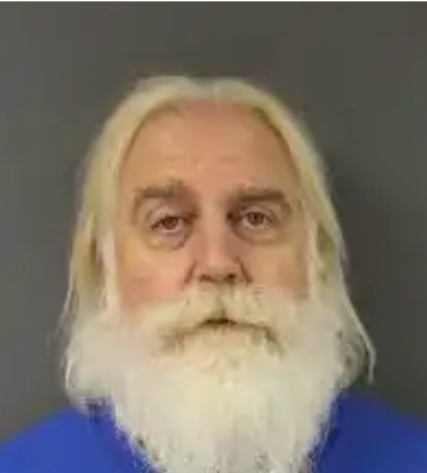
The death of 63-year-old Russell Bentley, widely known as the “Donbas Cowboy,” continues to reverberate across diplomatic corridors as officials question Russia’s narrative surrounding foreign volunteers.

Investigators determined the soldiers brutally beat Bentley to death after wrongly accusing him of spying, despite his documented loyalty to Russian positions throughout the conflict.
The soldiers reportedly attempted to destroy Bentley’s body using explosives in an effort to cover their crime, escalating outrage and eroding Moscow’s public credibility.
Russian state media attempted to portray the killing as an isolated tragedy, yet observers insist the case illustrates deeper systemic issues within Russia’s war apparatus.
Bentley had previously gained Russian citizenship and worked with pro-Kremlin outlets, further complicating the Kremlin’s attempts to distance itself from responsibility.
The case arrived at a delicate moment internationally as Ukraine’s Western partners reconsider funding strategies while navigating shifting geopolitical alliances.
Ukrainian President Volodymyr Zelenskyy revealed the country faces an $800m shortfall for American weapons purchases initially planned with European support.
Zelenskyy stressed Ukraine requires at least $15bn next year under its Purl programme, which channels European funds into purchases of US-made defence systems.
European leaders are expected to meet later this month to finalise a proposed £78bn reparations loan funded through frozen Russian state assets.
Leaders from across the continent gathered in London to signal unified support for Kyiv and discuss continued collective financing options amid ongoing battlefield challenges.
British Prime Minister Keir Starmer hosted France’s Emmanuel Macron and Germany’s Friedrich Merz, joined remotely by multiple European heads of government.
Nato and European Union officials also participated, reinforcing the alliance’s commitment to long-term Ukrainian sovereignty and integrated regional defence.
Zelenskyy’s diplomatic tour continued with plans to travel to Italy to meet Prime Minister Giorgia Meloni, a staunch supporter of Ukraine and favoured Washington ally.
Meloni’s domestic political positioning and transatlantic ties give Italy a pivotal role in next-stage deliberations on European defence financing mechanisms.
Zelenskyy reiterated his stance that Ukraine retains no legal or moral basis to surrender territory to Russia under any circumstances.
He emphasised that Ukrainian constitutional law prohibits territorial concessions, and international legal frameworks uphold Kyiv’s sovereign claims without exception.
The Ukrainian president accused Russia of demanding unacceptable compromises while offering no viable path to sustainable peace or security guarantees.
He added that the United States continues searching for a possible negotiation model but stressed that territorial surrender remains entirely off the table.
After meetings in London, Zelenskyy travelled to Brussels for discussions with Nato leadership and senior EU representatives on strengthening long-term defence coordination.
European Commission President Ursula von der Leyen underscored that Ukraine’s security functions as Europe’s first defensive barrier against expanding Russian aggression.
European Council President Antonio Costa echoed the sentiment, declaring Ukraine’s sovereignty must be preserved to ensure continental stability and democratic resilience.
Kremlin spokesperson Dmitry Peskov announced no additional meetings between Russian President Vladimir Putin and US President Donald Trump were planned before the new year.
Peskov said the Kremlin awaited results from Ukrainian and American discussions in Florida before determining its next strategic moves.
Russian state agencies suggested Moscow remains uncertain about Washington’s negotiating position as internal US divisions shape future Ukraine policy.
Meanwhile, Russian drone attacks struck the northern Ukrainian city of Sumy for the second time within twenty-four hours, escalating civilian hardship.
Regional authorities confirmed the strikes triggered widespread power outages, forcing essential services to operate using emergency backup generators.
Earlier bombardments damaged residential apartment buildings, injuring at least seven people and prompting renewed calls for enhanced air defence capabilities.
The persistent drone assaults highlight Russia’s reliance on low-cost unmanned systems to pressure Ukrainian cities already strained by infrastructure challenges.
Military analysts note intensified Russian activity near Sumy may reflect attempts to stretch Ukrainian air defences heading into winter.
Observers warn that Russia’s ongoing attacks on civilian infrastructure violate international humanitarian law and appear designed to erode public morale.
Returning to Bentley’s case, rights organisations argue the brutality shown toward a loyal foreign volunteer signals growing indiscipline inside Russian ranks.
They assert that Russia’s expanding use of mobilised units, irregular fighters and lightly supervised field brigades increases risks of internal violence.
Bentley’s decades-long ideological journey fascinated commentators long before his murder shocked the international community.
A former Texan activist, he reinvented himself in the Donbas as a committed pro-Kremlin propagandist and volunteer fighter.
He became a symbolic figure within Russian separatist circles, frequently appearing in media supporting Moscow’s narratives against Ukraine.
His disappearance in April 2024 prompted immediate speculation, with Russian authorities initially offering conflicting accounts of his final movements.
Pro-Ukrainian observers mocked Moscow’s inability to protect a foreign fighter who spent years publicly championing Russia’s cause.
The court eventually heard that soldiers encountered Bentley while he attempted to film damage caused by Ukrainian shelling near a military repairs facility.
He identified himself as a journalist and Russian citizen, yet soldiers placed a sack over his head and began beating him.
Investigators testified that Bentley endured prolonged torture before succumbing to his injuries in an unprovoked and unnecessary attack.
His killers detonated a car containing his body to destroy evidence, but forensic teams successfully reconstructed the circumstances of his death.
The sentencing of two soldiers to twelve years and one to eleven years represents a rare admission of wrongdoing by Russian military courts.
Even so, critics argue the penalties remain insufficient given the political implications and severity of the killing.
The incident has also reignited debate regarding Russia’s practice of recruiting foreigners to bolster its war efforts.
Some analysts claim foreign volunteers risk exploitation given Russia’s limited oversight and chaotic chain of command across multiple occupied regions.
Bentley’s case has become a cautionary tale for sympathisers previously attracted by Russian information campaigns promising honour and protection.
American officials monitored the trial but have not publicly commented on any additional diplomatic steps regarding the killing.
Privately, analysts say Washington views the case as evidence of deepening dysfunction inside Russian frontline units.
Ukrainian officials seized upon the sentencing to criticise Russian claims of discipline and moral superiority over Kyiv’s Western-backed forces.
They argue that if Russia cannot safeguard its own supporters, its promises to occupied Ukrainian populations cannot be trusted.
The ongoing conflict, now well beyond one thousand days, has produced countless incidents of violence, misinformation and diplomatic turbulence.
Bentley’s murder adds another layer to a conflict defined by irregular warfare, competing narratives and contested ideological loyalties.
International experts warn the case may discourage other foreigners considering joining Russia’s war effort, undermining Kremlin propaganda campaigns.
The episode simultaneously reinforces Ukraine’s message that Russia cannot guarantee security even to those who serve its interests.
As funding debates intensify, Ukrainian officials maintain that strong Western support remains essential to resisting Russian advances.
European leaders appear increasingly unified after months of negotiation, though internal disputes over burden-sharing continue to surface.
The upcoming EU summit will be critical in finalising finance mechanisms ensuring Ukraine’s military resilience throughout 2026.
Read more:Renewed Israeli strikes on Lebanon heighten regional tensions
Meanwhile, global attention remains fixed on both frontline developments and the high-level diplomacy shaping the war’s next phase.
The story of Russians jailed for killing US volunteer captures the conflict’s unpredictability and the dangerous environment faced by all individuals operating within contested zones.
The sentencing may offer a measure of justice, yet it exposes vulnerabilities that extend far beyond one isolated act of violence.
As the war endures, the international community must grapple with increasing complexity, shifting alliances and evolving threats across the European landscape.
Continued investment, diplomatic unity and strategic clarity will shape the outcome of a conflict still redefining twenty-first-century security norms.
About The Author