The Russia Baltic provocation threat is moving to the top of Nato’s risk list in late June 2026. Intelligence from Latvia and a second Nato member indicates Moscow is weighing limited “provocation” actions against the Baltic states or Poland. The aim, sources say, is to test US and alliance resolve while Russia faces mounting pressure from Ukraine’s long-range strikes near Moscow and St Petersburg.
“We see indications that Russia is preparing military provocations against the Baltic countries or Poland,” Latvian intelligence said on Monday. Officials stressed the activity would fall “well short of a full-scale attack.” A senior political source from another Nato country echoed the assessment, telling reporters last week: “We are picking up intelligence that Vladimir Putin was planning something against the Baltic states.”
Why Nato Is Flagging Risk Now
Pressure from Ukraine’s Deep Strike Campaign
Moscow’s calculus appears to be shifting as Ukraine expands its ability to hit targets 2,000km inside Russia. Last week, nearly 200 drones struck sites around Moscow, with video showing oil raining down after a refinery was hit.
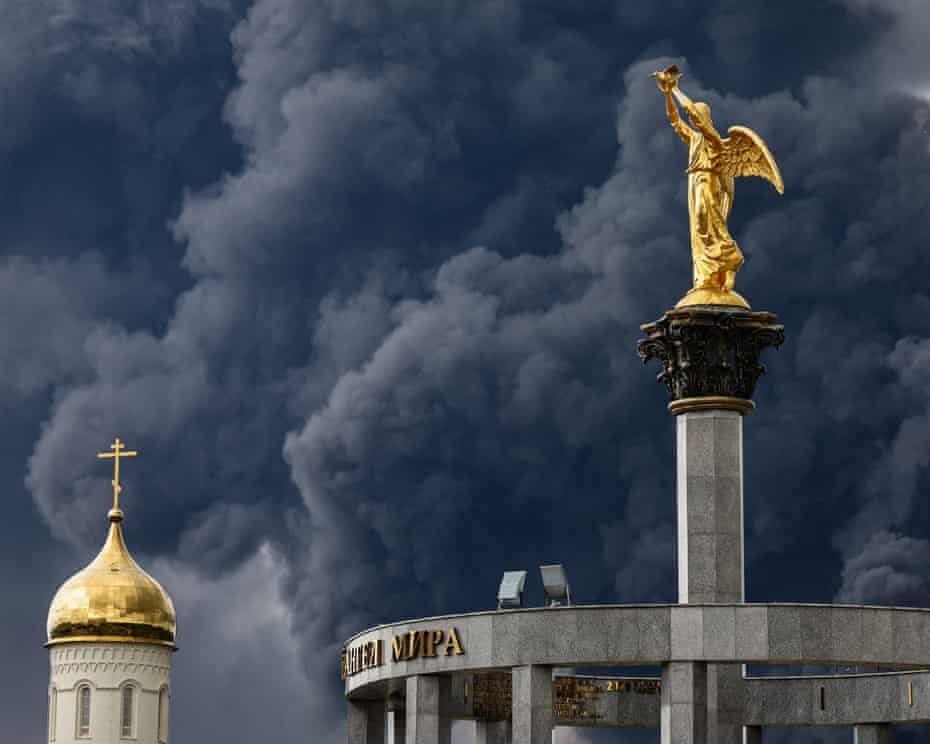
A western military source described the moment as sensitive. “I cannot lie, that is a period of danger,” they said, referring to the risk that Putin could escalate if he feels cornered as the war reaches the skylines of Moscow and St Petersburg.
Ukraine’s President Volodymyr Zelenskyy also raised the temperature with Belarus. He gave Minsk a one-week warning over drone relay stations used to guide Russian attacks. Belarusian authorities in Brest and Gomel later ordered mobile operators to dismantle repeaters, citing interference with grouse nesting sites, according to one Telegram channel.
The Eastern Flank Summit Response
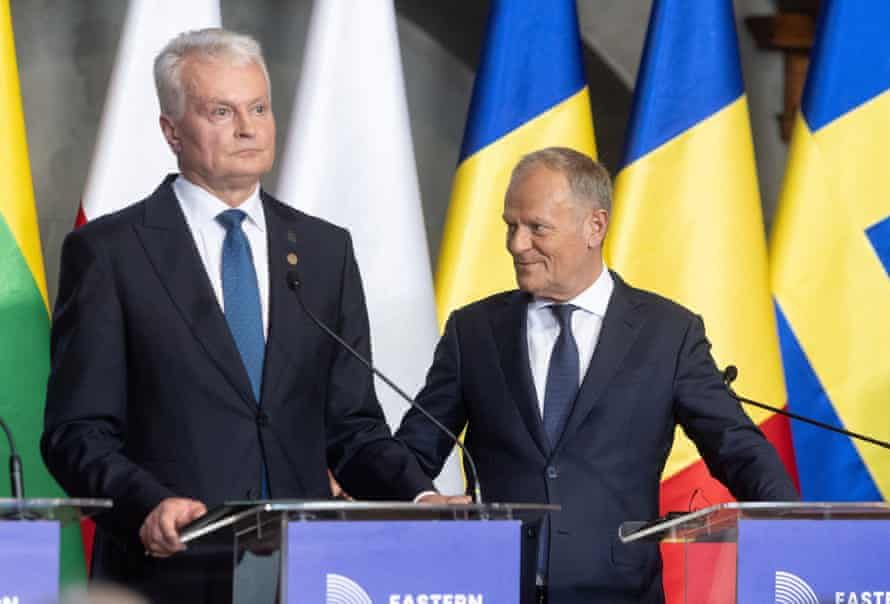
Poland’s Prime Minister Donald Tusk did not mince words after the Eastern Flank summit in Gdansk. Standing alongside Lithuanian President Gitanas Nausėda, Tusk said:
“We also share, without exception, the opinion that the situation is very unstable and various types of escalation can be expected in the coming weeks and months. We will want to prepare as a group of countries directly exposed to this risk.”
Nausėda and Tusk appeared on stage under the flags of participating countries, a visual signal of unity on NATO eastern flank security.
What Form Could a Provocation Take?
Hybrid Actions Over Conventional Invasion
Latvian intelligence assessed that Russia is not in a position to open a second front. Instead, it is considering “hybrid attacks, such as missiles, drones or other actions designed to send a signal: stop supporting Ukraine, or you will have your own problems.”
Analysts point to precedent. Since 2022, Russian activity has included sabotage and airspace incidents across Europe:
- Firebombs planted in DHL parcels in the UK, Poland and Germany in summer 2024.
- 19 Russian decoy drones entering Polish airspace last September, prompting Nato jets to scramble while civilians in three eastern provinces sheltered indoors.
These incidents fit a broader Putin hybrid warfare strategy: low-threshold actions that create political shock without triggering Article 5 automatically.
Testing Nato Cohesion
A senior source from a second Nato member said Putin may be willing to “throw the dice” against Estonia, Latvia or Lithuania to gauge US backing for the alliance’s smallest members.
Keir Giles of Chatham House explained the logic: “Moscow will be looking for ways to disrupt the current trend, through horizontal escalation [spreading the conflict to other countries] or doing something elsewhere. We should not expect Russia to passively lose.”
That framing aligns with current Baltic states defense warning messaging: prepare for incidents that probe response times, political will, and public resilience.
How This Differs From 2022 Warnings
Less Detail, More Context
Unlike the granular CIA and MI6 disclosures before Russia’s February 2022 invasion, the latest alerts are shorter on specifics. What they share is timing. Russia’s ground advance in Ukraine has stalled, and the Kremlin is under domestic pressure as Ukraine drone strikes Russia intensify.
In autumn 2022, a similar wave of concern followed Ukraine’s Kharkiv breakthrough. Western capitals feared nuclear escalation then, but the front stabilized without it. Officials now cite that episode as a reason to watch for non-nuclear provocations first.
What Happens at the Nato Summit in Ankara
US Commitment in Focus
Nato’s annual summit in Ankara arrives with questions about American posture. On Wednesday, Donald Trump said he felt “let down” by European allies who did not let US airpower operate from their bases against Iran.
For countries on the eastern flank, summit outcomes will be measured by three benchmarks:
- Force posture: Pre-positioned equipment, air policing rotations, and rapid-reaction plans for the Suwałki Corridor.
- Intelligence sharing: Faster circulation of indicators on drones, cyber, and sabotage linked to Russia Baltic provocation threat.
- Civil preparedness: Joint exercises with Poland, Lithuania, Latvia and Estonia on sheltering, energy continuity, and counter-disinformation.
Deterrence by Visibility
Nausėda’s presence at Gdansk alongside Tusk was deliberate. Visible coordination reduces the incentive for Moscow to test splits between Washington and European capitals.
“We will want to prepare as a group,” Tusk said, underlining that NATO eastern flank security depends on acting as a bloc rather than as individual states.
The Risks If Moscow Miscalculates
Escalation Pathways
Hybrid incidents can escalate quickly if misread. A drone incursion or cyber strike on critical infrastructure in Estonia could trigger emergency Nato consultations. If civilian casualties occur, public pressure for a stronger response rises.
The western source’s warning about “a period of danger” reflects that dynamic: pressure inside Russia, plus new Ukrainian reach, plus alliance politics creates a volatile mix.
Limits of Russian Capacity
At the same time, Latvia’s assessment that Russia cannot sustain a second front matters. The military is stretched in Ukraine. That makes large-scale land action unlikely, but it also makes smaller, deniable actions more attractive as a signaling tool.
What Citizens Should Watch For
Indicators, Not Panic
Security officials advise tracking concrete signals rather than rumors:
- Unusual airspace activity over Poland or the Baltics.
- Disruptions to GPS, telecoms, or power that officials attribute to external actors.
- Official travel advisories and changes to Nato air policing schedules.
The goal is vigilance without alarm. As Tusk noted, “various types of escalation can be expected,” but preparation reduces impact.
Information Resilience
Disinformation often accompanies hybrid moves. Governments across the Baltics are reinforcing media literacy and rapid fact-checking. Expect official channels to publish warnings quickly if an incident occurs, to prevent speculation from outpacing facts.
Outlook: Pressure, Provocation, and Preparedness
The Russia Baltic provocation threat is not a prediction of invasion. It is a warning that Moscow may use limited, deniable actions to change the political equation while Ukraine keeps up the pressure from the air.
Read also: Venezuela earthquake death toll rises as hundreds remain trapped, 46,000 reported missing
With Ukraine drone strikes Russia now reaching the capital region, and with Nato leaders meeting in Ankara, the coming weeks will test how well deterrence holds on the eastern flank.
For now, the message from Gdansk is clear. As Tusk put it: the situation is “very unstable,” and the exposed states will “prepare as a group.” That group posture is the core of NATO eastern flank security and the main answer to any Putin hybrid warfare strategy aimed at the Baltics.
About The Author