Amnesty International’s latest report has intensified global concern after accusing Sudan’s Rapid Support Forces of committing RSF war crimes in Darfur, despite announcing a humanitarian truce.
The findings emerged only hours after the RSF declared a unilateral three-month pause in hostilities, raising questions about its sincerity and the conflict’s evolving humanitarian implications.
Witness accounts gathered across displacement routes describe killings, abductions, rape and forced disappearances, painting a picture of systematic brutality that deepened fears among Darfuri civilians.
Survivors told researchers that RSF fighters stormed neighbourhoods in el-Fasher, executing unarmed men, assaulting women and preventing families from escaping as violence engulfed the historic western city.
Amnesty said twenty-eight testimonies detailed similar patterns of cruelty, indicating coordinated violations rather than rogue actions, reinforcing calls for urgent international monitoring mechanisms.
One witness recalled hiding behind collapsed walls as RSF fighters dragged neighbours outside, shouting threats before firing shots, leaving bodies abandoned along dust-filled streets.
A woman fleeing with two children described armed men stopping their group, beating her husband, and threatening to “clean the area” before looting belongings scattered across the road.
Another survivor said fighters hunted fleeing families at night, using flashlights to identify movement, echoing earlier reports of systematic targeting of civilians across Darfur towns.
Amnesty Secretary-General Agnes Callamard warned that unrestrained violence created “conditions amounting to war crimes,” urging accountability despite diplomatic deadlock blocking stronger investigative interventions.
She emphasised that neutral investigations were essential, stressing that atrocities occurring “in plain sight” must not be ignored as regional mediators push for a fragile truce.
Hours before publication, the RSF announced a three-month humanitarian cessation, framed as compliance with international diplomacy spearheaded by the United States under President Donald Trump.
Observers noted the timing seemed intended to ease pressure, though many questioned whether fighters on the ground would honour commitments amid intensifying territorial battles.
The el-Fasher takeover at the end of October fundamentally shifted control in Darfur, giving RSF dominance over the last major city beyond army authority.
Humanitarian agencies warn that the fall triggered mass displacement, overwhelming routes leading towards Tawila, Kutum and other struggling towns already hosting thousands of exhausted escapees.
UN aid chief Tom Fletcher recently called el-Fasher “a crime scene,” insisting perpetrators must “face justice” given relentless attacks on defenceless villagers and trapped residents.
His remarks followed satellite imagery analysis indicating burned districts, destroyed markets and growing grave clusters, reflecting the scale of devastation after weeks of urban clashes.
One mother recounted being assaulted with her fourteen-year-old daughter while fleeing, describing the horror of watching the girl deteriorate before dying in a clinic in Tawila.
Another man fleeing on foot said he saw RSF gunmen “killing people as if they were flies,” insisting none of the victims appeared to be armed.
His testimony aligned with broader patterns reported across el-Fasher, where escape routes became deadly corridors as fighters targeted civilians attempting to leave the besieged city.
Despite the truce pledge, mediation efforts remain stalled, with both sides pursuing battlefield advantage before negotiating political arrangements likely to shape Sudan’s future leadership.
Army chief Abdel Fattah al-Burhan has resisted US-backed proposals, citing alleged bias due to the UAE’s involvement in the Quad mediation group, claiming RSF support compromises fairness.
The UAE has denied involvement, instead accusing Burhan of obstructionism, while diplomatic channels remain strained and ceasefire talks face repeated delays, worsening conditions for displaced populations.
El-Fasher’s fall marked the final major city in western Darfur to fall under RSF control, consolidating the paramilitary group’s dominance in one of Sudan’s most troubled regions.
Witnesses reported that RSF fighters destroyed civilian property, looted homes and markets, and terrorised entire neighbourhoods, actions which clearly constitute el-Fasher civilian atrocities under international law definitions.
Amnesty International urged the UN Security Council to intervene, warning that failure to address RSF war crimes in Darfur could embolden further violations across Sudan’s vulnerable regions.
Survivor accounts detail horrific patterns of sexual violence, including assaults on girls as young as fourteen, with lasting physical and psychological consequences for victims and families.
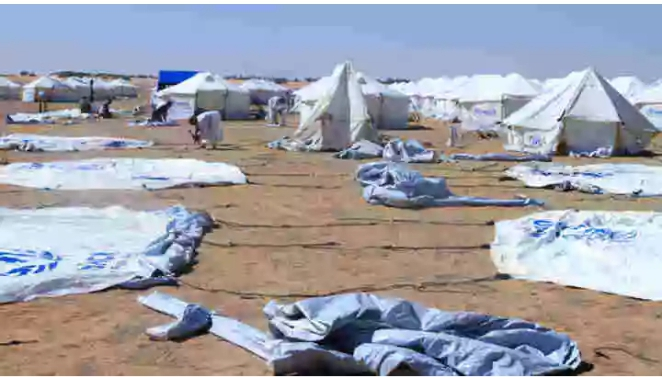
Medical teams in temporary clinics struggled to cope, treating malnourished children, trauma victims, and those injured while fleeing, highlighting the urgent need for humanitarian assistance amid continued conflict.
Humanitarian corridors remain blocked, despite the proclaimed Sudan humanitarian truce, with aid convoys facing threats from both sides, undermining relief efforts and intensifying suffering in isolated communities.
The RSF’s statement framed the truce as a response to international calls, yet observers argue this may be a tactical pause, allowing regrouping and consolidation of territorial gains.
El-Fasher’s strategic position in Darfur makes it a critical prize, controlling road networks and resources, including access to water, food supplies, and local markets vital to displaced populations.
The UN warned that civilians trapped in el-Fasher faced starvation, exposure, and disease, with hospitals overwhelmed by injuries from both armed clashes and indiscriminate RSF attacks.
Reports of summary executions were corroborated by satellite imagery and survivor interviews, strengthening Amnesty International’s claim that widespread violence in el-Fasher constitutes RSF war crimes in Darfur.
Burhan’s rejection of Quad proposals underscores the difficulty of reaching an impartial settlement, as accusations of foreign interference and partiality complicate negotiations to end the Darfur conflict escalation.
The US-led Quad, comprising Saudi Arabia, Egypt, the United Arab Emirates, and the United States, has sought to mediate, yet distrust and ongoing violence continue to derail peace efforts.
Local NGOs report that displaced populations fled en masse to Tawila and Kutum, many arriving with injuries, trauma, and no access to clean water, shelter, or food aid.
Humanitarian workers describe scenes of desperation, noting children separated from families, elderly unable to travel, and mass graves emerging in areas surrounding el-Fasher after indiscriminate killings.
Survivors detailed arbitrary arrests, enforced disappearances, and targeting of civilian infrastructure, emphasizing the need for accountability under international law and highlighting the severity of Amnesty International report on Sudan findings.
International human rights observers fear impunity, warning that unless measures are taken, RSF forces may continue perpetrating atrocities across wider Darfur regions with minimal accountability.
Some displaced families are returning to villages temporarily, yet insecurity persists, with sporadic attacks preventing reconstruction and access to essential services such as education, healthcare, and agriculture.
RSF spokespeople claim adherence to international humanitarian norms, but independent verification remains impossible due to limited access and ongoing hostilities, intensifying skepticism over truce intentions.
Amnesty’s report emphasizes that violations are systematic, not incidental, noting the deliberate targeting of civilians, looting of humanitarian supplies, and destruction of cultural and religious sites.
Analysts warn that the Darfur conflict escalation may destabilize neighbouring regions, increasing refugee flows into Chad and Sudan’s eastern provinces, placing pressure on already fragile humanitarian networks.
UNHCR officials report overcrowded camps, disease outbreaks, and insufficient medical supplies, raising urgent calls for global support to protect civilians fleeing Darfur conflict escalation.
Tom Fletcher stressed that accountability is non-negotiable, warning that ignoring such violations will undermine global human rights frameworks and embolden armed groups to commit similar atrocities.
Survivor testimonies included gruesome accounts of RSF shootings, beatings, and sexual violence, all contributing to a climate of fear that prevents civilians from seeking safety.
International responses have ranged from condemnation to urgent appeals for action, with calls for impartial investigations into the reported el-Fasher civilian atrocities and broader patterns across Sudan.
US President Donald Trump reaffirmed commitment to diplomacy, promising cooperation and coordination with regional partners to achieve cessation of hostilities and facilitate humanitarian assistance.
Human rights experts stress that securing access to affected populations is crucial, enabling medical relief, food distribution, and documentation of RSF war crimes in Darfur for future prosecutions.
Despite truce declarations, sporadic fighting persists on the outskirts of el-Fasher, highlighting the fragile nature of peace initiatives and the ongoing threat to civilian populations.
RSF fighters reportedly continue fortifying positions, suggesting that tactical interests may outweigh humanitarian commitments, complicating prospects for a sustainable Sudan humanitarian truce and lasting ceasefire.

Analysts warn that political rivalries, military ambitions, and ethnic tensions exacerbate the Darfur crisis, making civilian protection and adherence to international law even more challenging.
Communities in Darfur face long-term consequences of trauma, displacement, and destroyed infrastructure, which may hinder social and economic recovery long after hostilities end.
Amnesty International reiterated that all perpetrators must be held accountable, stressing that impunity would perpetuate cycles of violence and undermine international human rights law.
Calls for the UN Security Council to establish investigative mechanisms grow louder, with advocacy groups urging concrete action to prevent further RSF war crimes in Darfur.
Efforts to deliver humanitarian aid are increasingly urgent as winter approaches, compounding risks for displaced populations facing exposure, inadequate shelter, and limited access to food or healthcare.
RSF and army forces have yet to implement independent monitoring of truce adherence, making external verification vital to prevent further civilian harm and assess compliance with peace commitments.
Local humanitarian staff continue documenting violations, providing crucial testimony for Amnesty International report on Sudan, highlighting the urgency of coordinated international intervention to protect civilians.
Observers emphasize that without enforcement, ceasefire agreements risk becoming symbolic gestures, while victims of RSF violence remain unprotected and without redress.
Civilian displacement continues to rise, with families enduring perilous journeys to Chad and other neighbouring countries, reflecting the scale of the Darfur conflict escalation.
Medical clinics report cases of malnutrition, injuries, and psychological trauma among children and women, revealing the immediate human cost of prolonged RSF attacks in el-Fasher.
The international community faces mounting pressure to act decisively, balancing diplomatic negotiations with accountability measures to prevent further el-Fasher civilian atrocities and uphold human rights standards.
In conclusion, Amnesty International’s report underscores the gravity of RSF war crimes in Darfur, the fragility of current truce arrangements, and the urgent need for global attention and intervention.
About The Author